
In the previous articles, we looked at the basics of miso soup, from its place in Japanese home cooking to miso, dashi, and ingredient combinations.
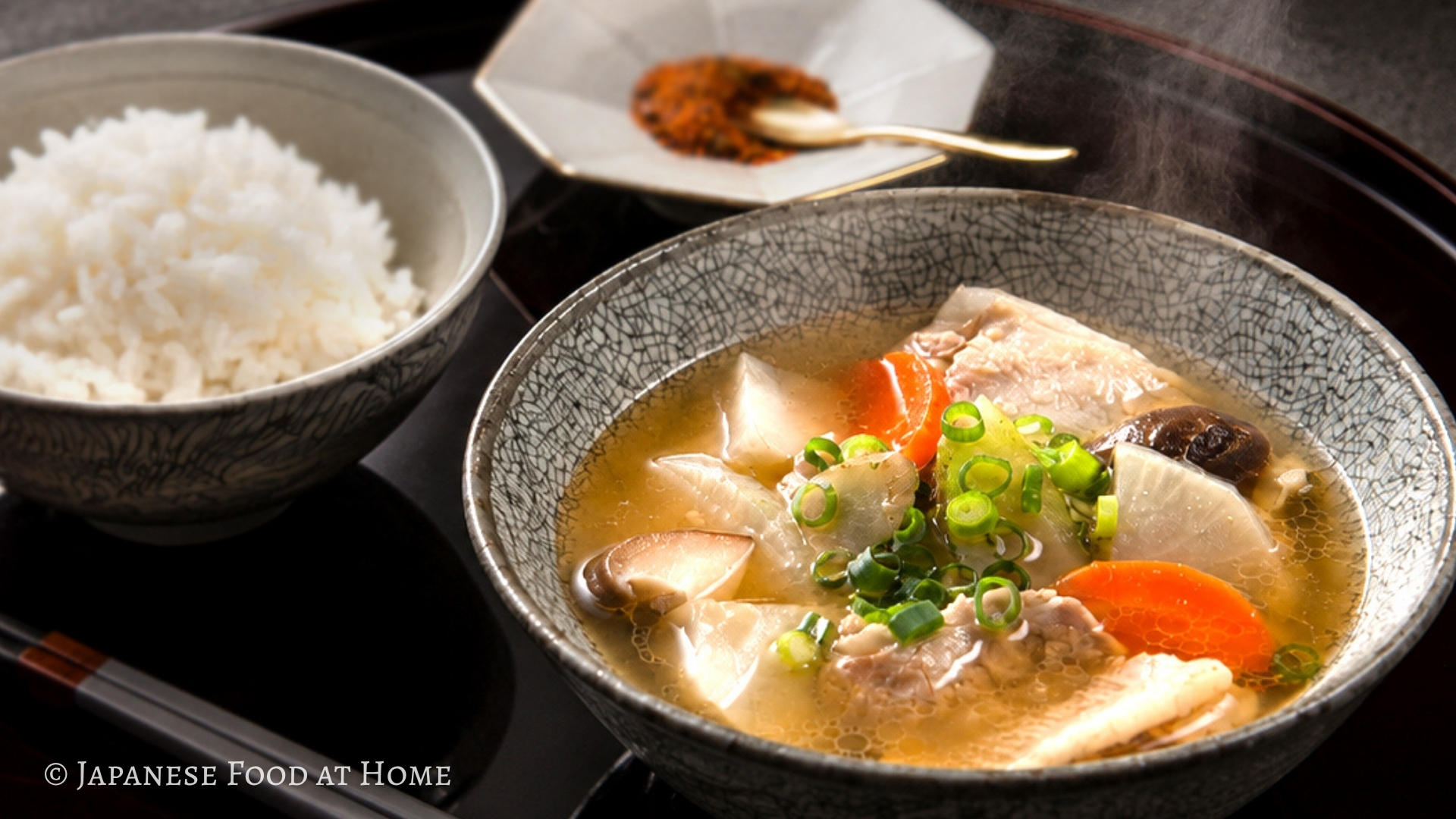
Now, let’s put those ideas into practice with a specific miso soup recipe. In this article, I’ll show you how to make tonjiru, one of the most beloved types of miso soup in Japan.
What Is Tonjiru?
Tonjiru is a traditional Japanese miso soup made with pork and a variety of root vegetables, often including daikon, burdock, and carrot. It is usually more hearty than everyday miso soup, with plenty of ingredients simmered together in a savory miso-flavored broth.
As the pork cooks, its umami blends into the soup, giving tonjiru a rich and satisfying flavor. Combined with the sweet, earthy flavor of the root vegetables, it becomes one of the most comforting types of miso soup in Japanese home cooking.
How to Make Tonjiru
Ingredients for 2 Servings
150 g thinly sliced pork belly
50 g daikon radish
30 g carrot
30 g burdock root (gobo)
100 g taro *Potato can be used as a substitute.
2 shiitake mushrooms
1 Tbsp sesame oil
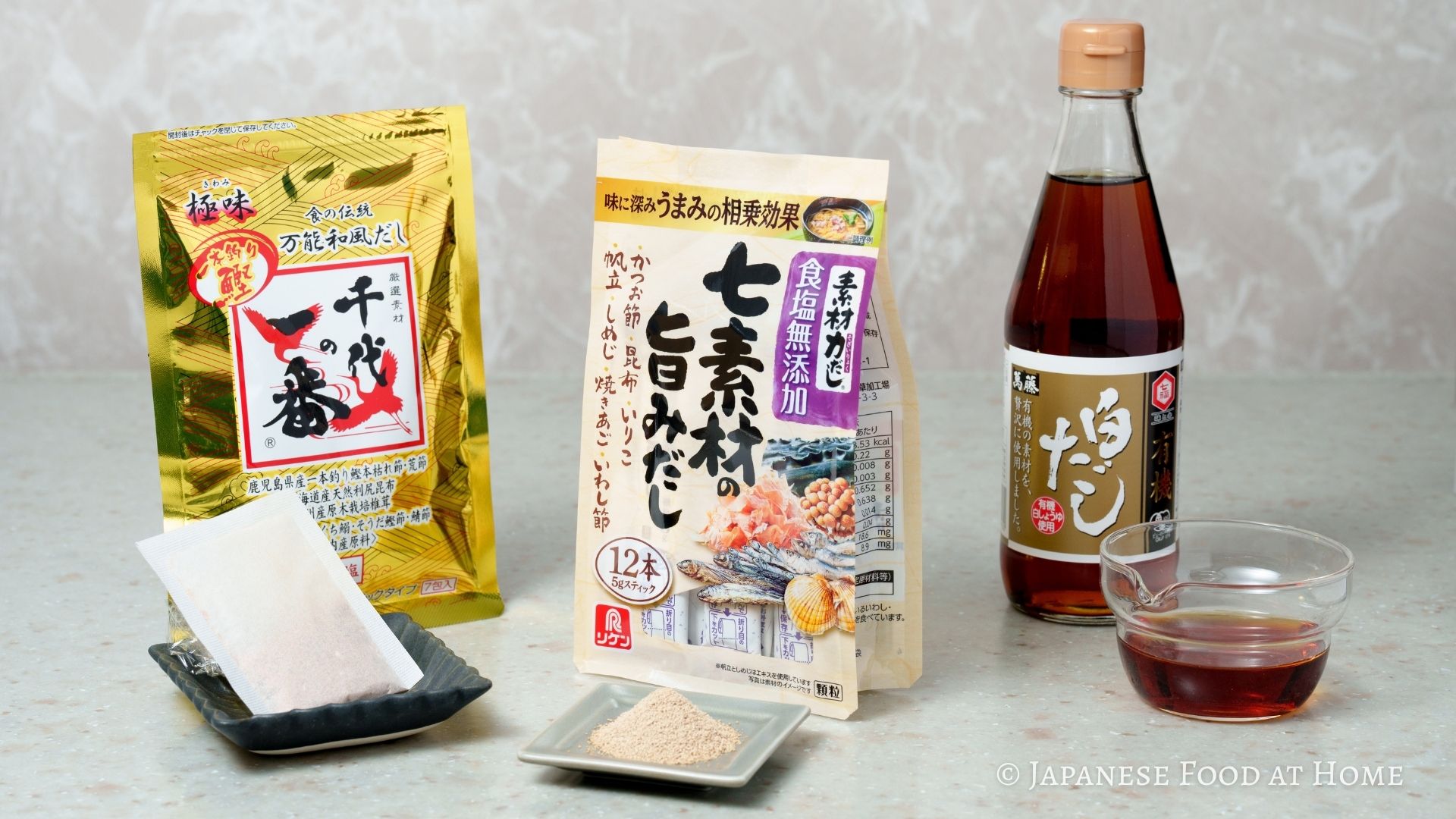
600 ml dashi stock
Approx. 30 g miso, to taste
Green onions, thinly sliced, for garnish
Optional
1/2 tsp freshly grated ginger
Shichimi togarashi (Japanese seven-spice blend), for serving
If you are not sure how to prepare dashi, check out the article below.
Preparation
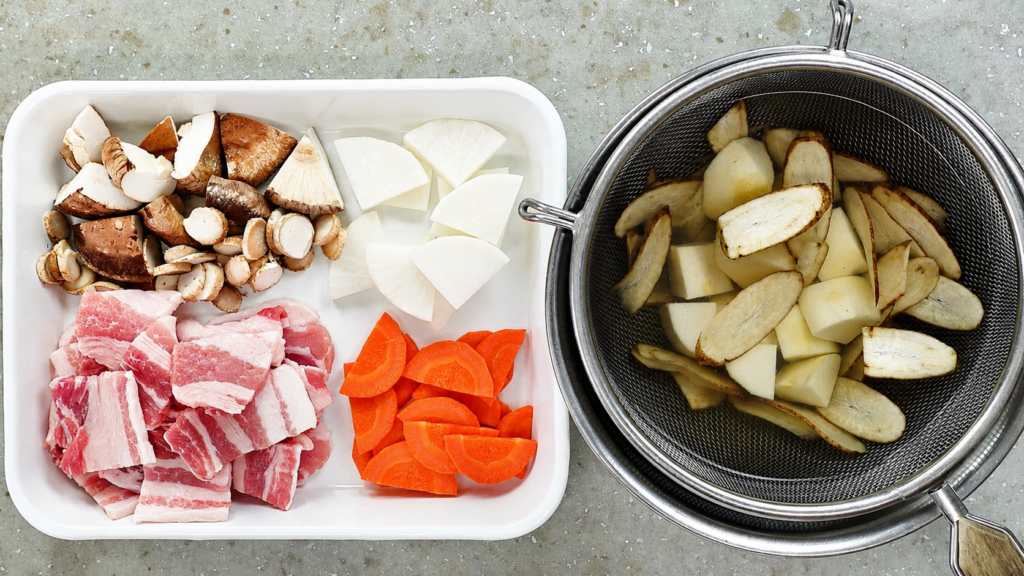
- Peel the daikon and slice it into quarter-rounds, about 5 mm (1/4 inch) thick.
- Peel the carrot and slice it into half-moons or rounds, about 3 mm (1/8 inch) thick.
- Scrub the burdock root under running water, thinly slice it on the diagonal, and soak the slices in water until ready to use.
- Peel the taro and cut it into bite-size pieces, then soak them in water until ready to use.
- Separate the shiitake mushrooms into caps and stems. Cut the caps into bite-size pieces and thinly slice the stems.
- Cut the pork belly into bite-size pieces.
Want to learn more about Japanese cutting techniques? See our guide to common cuts.

Instructions
Heat the sesame oil in a pot over medium-high heat. Add the pork belly and sauté until it is no longer pink.
Add the daikon, carrot, burdock root, taro, and shiitake mushrooms. Sauté briefly until everything is lightly coated with oil.
Add the dashi stock. Once it comes to a boil, reduce the heat to low and skim off any foam that rises to the surface. Simmer for about 15 minutes, until the vegetables are tender.
When the taro is soft, turn off the heat.
Place the miso in a small bowl, add a little hot soup from the pot, and stir well to loosen it. Add about half of the dissolved miso to the pot first. Taste the soup, then gradually add more miso as needed.
Add the grated ginger, heat the soup again, and remove it from the heat just before it comes to a boil.
Ladle the tonjiru into bowls and top with thinly sliced green onions. Sprinkle with shichimi togarashi if you like.
Cooking Tips
- Much of the earthy aroma of burdock root and the fresh fragrance of ginger is found close to the skin. When using them in cooking, scrub them well instead of peeling them to make the most of their aroma.
- Miso has a delicate flavor that can fade if the soup is boiled after the miso is added. Warm the soup gently at the end rather than letting it come to a full boil.
-scaled.jpg)
Tonjiru is hearty, comforting, and full of the flavors of Japanese home cooking. Once you learn the basic method, you can adjust the vegetables and miso to suit your taste.
I hope this recipe helps you enjoy a warm bowl of tonjiru at home.




Comments