
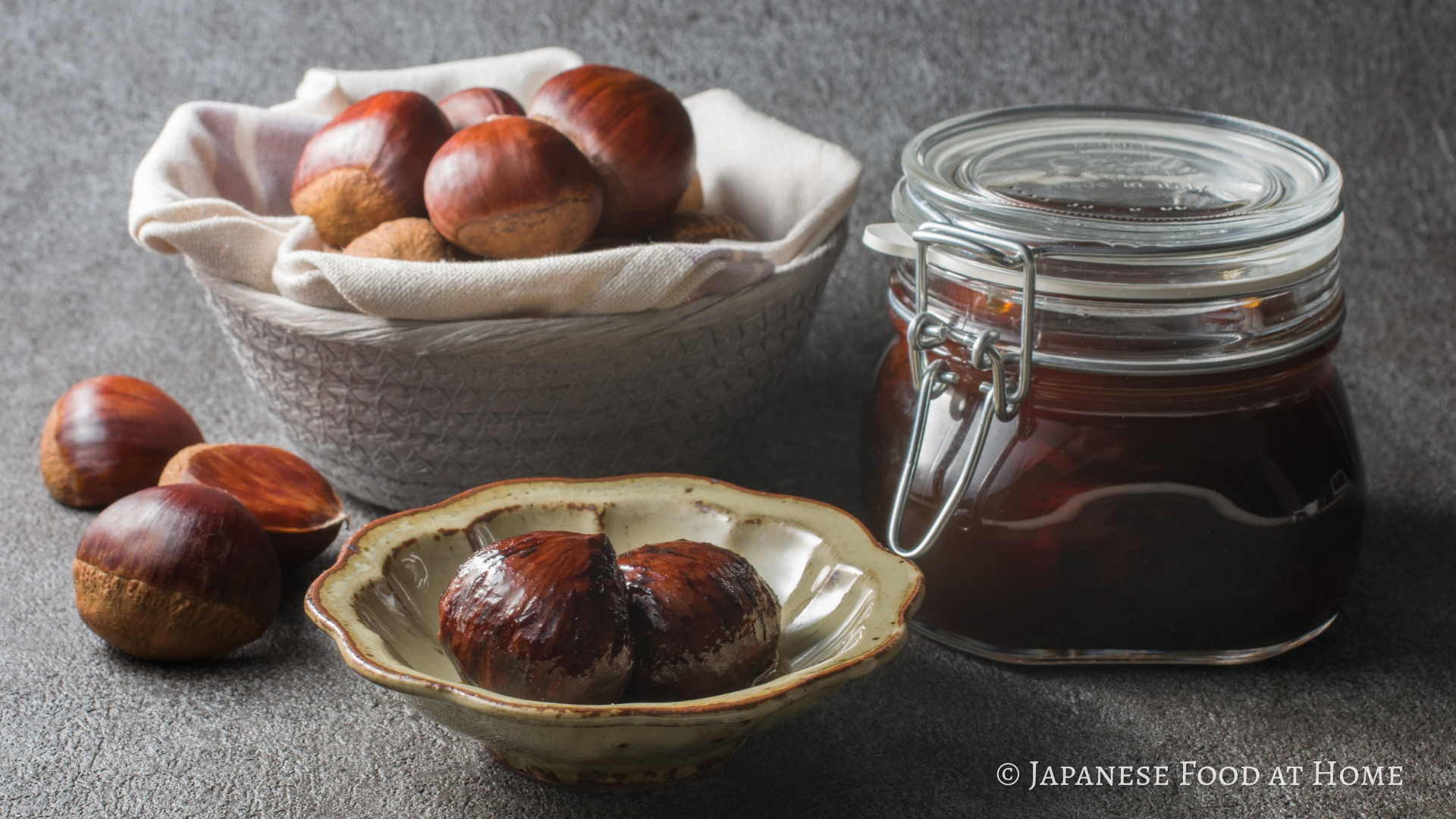
Japanese sweet simmered chestnuts are one of the classic seasonal kitchen projects of autumn in Japan.
They take time and patience to prepare, but the process itself is part of what makes them special. With a little care at each step, you’ll end up with beautifully glossy chestnuts with a deep, rich flavor that are well worth the effort.
If you enjoy slowing down in the kitchen and making something that truly celebrates the season, this is a recipe worth trying.
Shibukawa-Ni vs. Kanro-Ni: Two Traditional Japanese Chestnut Preserves
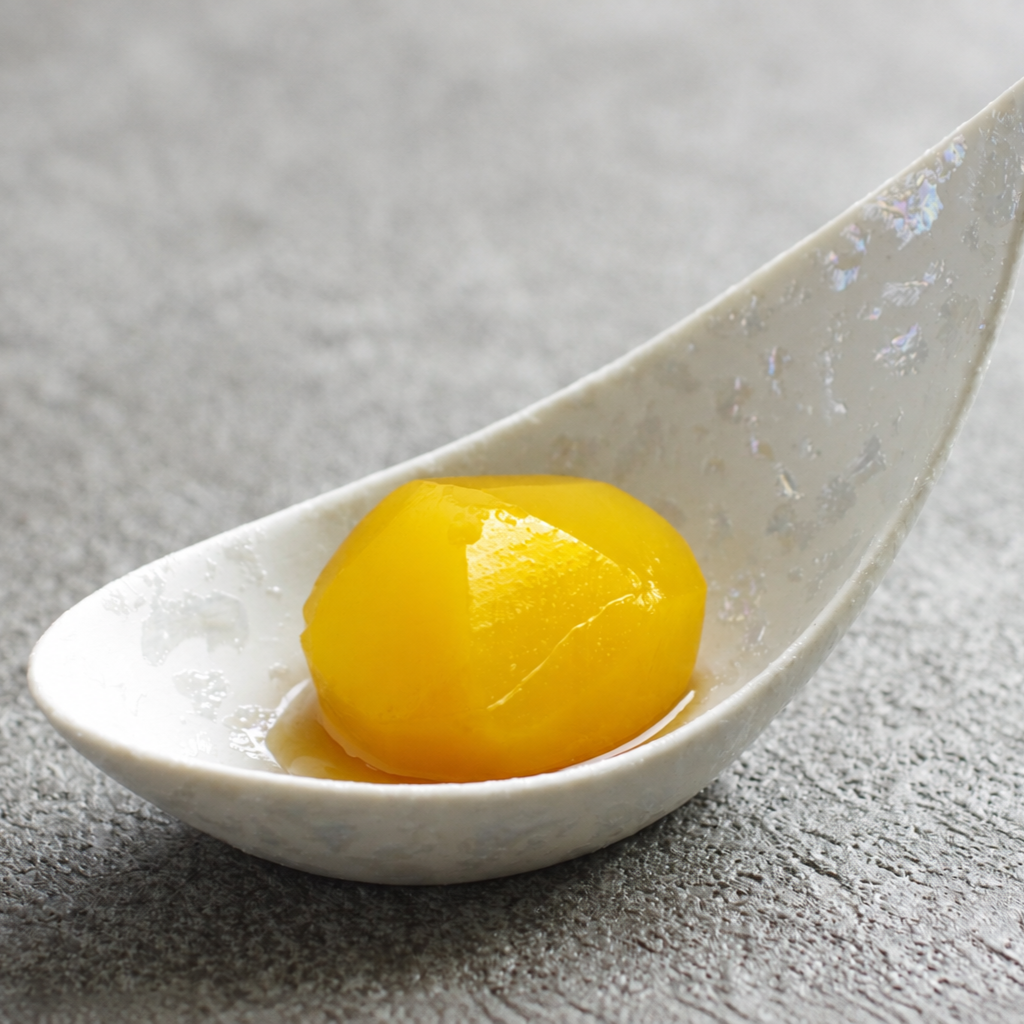
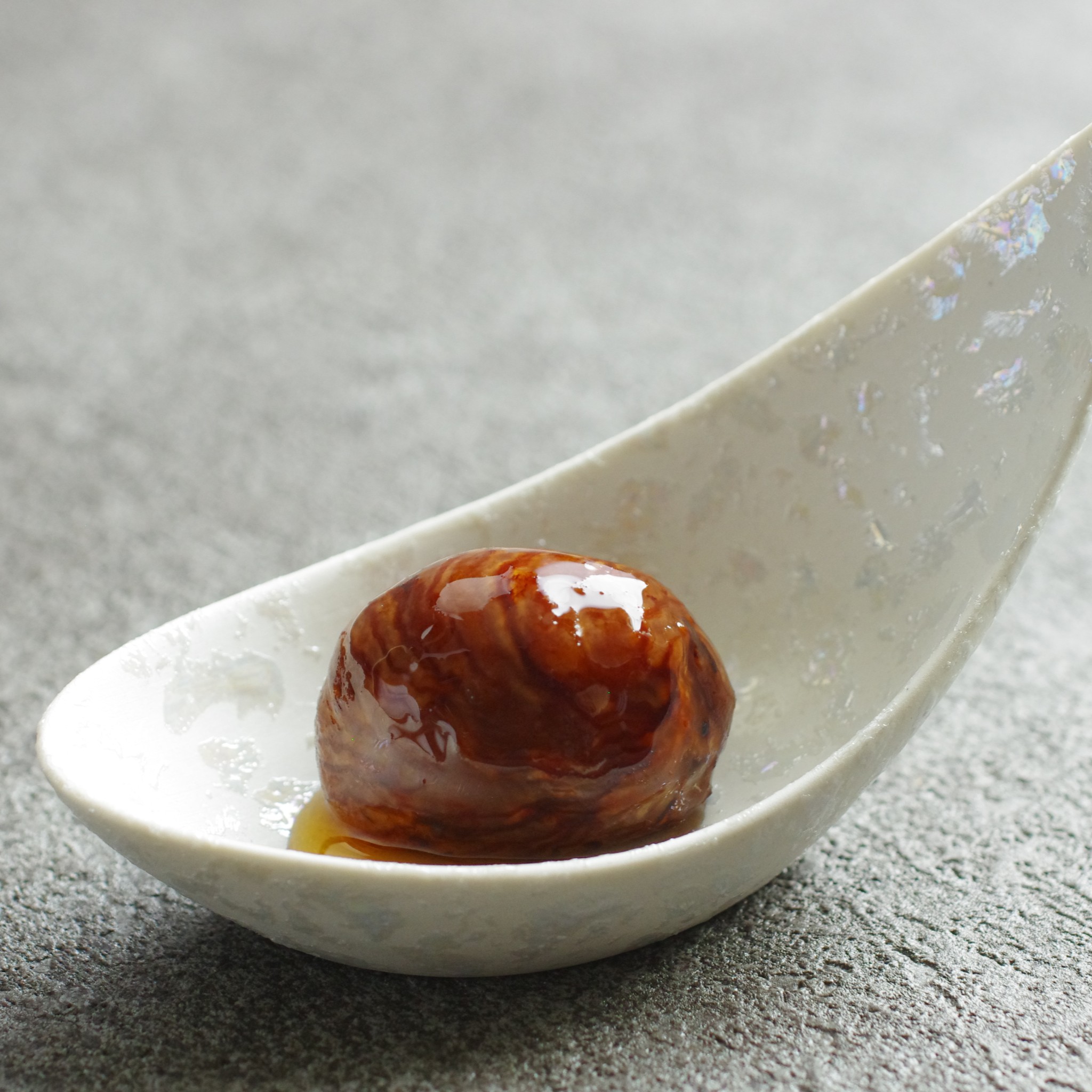
Two of the best-known traditional chestnut preserves in Japan are kanro-ni (甘露煮) and shibukawa-ni (渋皮煮). Both are made by gently simmering chestnuts in a sweet syrup, but the key difference lies in how the chestnuts are peeled before cooking.
Fresh chestnuts have two layers of skin: the hard outer shell, called onikawa, and the thin inner skin, called shibukawa. For kanro-ni, both layers are removed, leaving the pale yellow chestnut flesh completely exposed. The result is a clean, straightforward flavor without any bitterness.
For shibukawa-ni, only the outer shell is removed, while the inner skin, or shibukawa, is carefully left intact. This gives the chestnuts a darker color and a deeper, more complex flavor, with subtle woody notes and a distinctive aroma.
At first glance, kanro-ni may seem more labor-intensive because the chestnuts are peeled all the way down to the flesh. In practice, however, shibukawa-ni requires even more careful handling. The delicate inner skin must remain unbroken while its bitterness and harshness are gradually removed through repeated preparation and simmering.
That extra care is also one reason shibukawa-ni is often more expensive when sold commercially. It takes time and patience to make, but the painstaking process is essential to bringing out the rich, layered flavor that makes shibukawa-ni such a treasured autumn tradition in Japan.
How to Make Shibukawa-Ni
Ingredients
1 lb (450 g) fresh chestnuts
Baking soda, as needed
Brown sugar, equal to 60% of the weight of the chestnuts after removing the outer shells
2 Tbsp or more dark rum, to taste (optional)
Ingredient Tips
- Chestnuts gradually lose moisture and become firmer over time, so use the freshest chestnuts you can find.
- You don’t need to use exactly 1 lb (450 g) of chestnuts. Simply adjust the other ingredients according to the amount of chestnuts you have.
Instructions
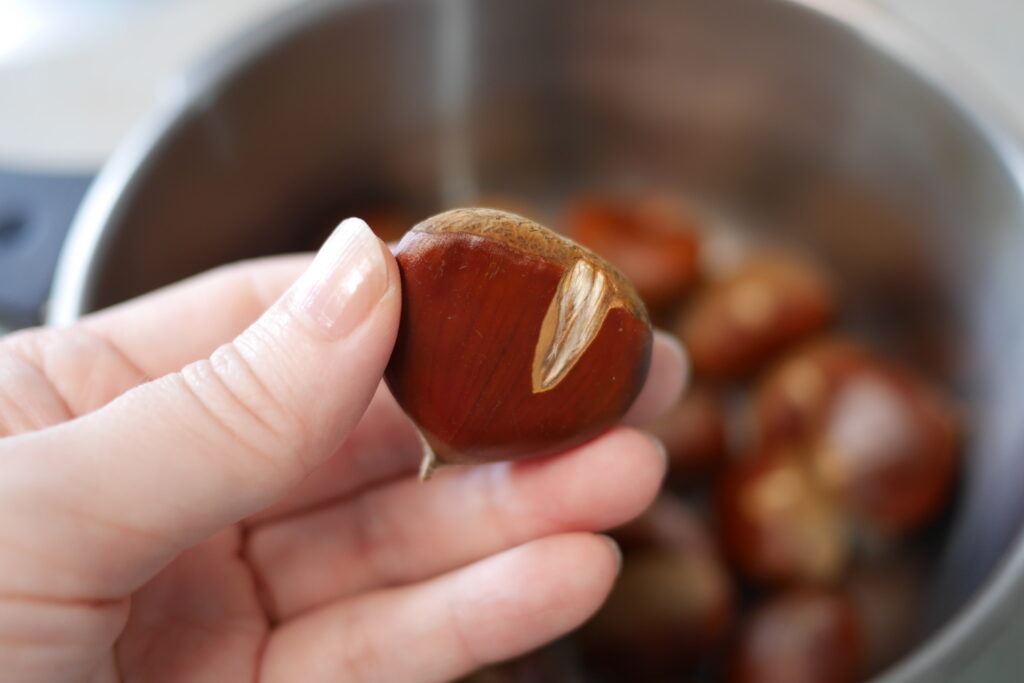
Check each chestnut for small holes as you work. Chestnuts with tiny holes may contain insects, so discard them.
Using a paring knife, carefully remove a small section of the hard outer shell from the base toward the tip of each chestnut. Be careful not to peel away the inner skin; the chestnut flesh should remain covered.
Place the chestnuts in a pressure cooker and add enough water to cover them. Close the lid and heat over high heat. If your pressure cooker has adjustable pressure settings, use high pressure.
Once the cooker reaches pressure, reduce the heat to low and cook for 15 minutes. Turn off the heat and allow the pressure to release naturally.
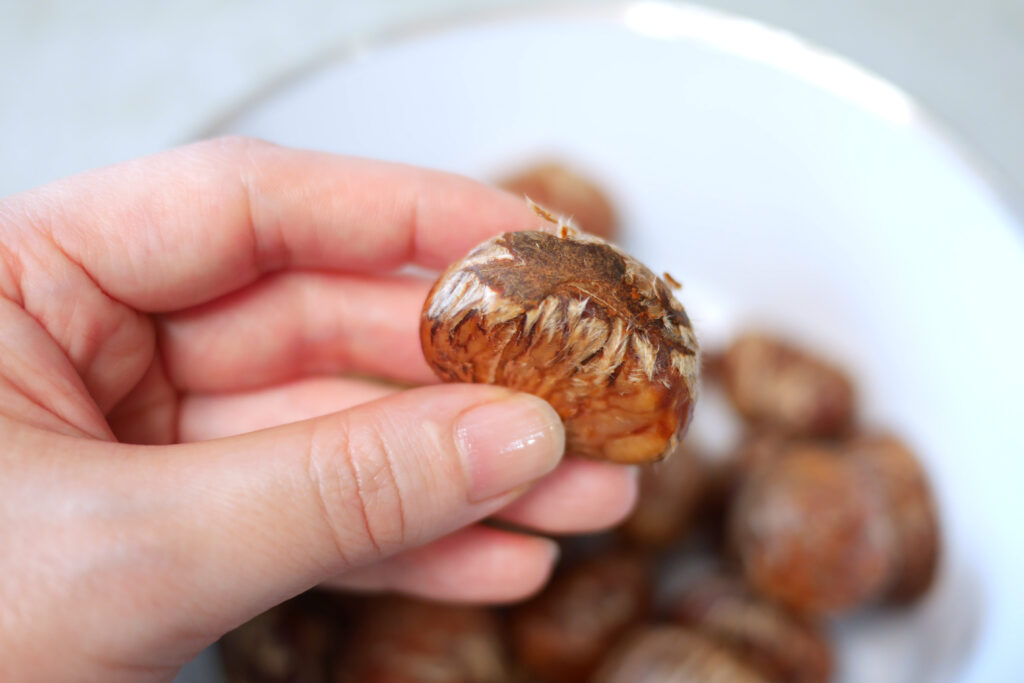
As soon as the pressure indicator has dropped and it is safe to open the cooker, remove the lid and peel the chestnuts while they are still hot. Wear kitchen gloves if needed.
Remove only the hard outer shell, taking care not to peel away the inner skin. If part of the shell around the base is difficult to remove, leave it for now rather than forcing it off.
After removing the outer shells, weigh the chestnuts. You will use this weight to calculate the amounts of sugar and water later.
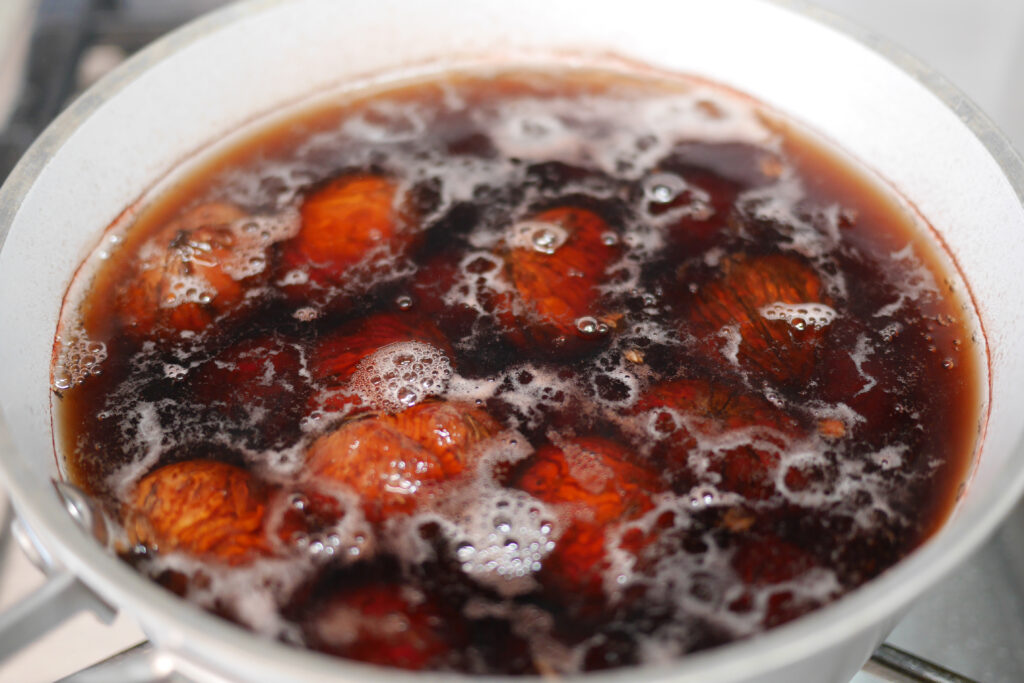
Place the peeled chestnuts in a pot and add enough water to cover them. Add a small amount of baking soda—about 1 teaspoon per liter of water.
Bring to a boil, then reduce the heat to low and simmer for 10 minutes. Skim off any foam or scum that rises to the surface as needed. Since the cooking water will be discarded, there is no need to remove every bit.
Remove the pot from the heat and transfer the chestnuts one by one to another pot.
As you transfer them, remove any remaining pieces of outer shell. You can also gently remove any thick, loose areas of inner skin and any dark veins that come away easily.
Once all the chestnuts have been transferred, add enough fresh water to cover them and another small amount of baking soda. Bring to a boil, reduce the heat to low, and simmer for another 10 minutes.
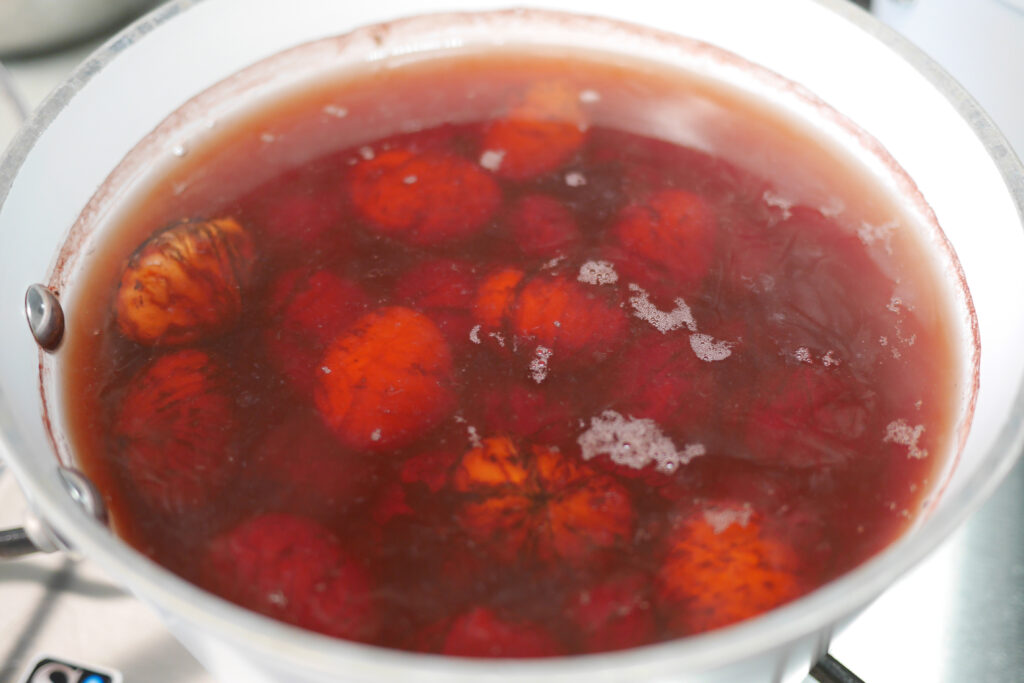
Rinse the first pot and fill it with fresh water. Bring the water to a boil, then carefully transfer the chestnuts from the baking soda water into the fresh boiling water.
Simmer over low heat for 10 minutes without adding baking soda. Repeat once more, so that the chestnuts are simmered four times in total: twice with baking soda and twice without.
Taste a little of the final cooking water. If the bitterness and astringency have disappeared, the chestnuts are ready for the next step. If the water still tastes noticeably astringent, transfer the chestnuts to fresh boiling water and simmer for another 10 minutes.
By the final simmer, the cooking water should be a light reddish-brown, as shown in the picture above, rather than the very dark brown seen in Step 4.
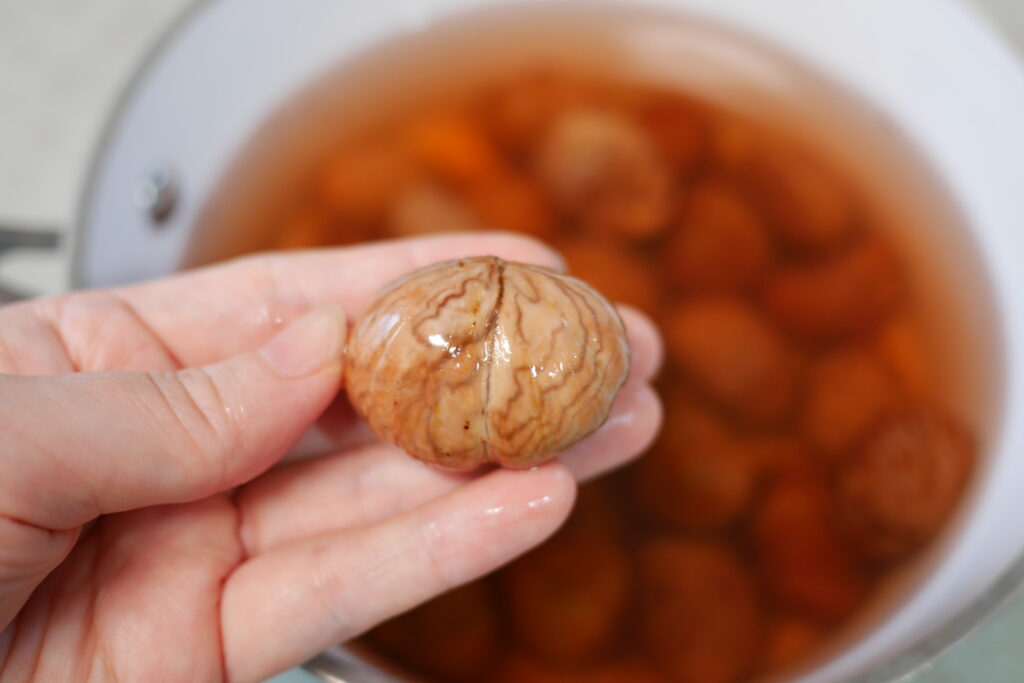
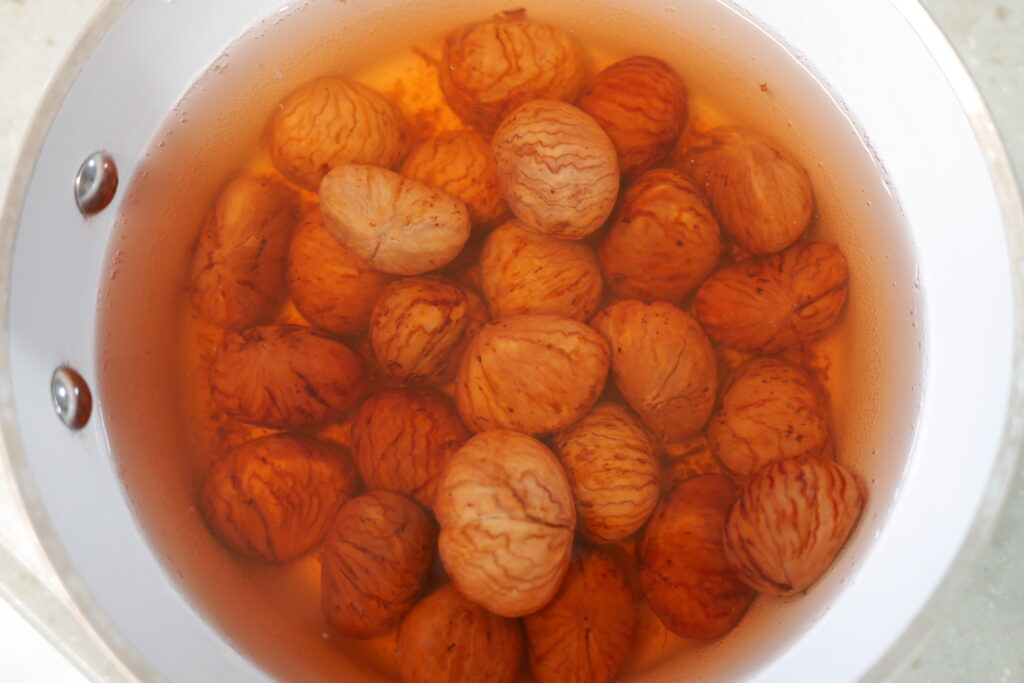
Prepare another pot of fresh hot water and transfer the chestnuts into it.
Working with one chestnut at a time, gently remove the fibrous veins and any rough or loose pieces from the surface of the inner skin.
As each chestnut is cleaned, transfer it to a pot of fresh room-temperature water to prevent the surface from drying out and cracking.
Based on the chestnut weight measured in Step 3, measure water equal to 80% of that weight and brown sugar equal to 20%, then combine them in a clean pot.
Heat gently, stirring with a silicone spatula until the sugar has completely dissolved.
Drain the cleaned chestnuts and carefully add them to the syrup. Cover and simmer over low heat for about 15 minutes. Turn off the heat and let the chestnuts cool slowly in the syrup.
Once the chestnuts and syrup have cooled completely, carefully remove the chestnuts from the pot.
Add another amount of brown sugar equal to 20% of the peeled chestnut weight to the syrup. Heat gently until the sugar has dissolved.
Return the chestnuts to the pot, cover, and simmer over low heat for 15 minutes. Turn off the heat and allow them to cool slowly in the syrup again.
Carefully remove the chestnuts once more.
Add a final amount of brown sugar equal to 20% of the peeled chestnut weight to the syrup and heat until dissolved.
Return the chestnuts to the pot, cover, and simmer over low heat for 15 minutes. Turn off the heat and allow them to cool slowly.
The total amount of sugar added throughout the three stages will be equal to 60% of the peeled chestnut weight.
Transfer the chestnuts to a clean container. Strain the syrup, then pour it over the chestnuts. If desired, add dark rum to taste.
Store the shibukawa-ni in the refrigerator for about 1 week.
Before serving, transfer some of the syrup to a small saucepan and simmer until reduced by half. If desired, add a little more dark rum at the end.
Serve the chestnuts with the reduced syrup spooned over the top.
Cooking Tips
- Working with chestnuts can stain your fingertips, so wearing thin rubber gloves is recommended. When handling hot chestnuts, you may want to wear a work glove over the rubber glove on your non-dominant hand—the hand holding the chestnuts. The outer shells become firmer as they cool, so peel them while they are still hot.
- Take care to keep the chestnut flesh covered by the inner skin at every stage. Once the inner skin is torn and the flesh is exposed, the chestnut can easily break apart during simmering, so work gently when peeling the outer shells and cleaning the inner skin.
- In Step 6, the fresh water should be hot rather than cold. By this stage, the chestnuts are already quite tender, and sudden temperature changes can cause them to crack. The same principle applies in Step 7. Keeping them in hot water while cleaning them one by one, then transferring them to room-temperature water, helps make the temperature change more gradual.
- The sugar is added in stages because placing the chestnuts directly into a highly concentrated syrup can draw moisture out of the chestnuts and make the surface firm. Gradually increasing the sugar concentration helps prevent this. The reduced syrup made for serving is much more concentrated, so spoon it over the chestnuts just before eating rather than using it for storage.

Tired just from reading all those steps? Fair enough—shibukawa-ni is definitely a labor of love 😂
But it’s truly delicious. If you’ve never tried it before, start with a store-bought version. If you fall in love with the flavor, then maybe it’s time to make your own!
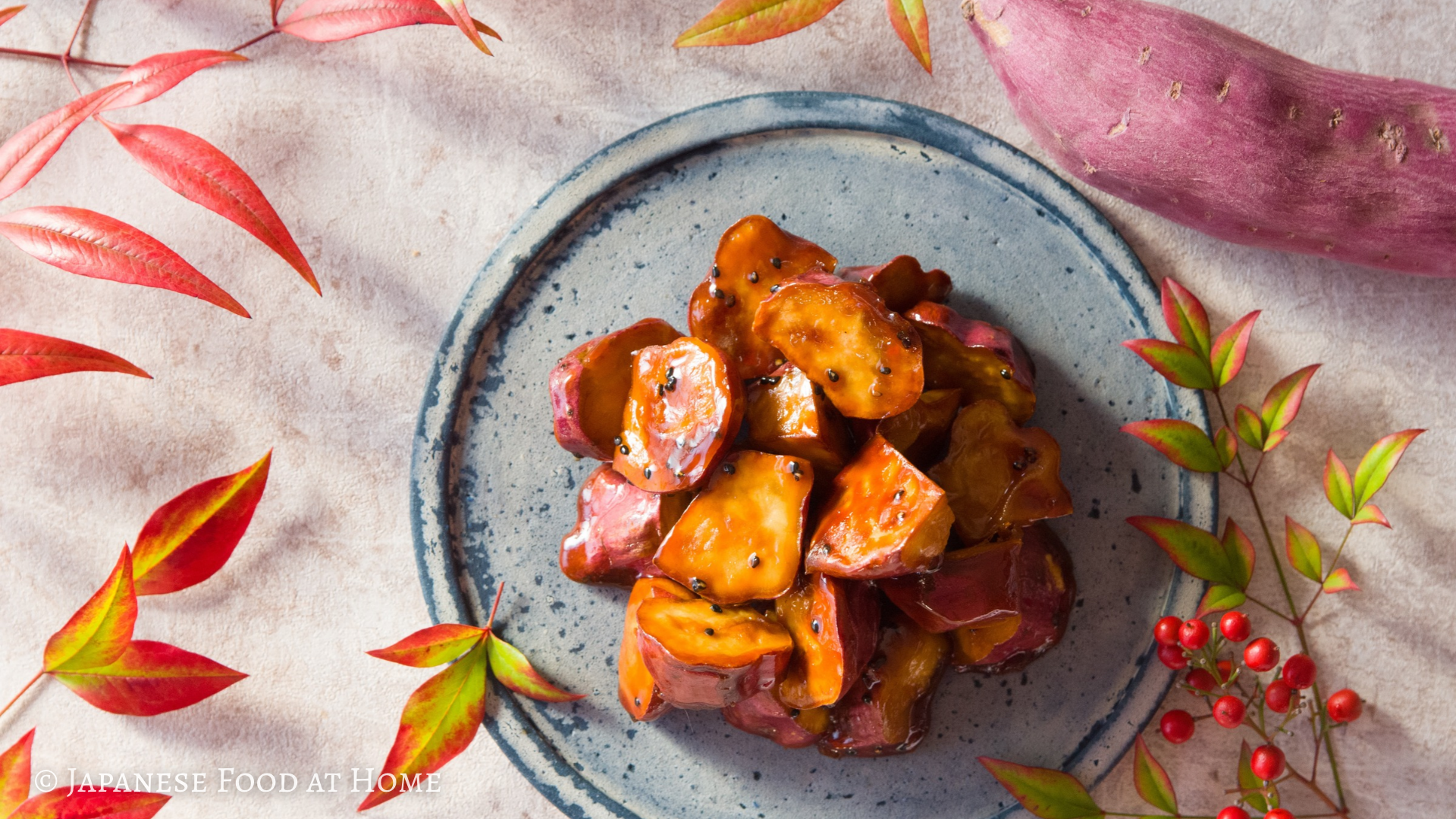
Want a much easier way to enjoy a Japanese autumn treat? Try my Daigaku Imo Recipe, a simple Japanese sweet potato snack with a glossy syrup coating.

Comments