
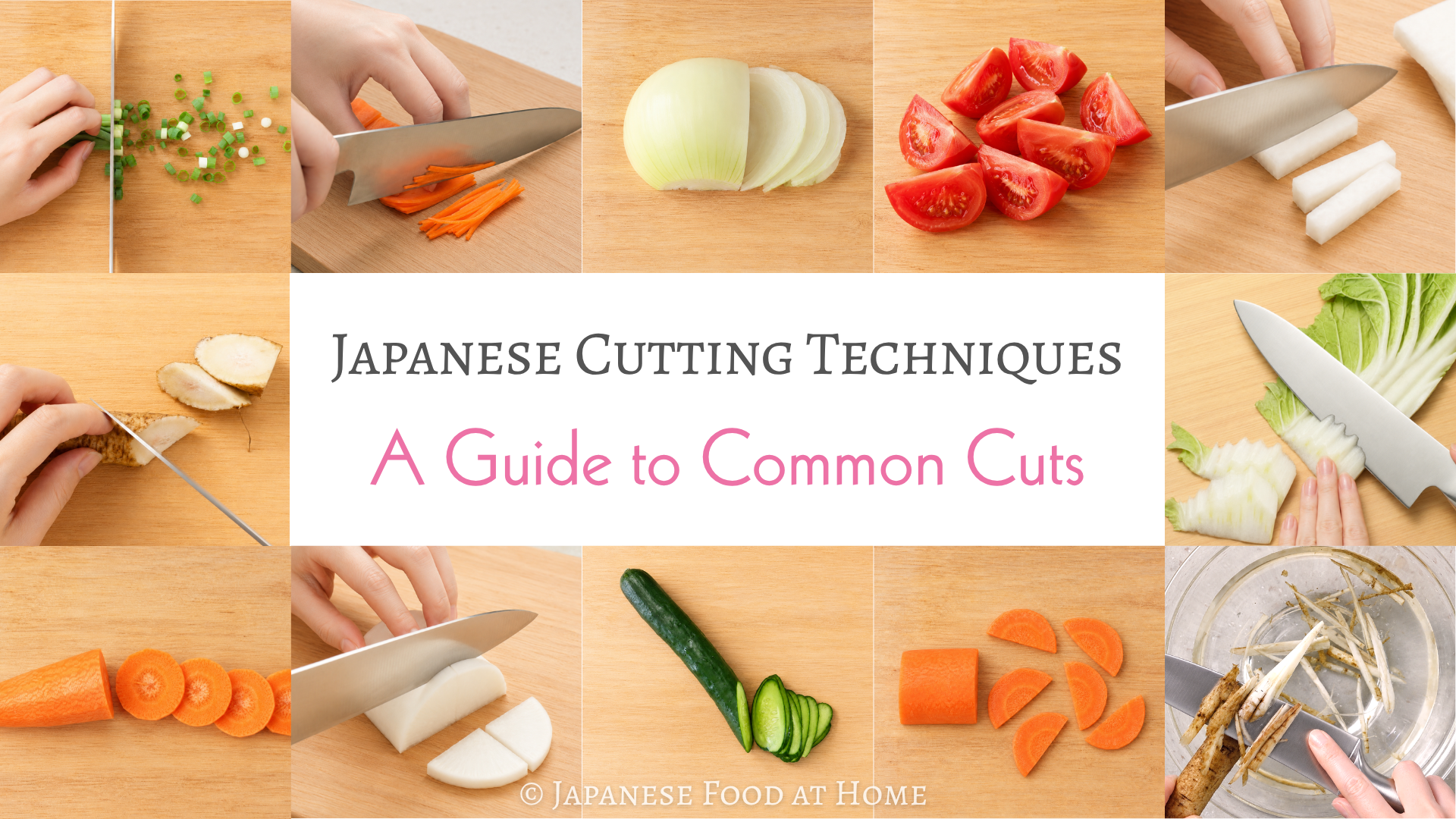
Every cuisine has its own ways of cutting ingredients, and some Japanese techniques may be unfamiliar outside Japan. Here is a quick guide to some of the most common cuts used in Japanese cooking.
Common Cutting Techniques in Japanese Cooking
Usugiri (Thin Slices) and Naname Usugiri (Diagonal Thin Slices)
How to Cut
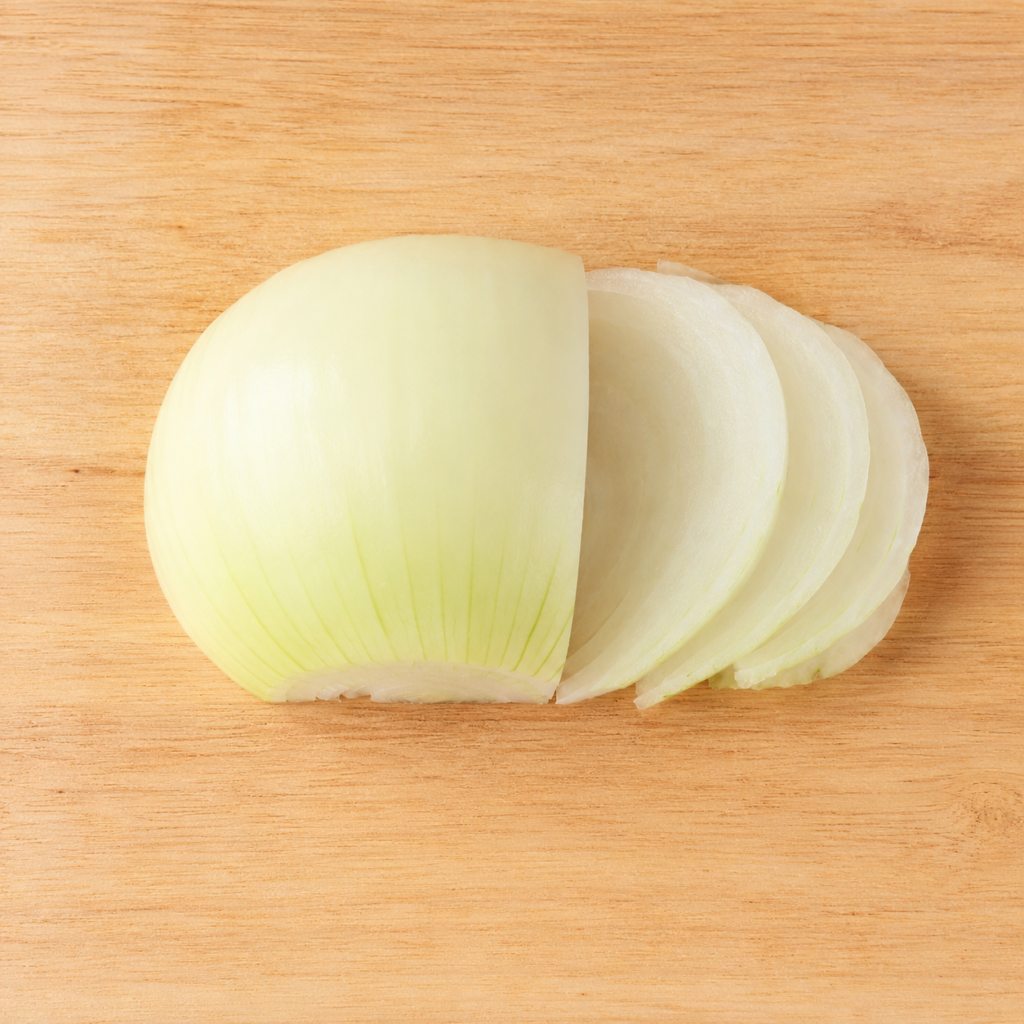
For usugiri, the ingredient is sliced thinly from one end, usually about 1–3 mm (1/16–1/8 inch) thick. It is one of the most basic cutting techniques and helps ingredients cook quickly and evenly.
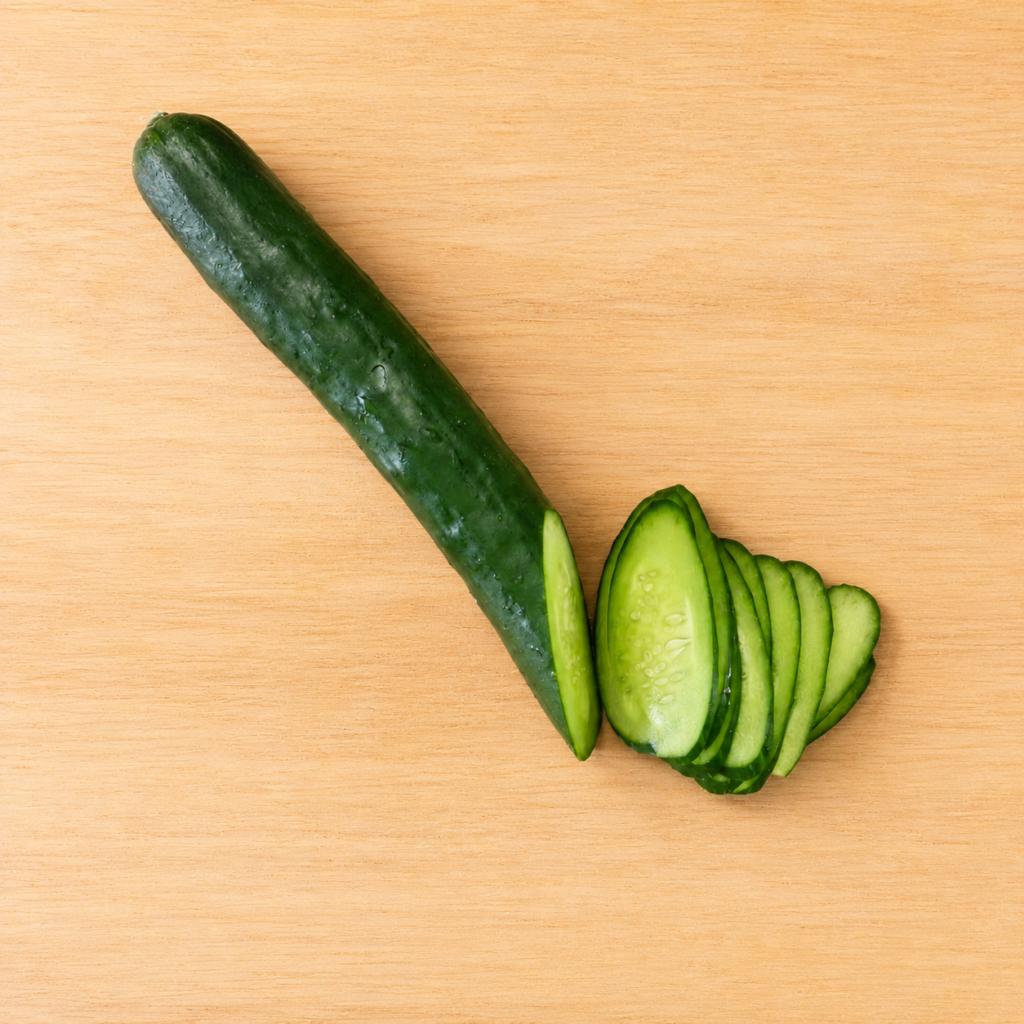
Naname usugiri is a variation used mainly for long, slender ingredients. Cutting at an angle allows you to slice across more of the ingredient with each stroke, making it an efficient way to prepare long, slender ingredients. It also creates a larger surface area, helping the ingredient cook faster and absorb flavors more easily.
Common Ingredients
Usugiri: almost any ingredient
Naname usugiri: mainly long, slender ingredients, such as Japanese leek, cucumber, celery, burdock root
Wagiri (Rounds) and Koguchigiri (Small Rounds)

How to Cut
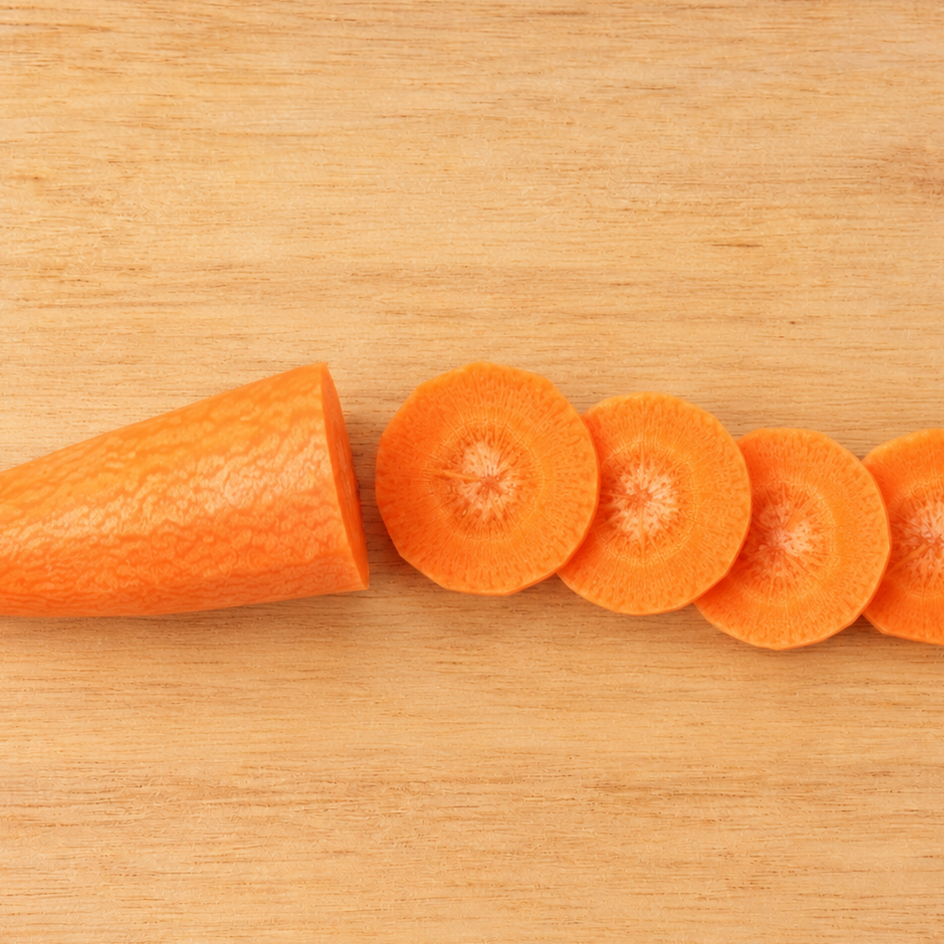
Wagiri is a method of slicing an ingredient crosswise into rounds. It is commonly used for cylindrical or spherical ingredients, as well as other ingredients with a round cross-section.
When a long, slender ingredient is sliced crosswise from one end into small rounds, the cut is called koguchigiri.
Common Ingredients
Wagiri: carrot, daikon, cucumber, eggplant, lotus root, green pepper, onion, tomato, apple, citrus fruits, pineapple, sausage
Koguchigiri: Japanese leek, green onion, okra, myoga
Hangetsugiri (Half-Moon Slices)
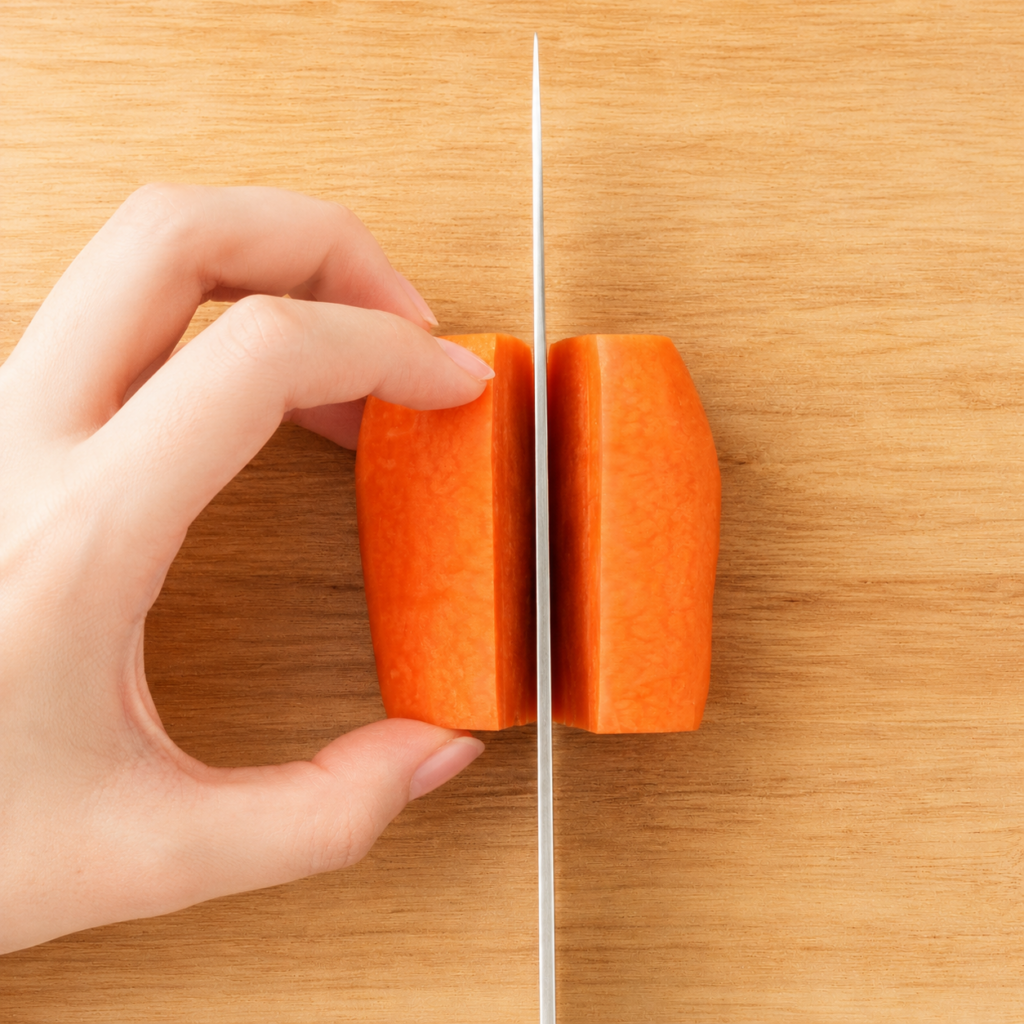
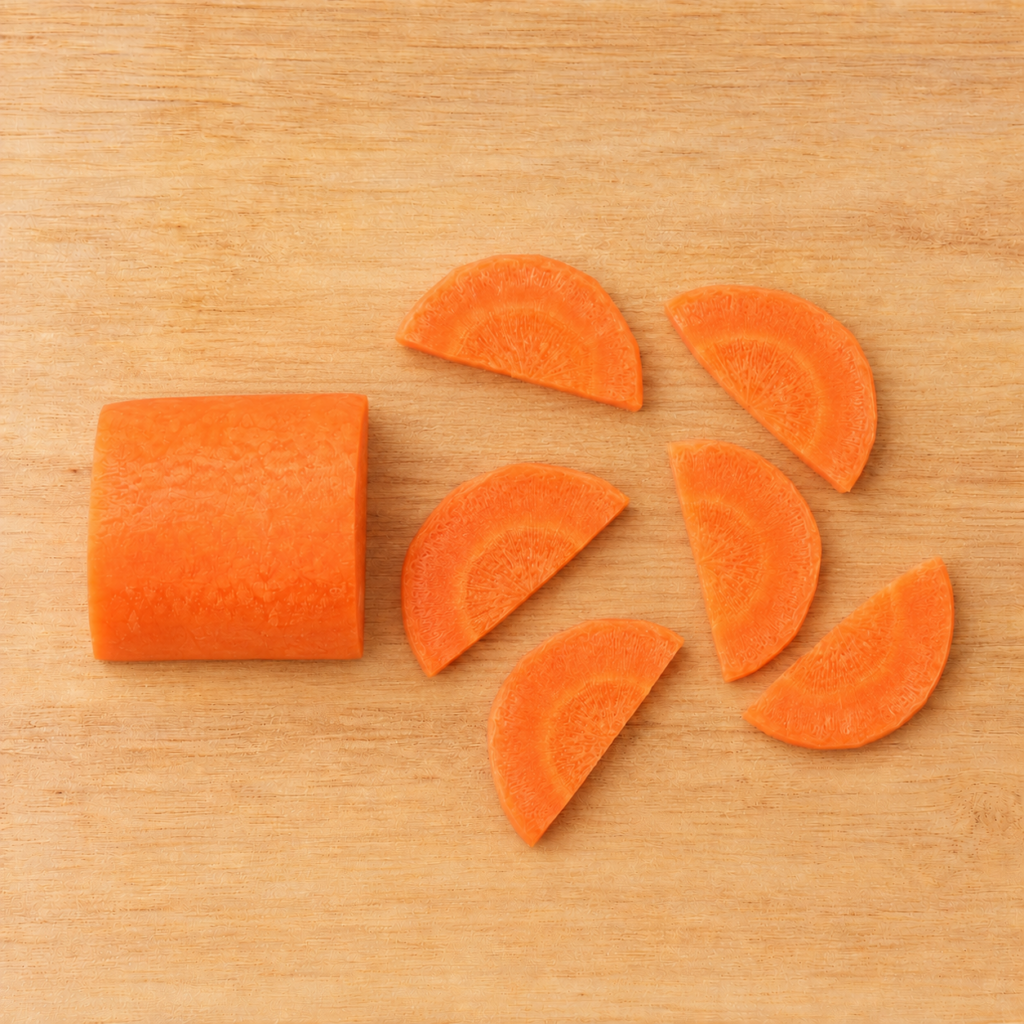
How to Cut
Cut a cylindrical or spherical ingredient, or another ingredient with a round cross-section, in half lengthwise. Then place the cut side down and slice crosswise to create half-moon shapes.
Common Ingredients
Carrot, turnip, eggplant, lotus root
Ichogiri (Quarter-Round Slices)
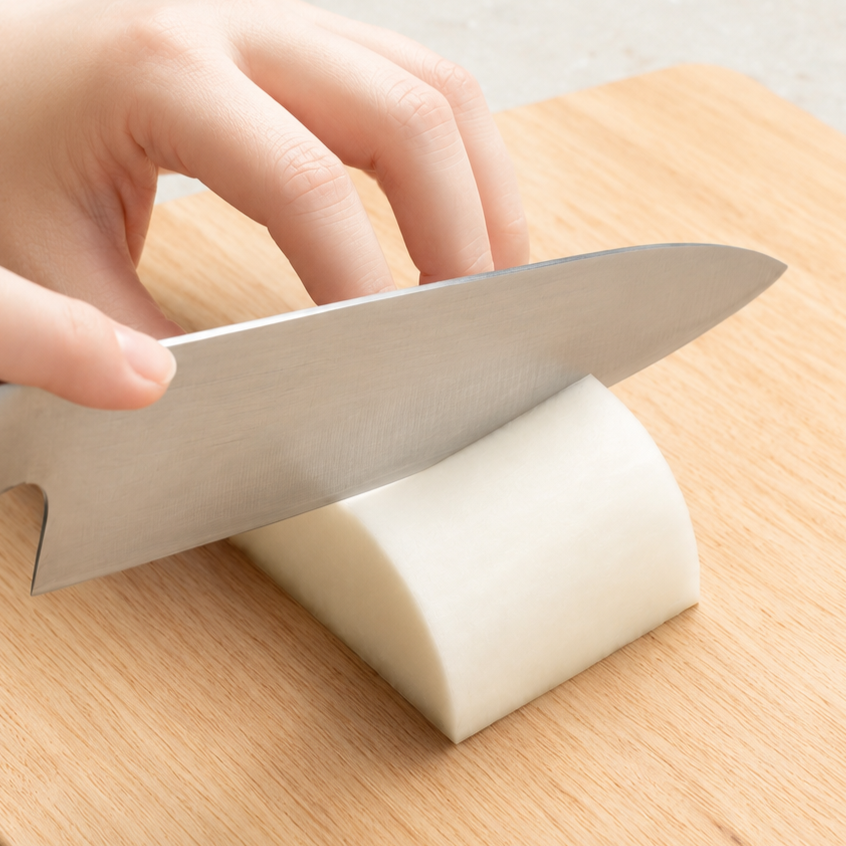
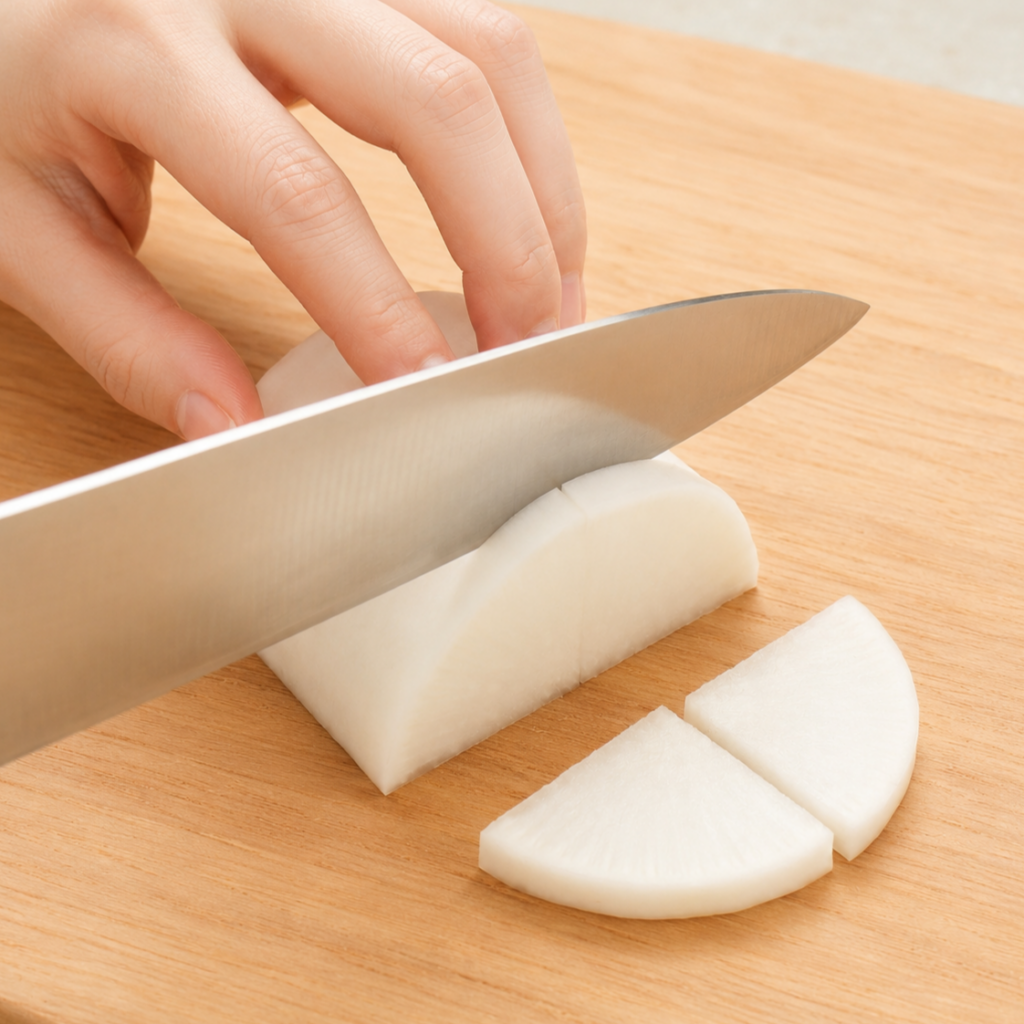
How to Cut
Cut a cylindrical or spherical ingredient, or another ingredient with a round cross-section, into quarters lengthwise. Then slice crosswise to create quarter-round shapes. The name ichogiri comes from the resemblance of the slices to icho (ginkgo) leaves.
Common Ingredients
Carrot, daikon, turnip, eggplant, lotus root
Rangiri (Rolling Cut)
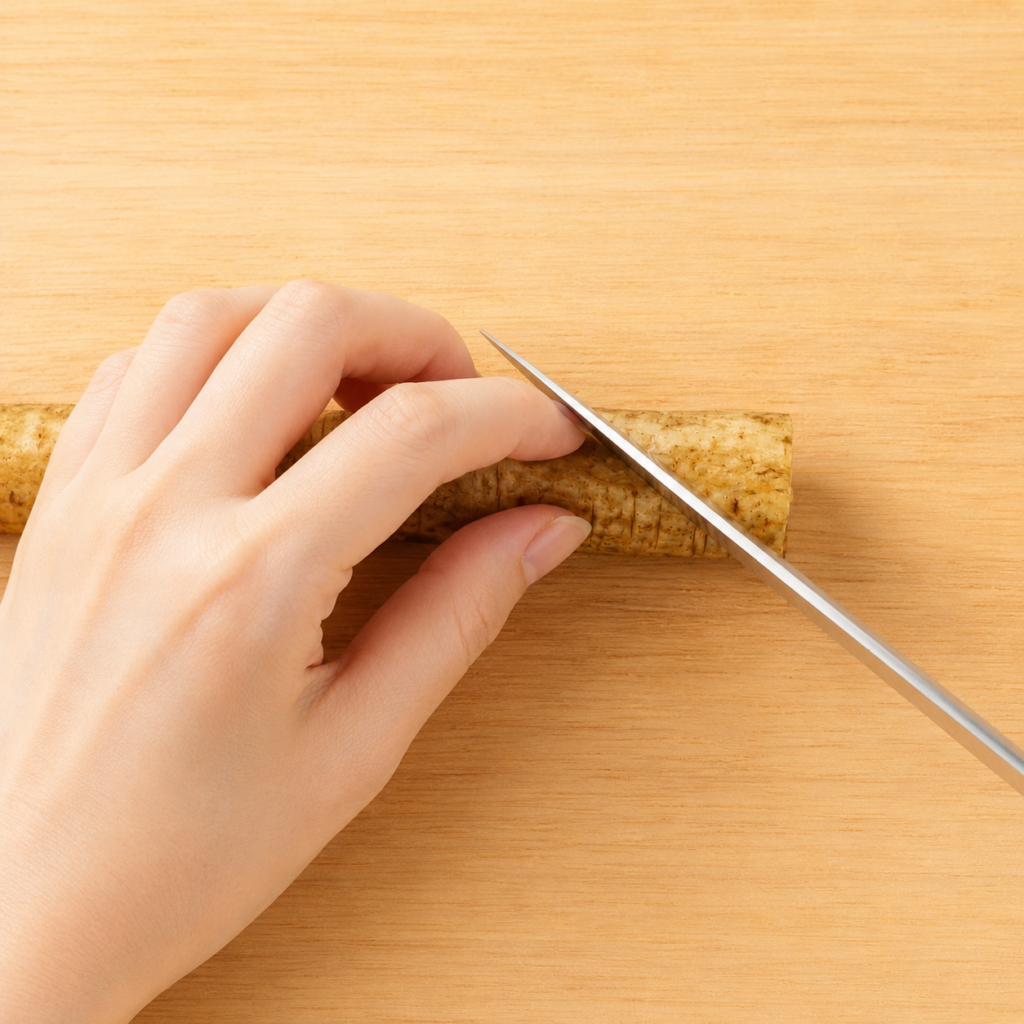
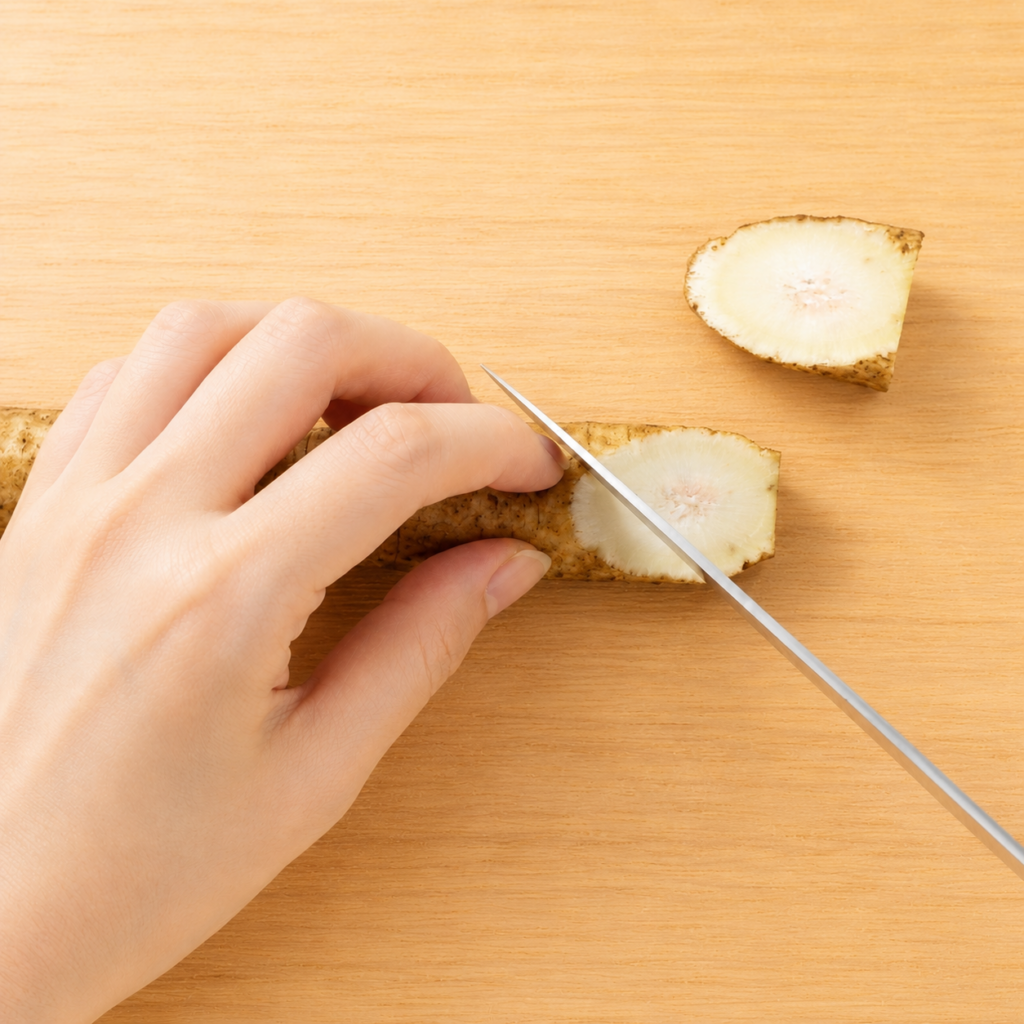
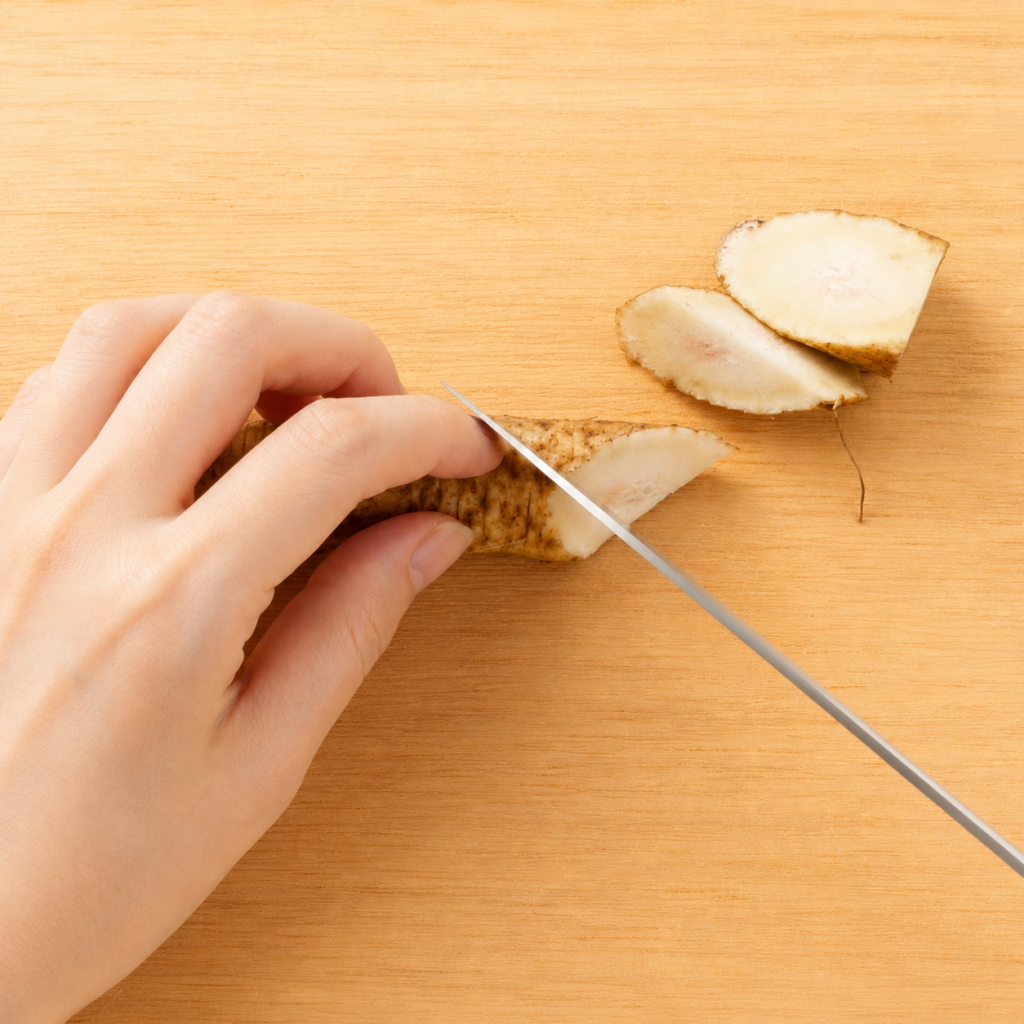
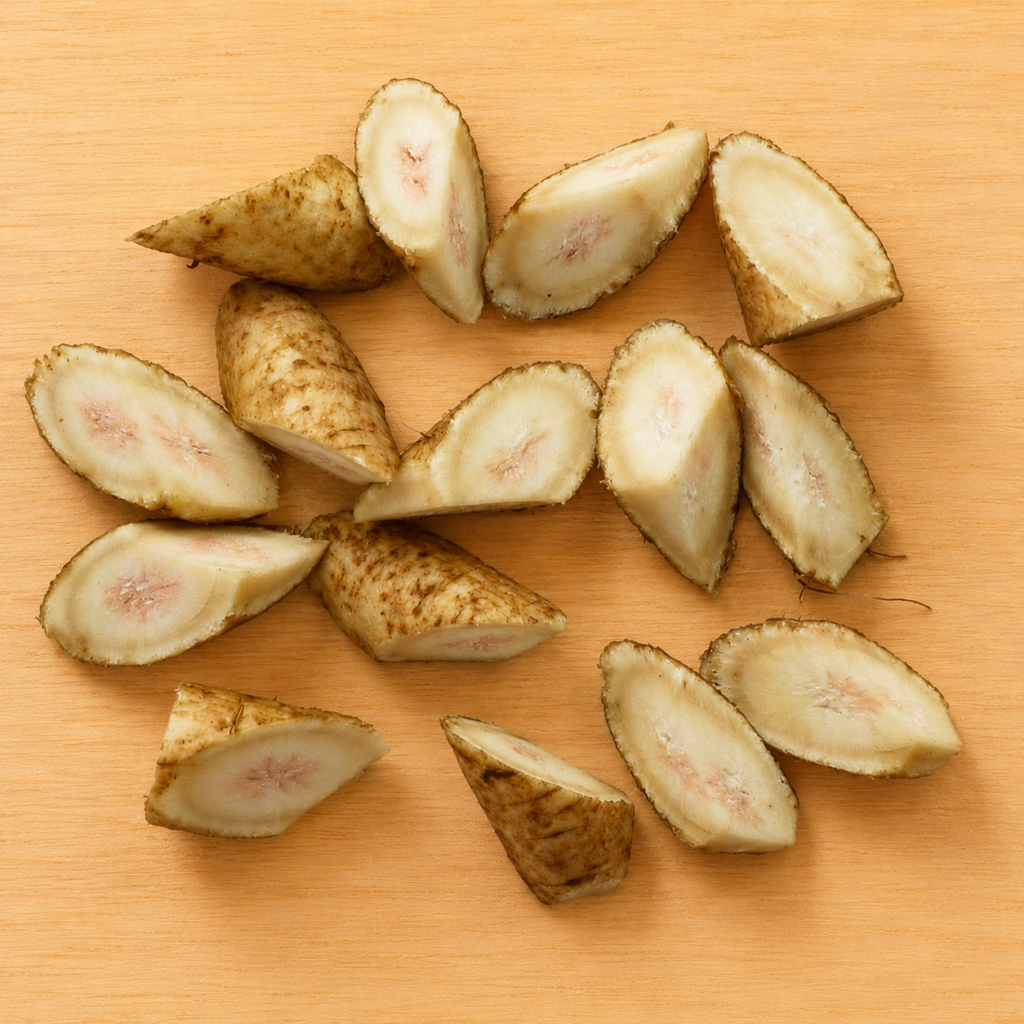
How to Cut
Rangiri is mainly used for cylindrical vegetables. Cut the ingredient diagonally into a bite-sized piece, then roll the remaining piece about 90 degrees so the cut side faces up. Cut diagonally again, and repeat. Watch the video.
Common Ingredients
Carrot, eggplant, burdock root, lotus root, green pepper
Kushigiri / Kushigatagiri (Wedges)
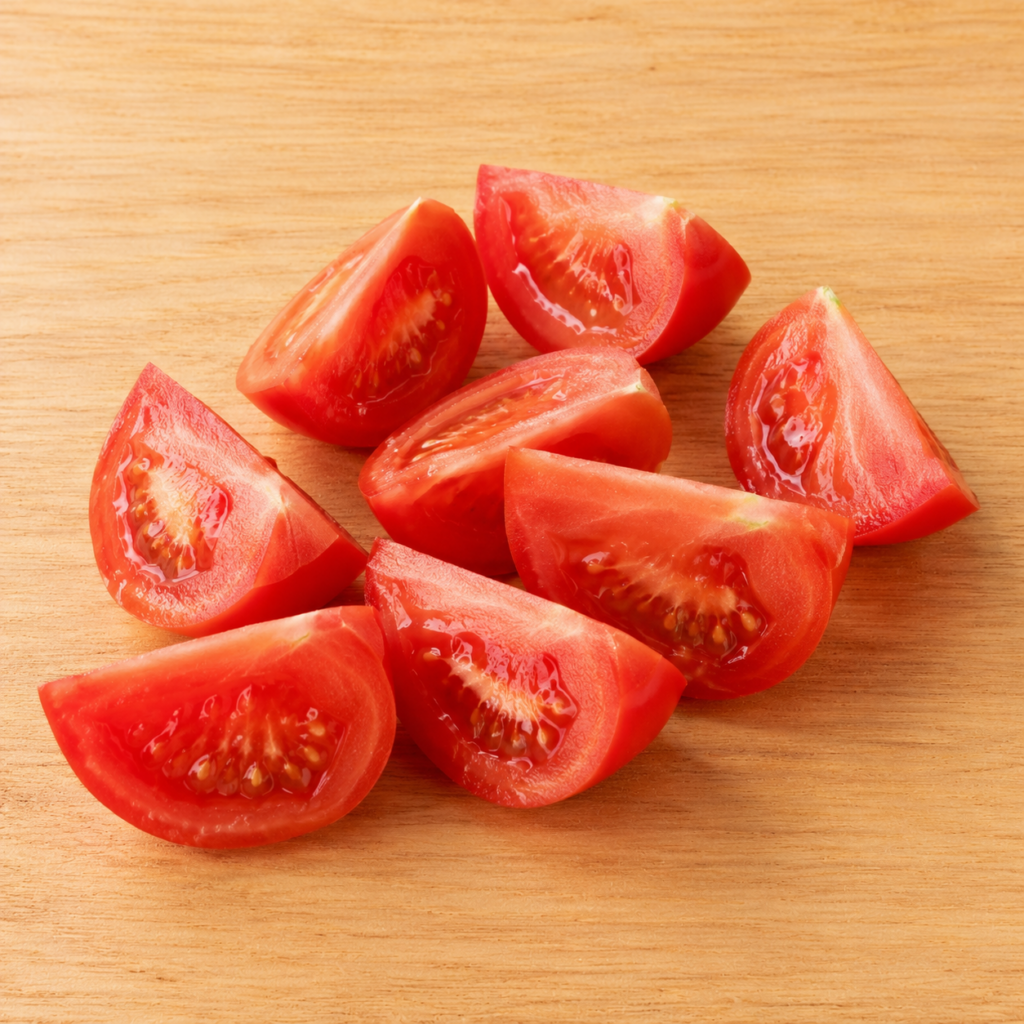
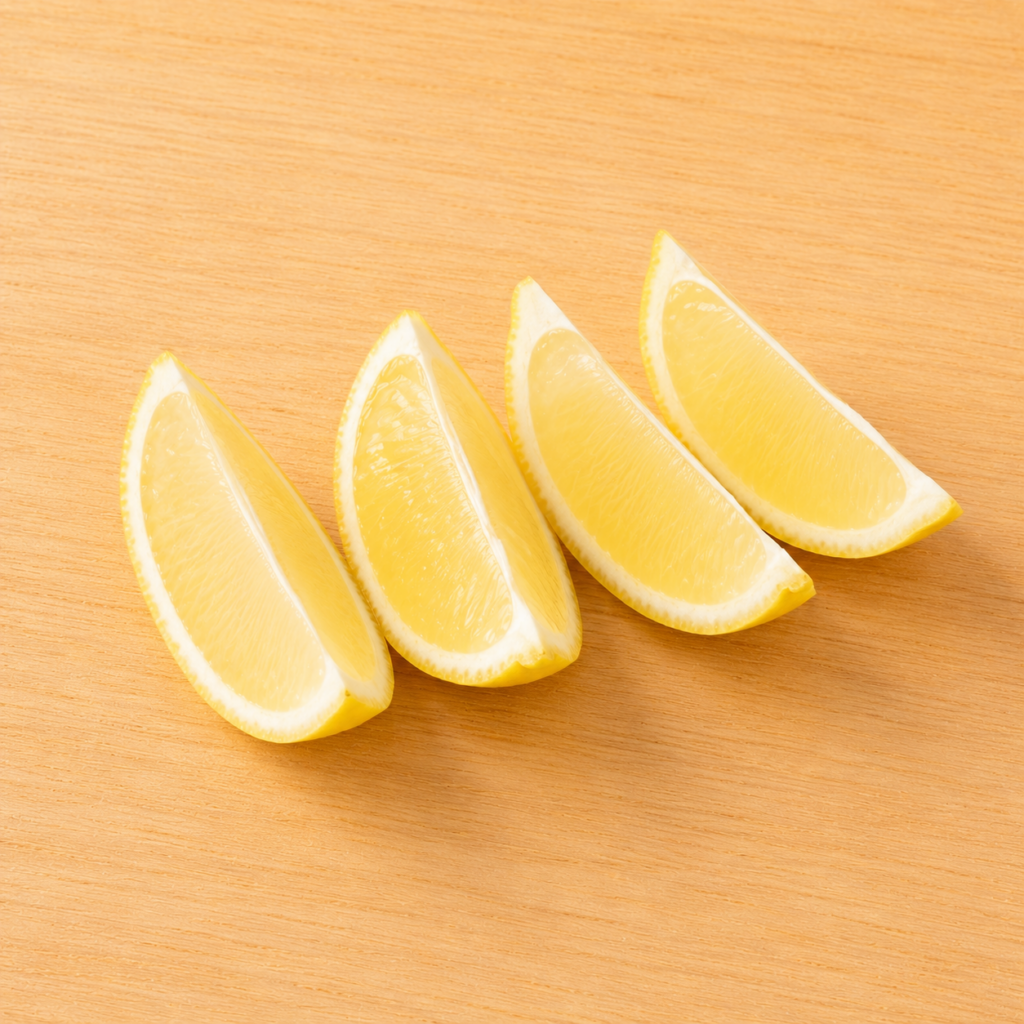
How to Cut
Cut a spherical ingredient, or a conical ingredient such as a bamboo shoot, lengthwise into equal sections, making each cut through the center to create wedge shapes.
Common Ingredients
Onion, tomato, potato, turnip, bamboo shoot, fruits
Hyoshigigiri (Batons)
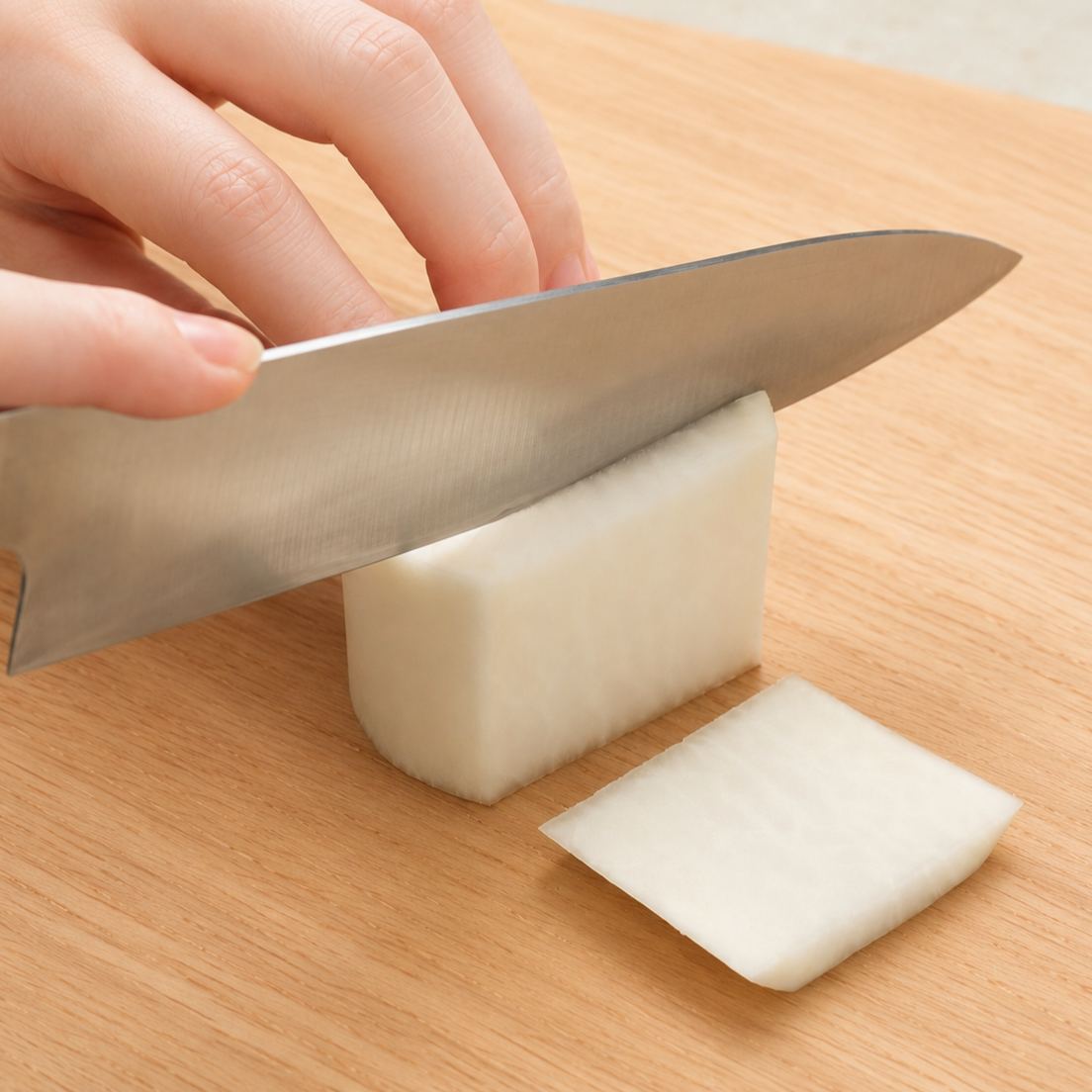
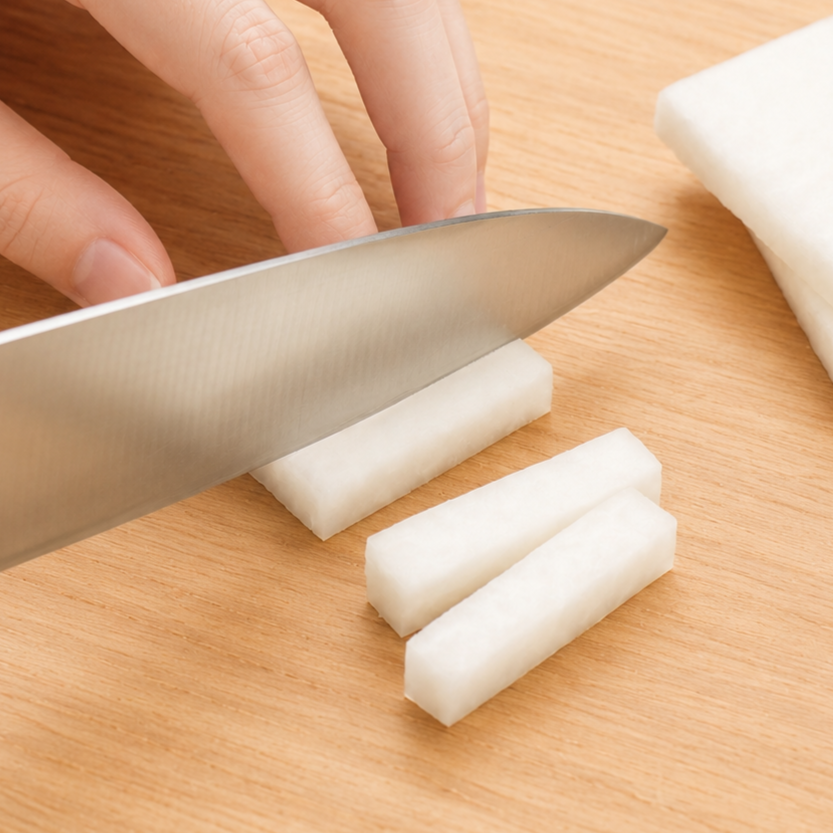
How to Cut
Cut the ingredient into planks, then slice each plank into batons with a width roughly equal to its thickness.
Common Ingredients
Daikon, potato
Tanzakugiri (Rectangular Slices)
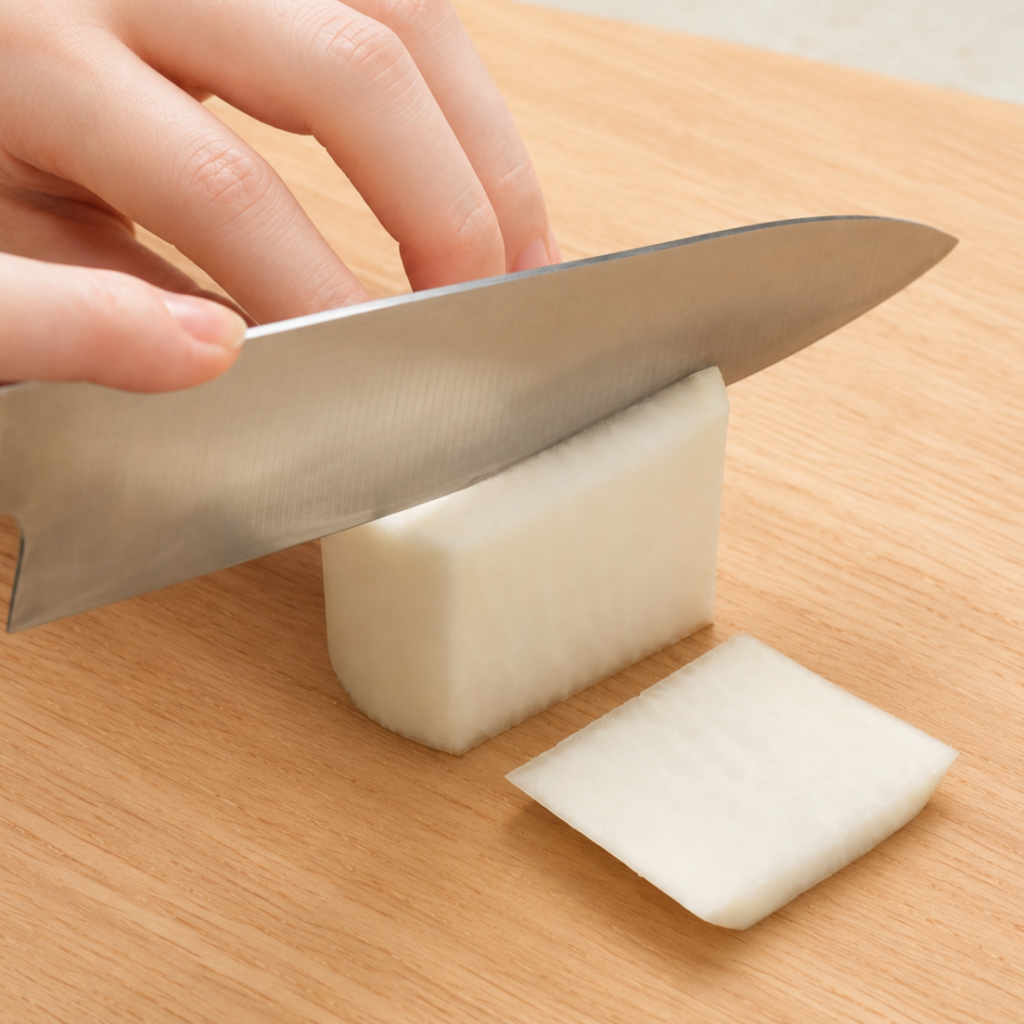
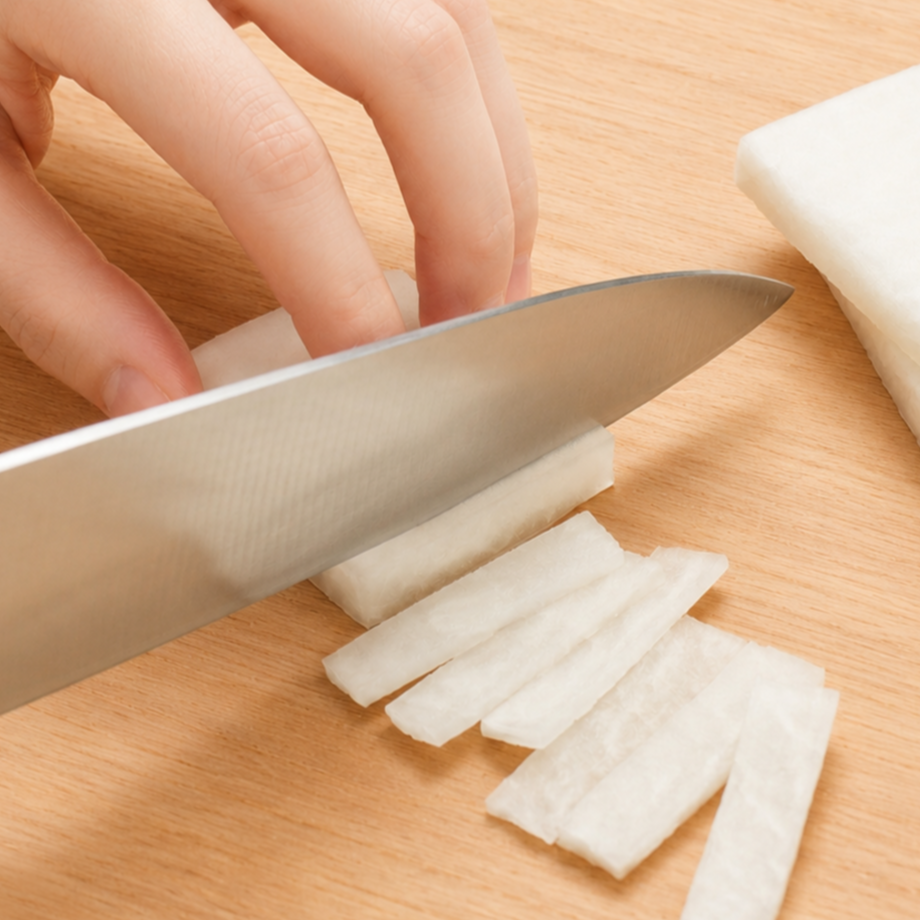
How to Cut
Cut the ingredient into planks, then slice the planks into thin rectangular pieces.
Common Ingredients
Carrot, daikon
Hosogiri (Thin Strips)
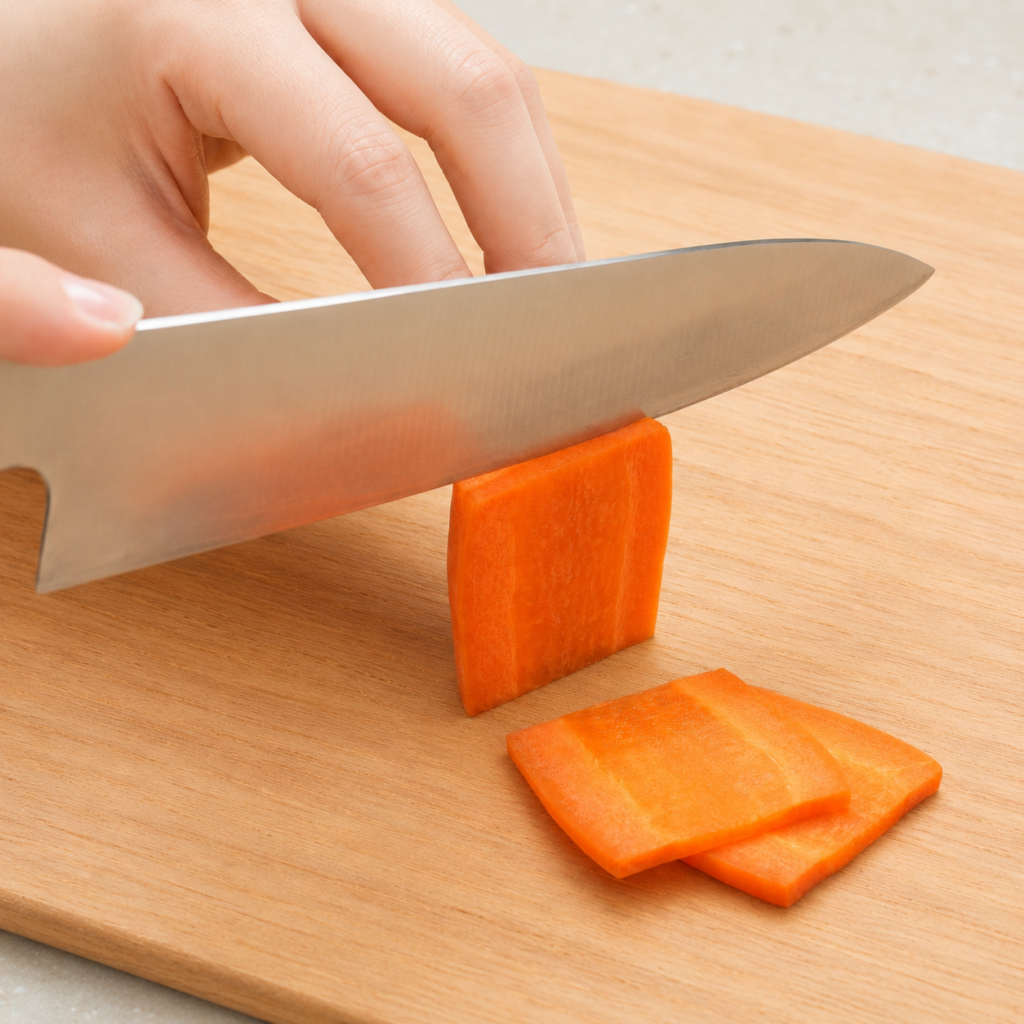
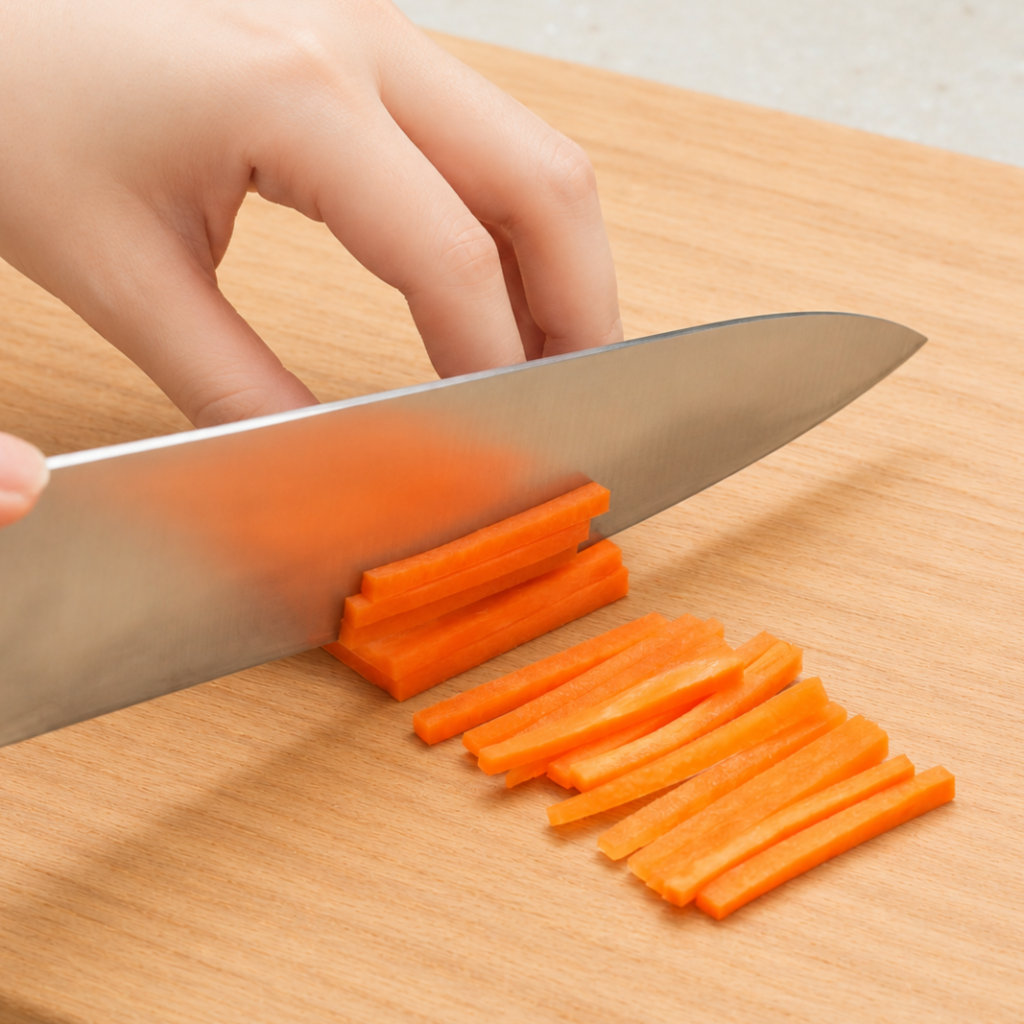
How to Cut
Cut the ingredient into planks about 2–3 mm (1/16–1/8 inch) thick, then stack a few planks and cut them into thin strips roughly the same width as their thickness.
Common Ingredients
Carrot, daikon, cucumber, potato, bamboo shoot, burdock root, nagaimo (Chinese yam)
Sengiri (Julienne)
How to Cut
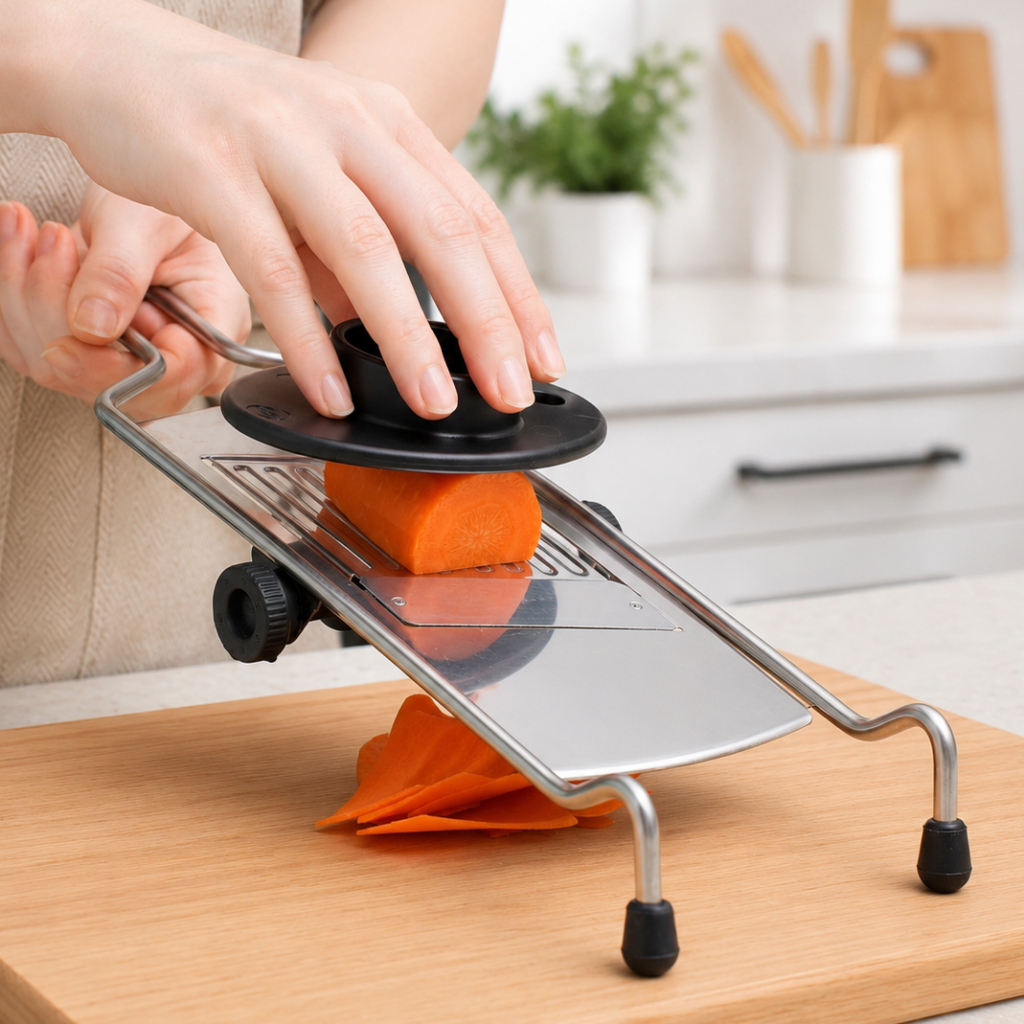
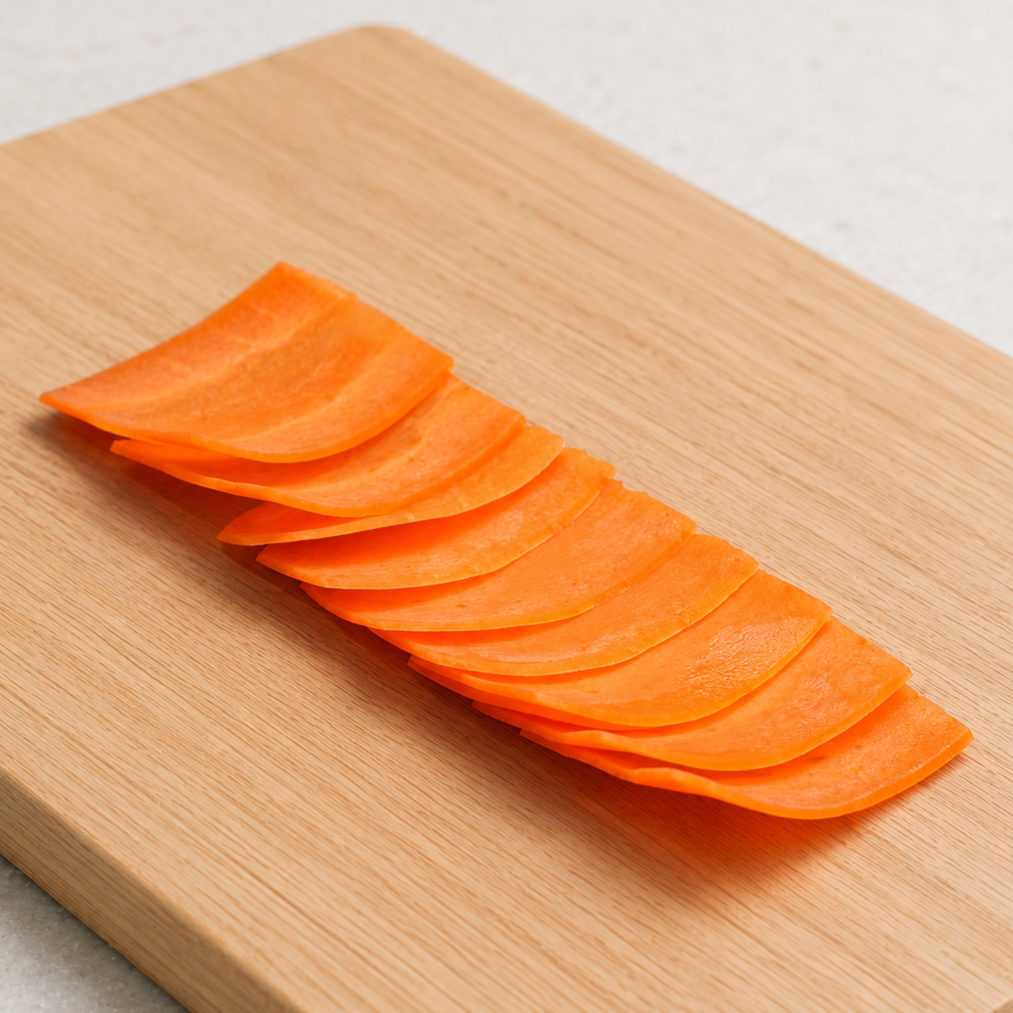
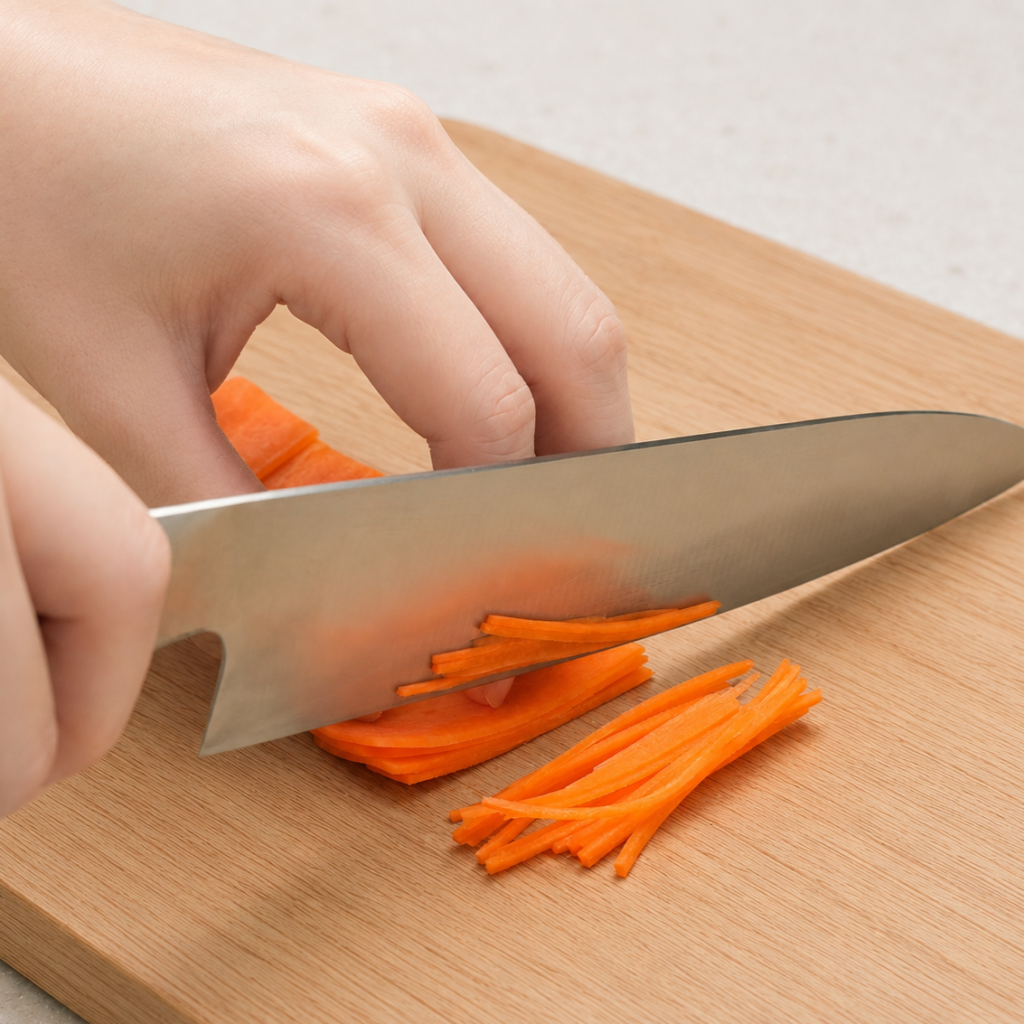
Cut the ingredient into very thin planks. You may want to use a mandoline for this step if you have one. For naturally thin ingredients such as cabbage or shiso leaves, skip this step. Then slice the prepared ingredient into very thin strips.
For shiraga negi, use the white part of a Japanese leek. Make a lengthwise cut through one side, stopping at the center, then open it up and remove the pale green inner core. Lay the remaining white layers flat and slice them lengthwise into very thin strips. Watch the video.
Common Ingredients
Carrot, daikon, cucumber, cabbage, green shiso, Japanese leek
Mijingiri (Mince)
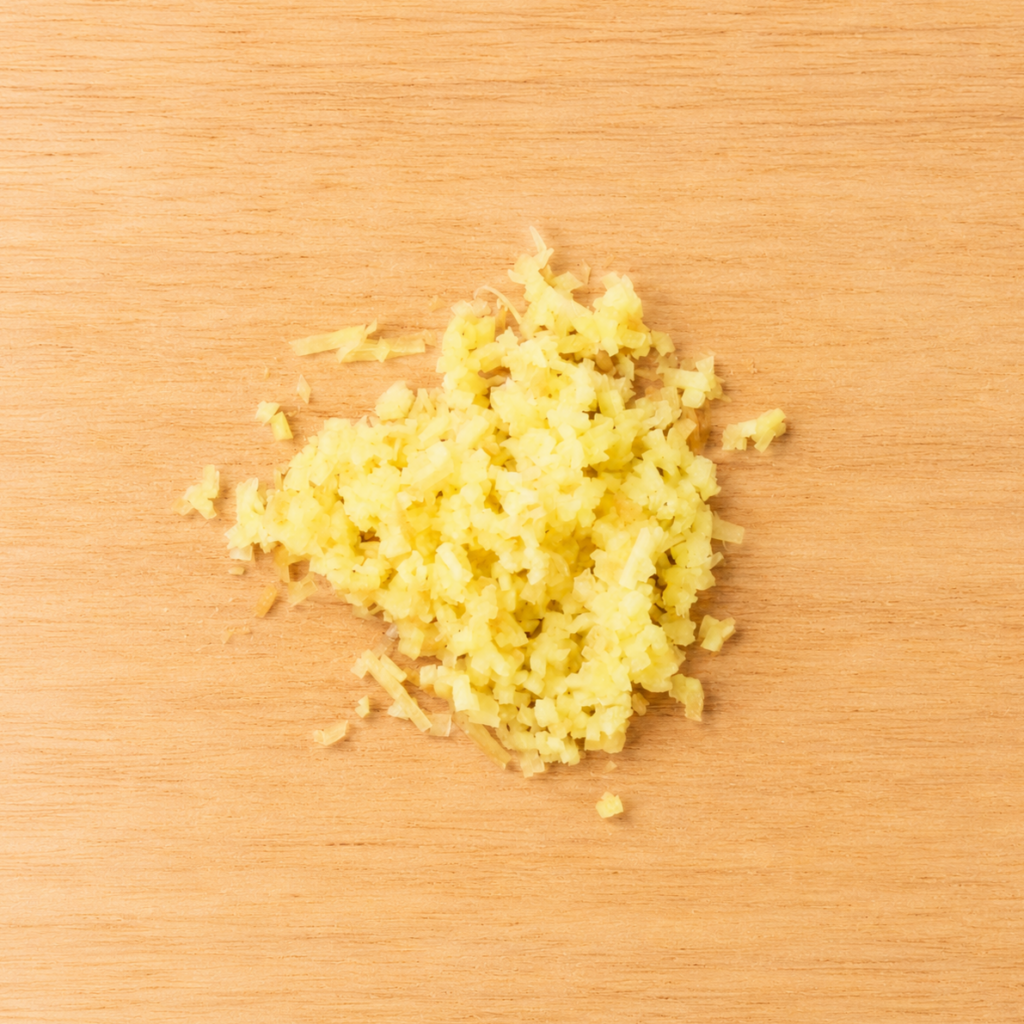
How to Cut
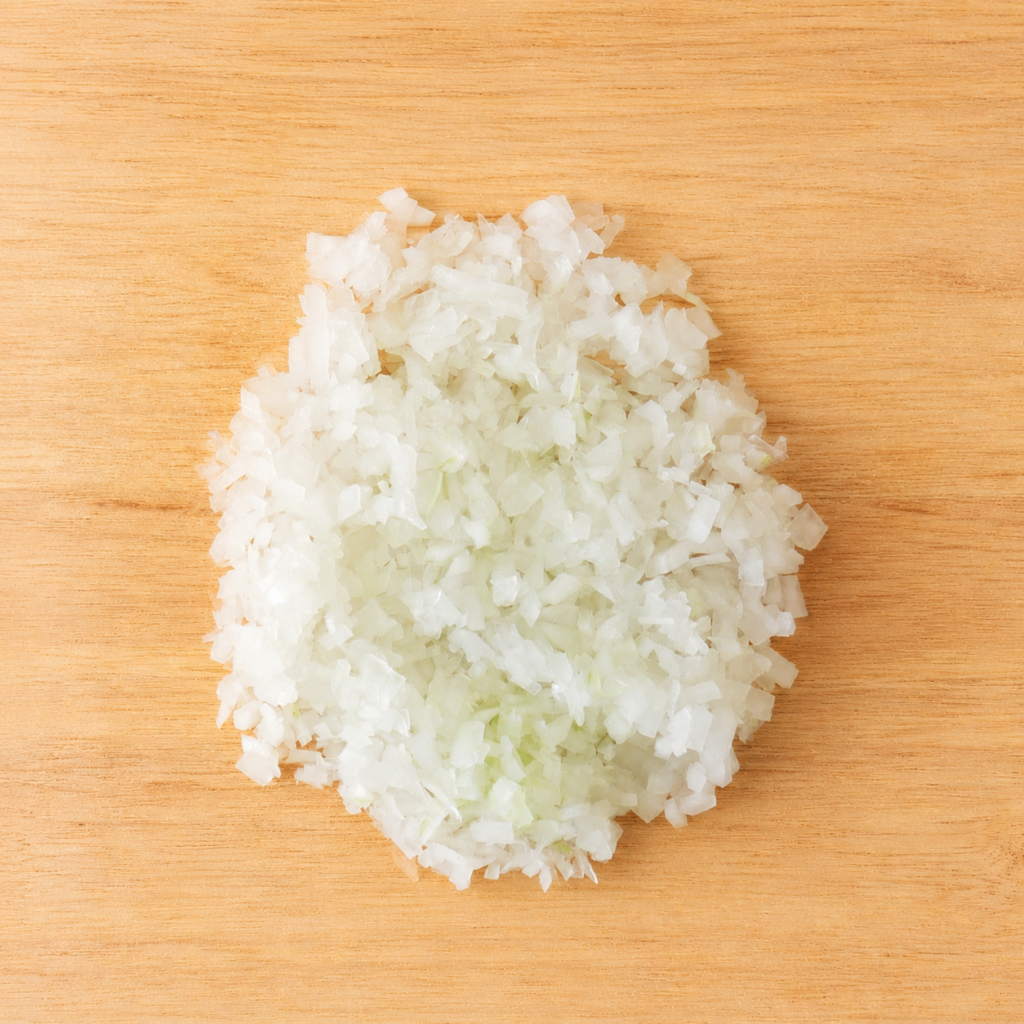
Mijingiri is a method of finely chopping an ingredient into very small pieces. It is especially useful when you want the aroma and flavor of aromatic vegetables or herbs to blend evenly throughout a dish.
Common Ingredients
Aromatic vegetables such as onion, garlic, ginger, myoga; fresh herbs
Sasagaki (Thin Shavings)
How to Cut
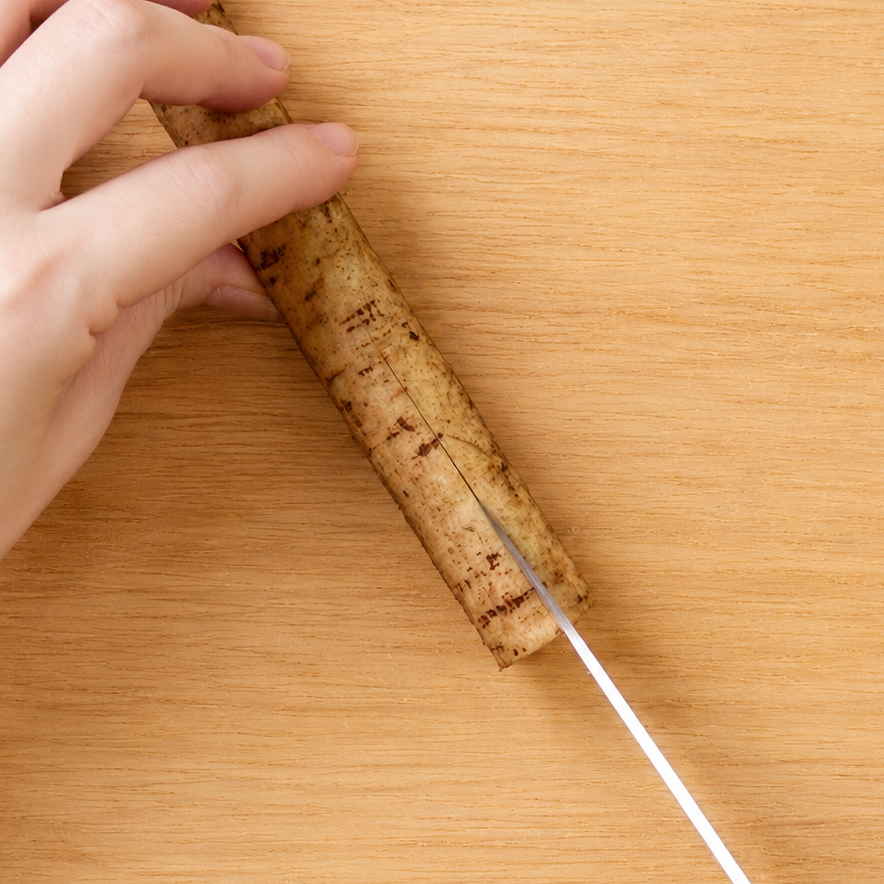
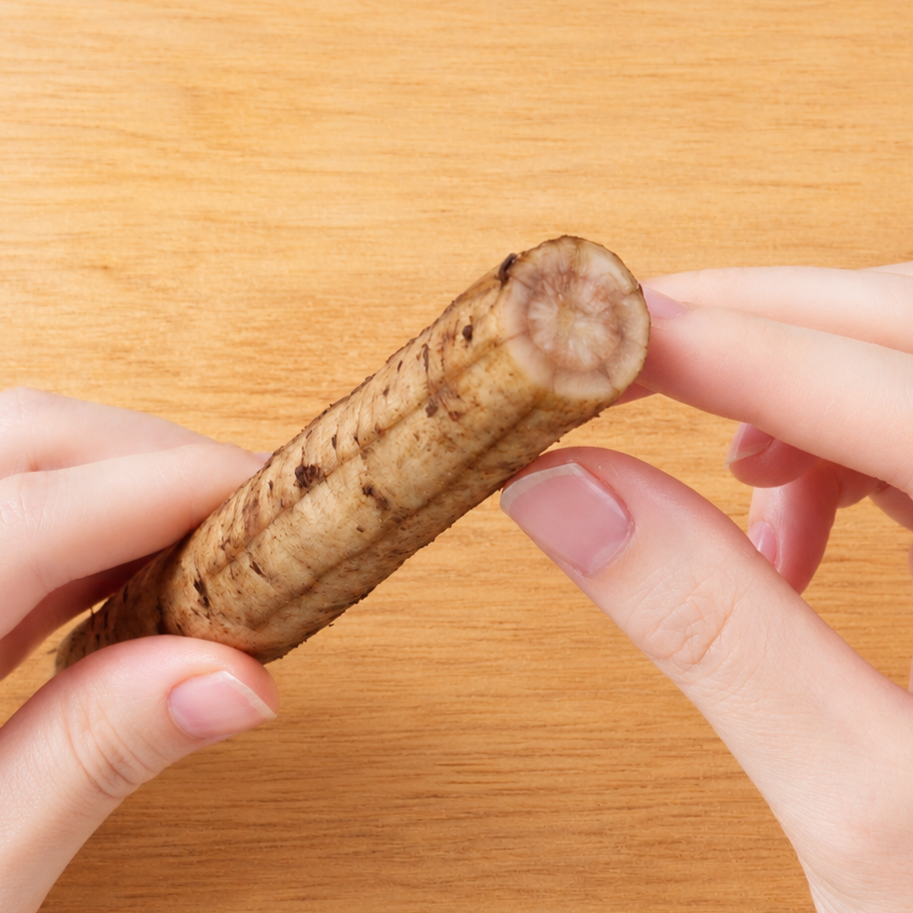
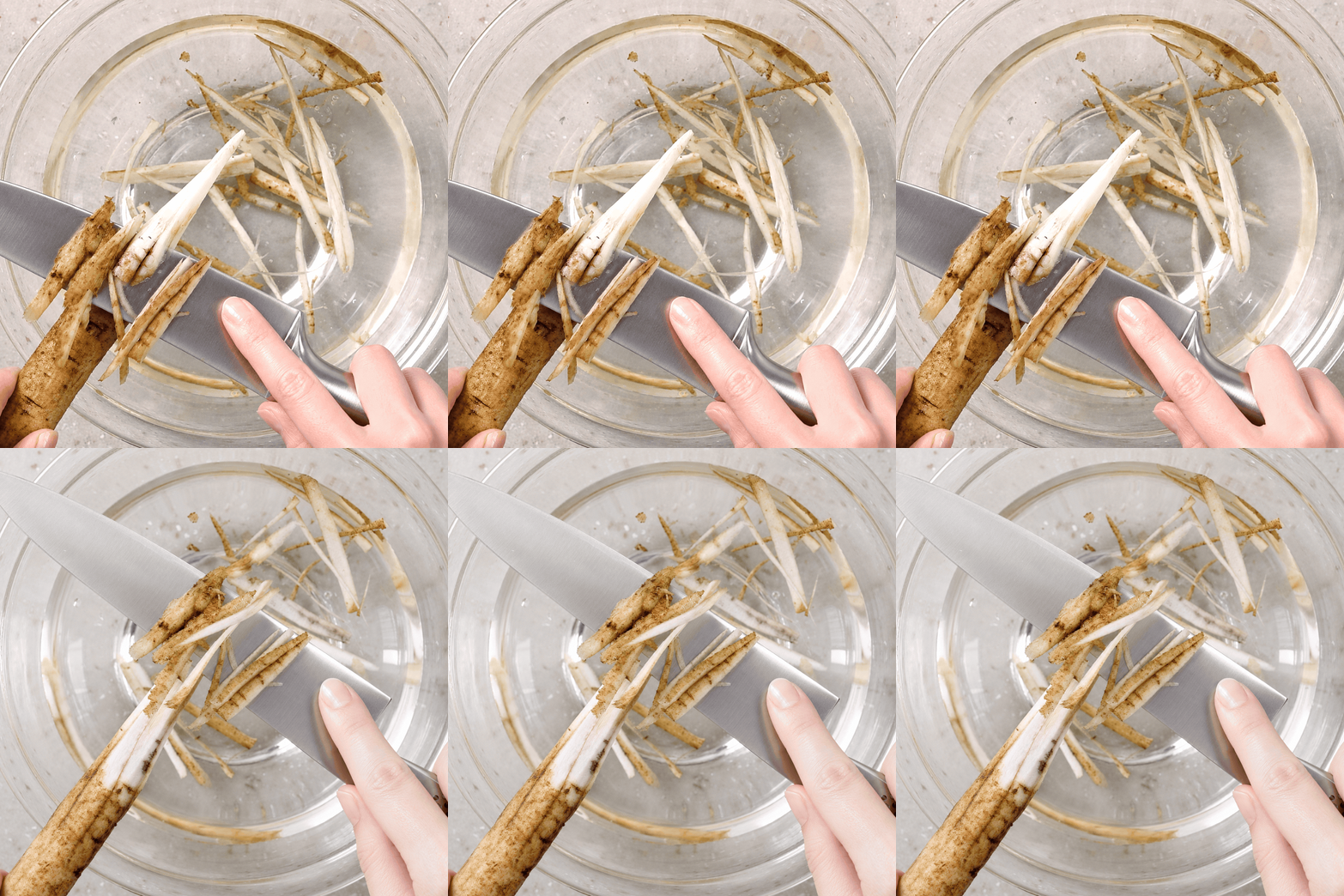
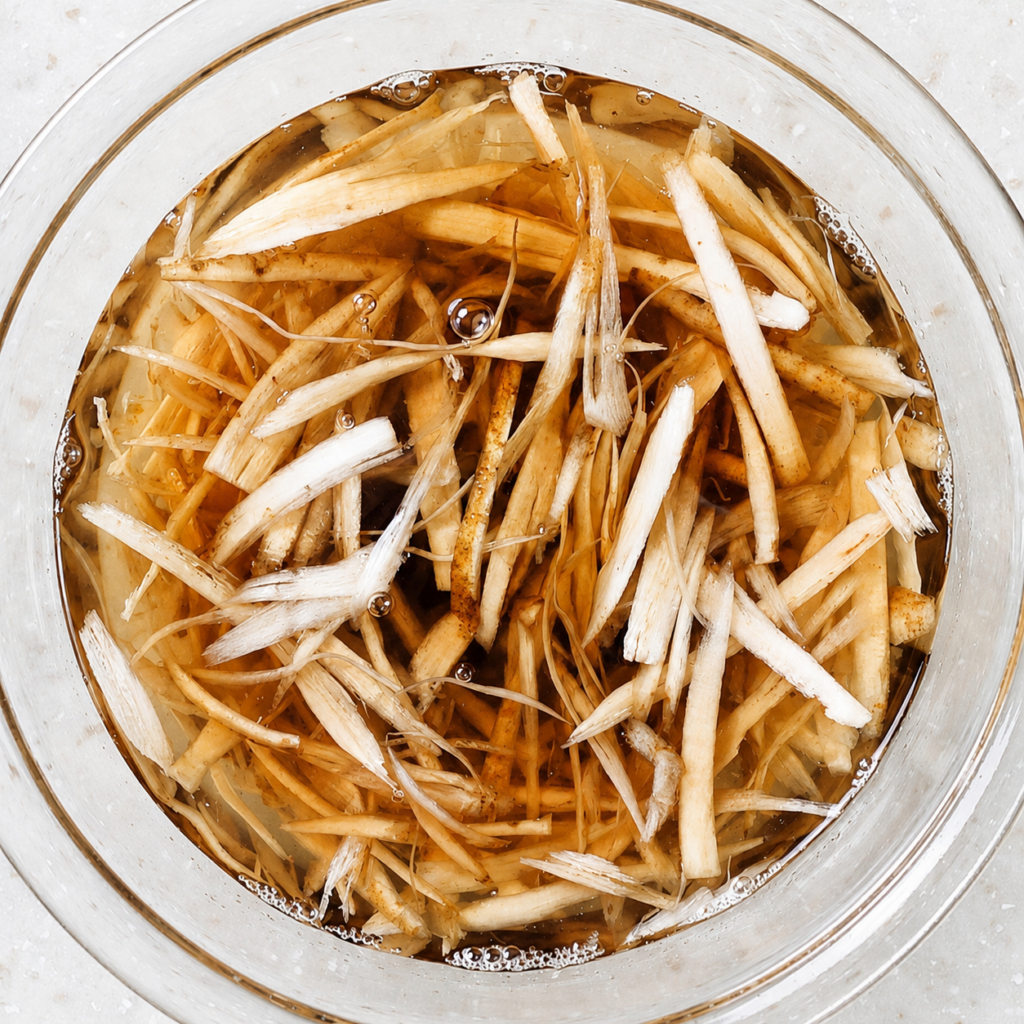
Sasagaki is a shaving technique used almost exclusively for burdock root. Scrub the surface thoroughly with a vegetable brush and rinse well. Then make shallow lengthwise cuts all around the burdock, spacing them roughly 5–8 mm (about 1/4 inch) apart. Hold the burdock over a bowl of water, place the knife diagonally against its surface, and shave off thin pieces while rotating the burdock slightly after each stroke, as if sharpening a pencil. Burdock discolors quickly, so keep the shaved pieces in water. You can also use a peeler to make thinner shavings.
Common Ingredients
Burdock root
Sogigiri (Angled Slices)
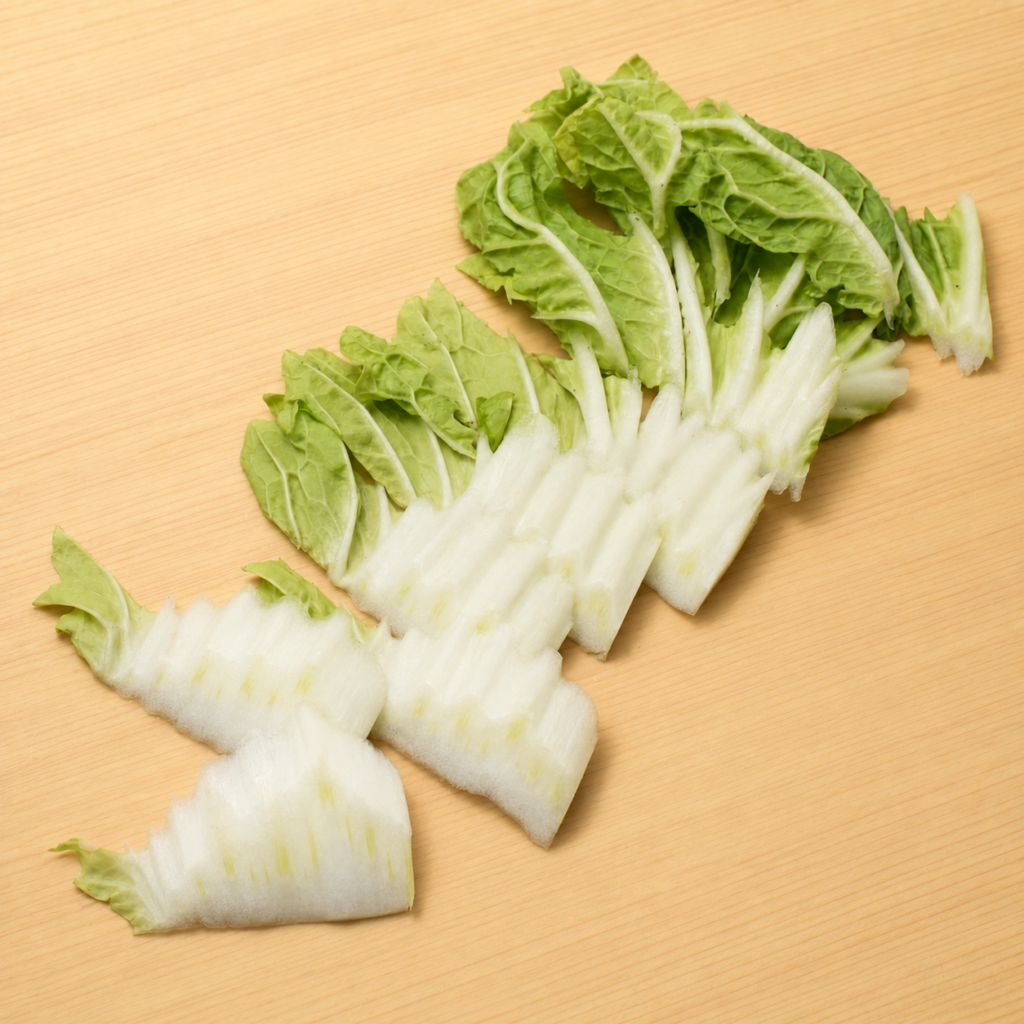
How to Cut
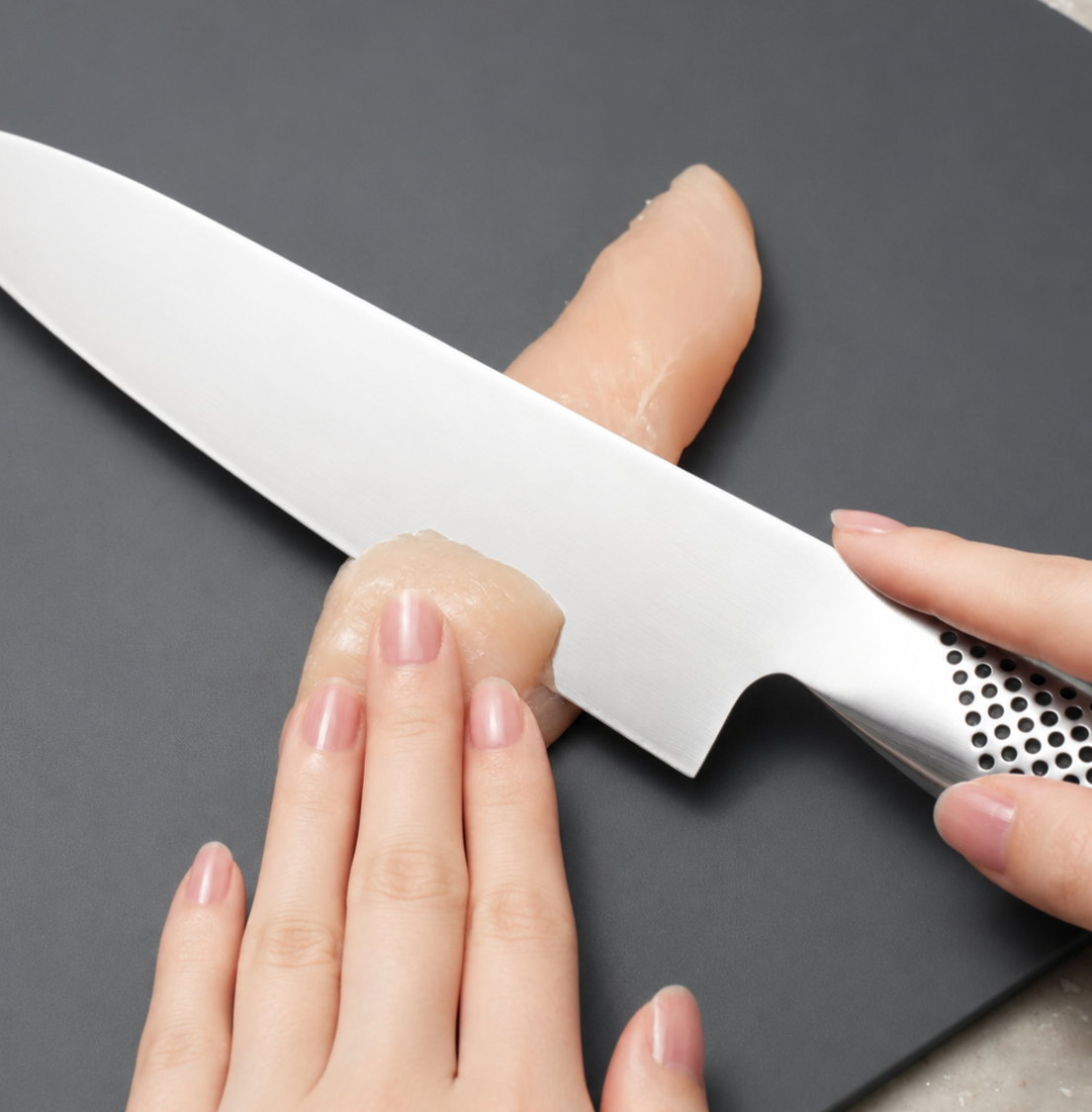
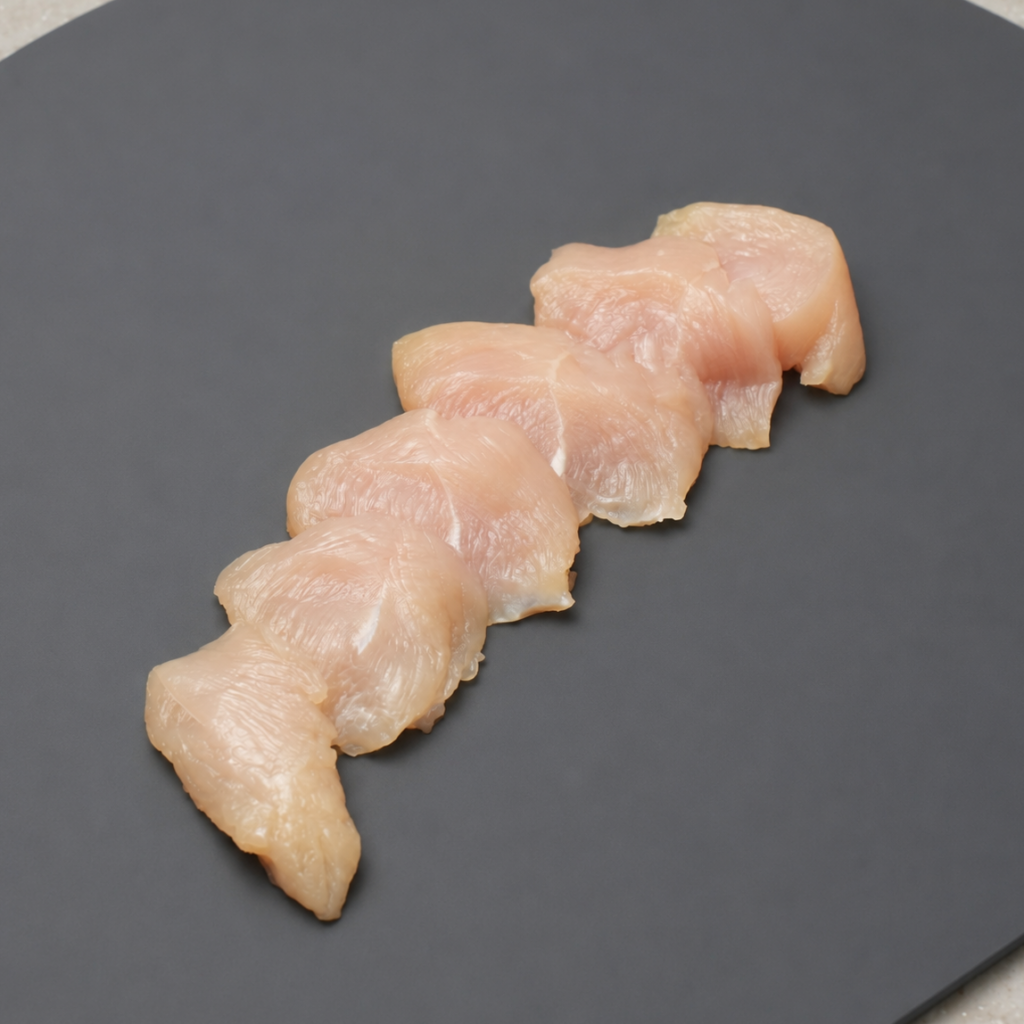
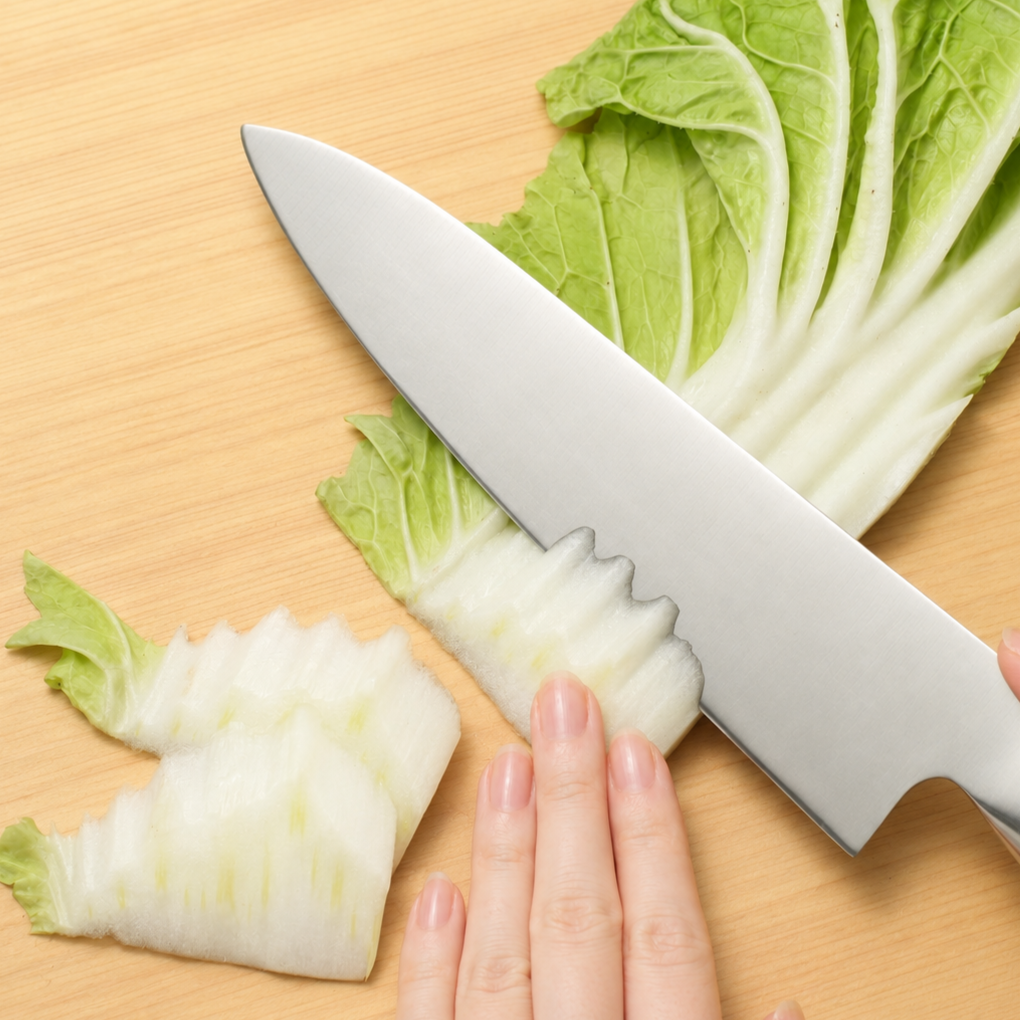
Hold the knife at a shallow angle and draw it toward you as you slice the ingredient into broad, thin pieces. This makes each piece look larger while helping it cook quickly and absorb flavors easily.
Common Ingredients
Meat, fish, napa cabbage
Tips for Cutting Ingredients
- Keep the cutting board stable. Place a silicone mat or a damp kitchen towel underneath the cutting board to prevent it from slipping while you work.
- Cut ingredients into even pieces. When cutting an ingredient, try to keep each piece as uniform in size as possible. This not only makes the finished dish look better but also helps the pieces cook evenly and absorb flavors at a similar rate.
- Allow for shrinkage during cooking. Ingredients with a high water content tend to shrink as they lose moisture during cooking, so keep this in mind when deciding how large to cut them.
-scaled.jpg)
The way you cut an ingredient can change its texture, cooking time, and how well it absorbs flavors. Keep trying different techniques, and choosing the right cut will soon start to feel natural!
Comments