
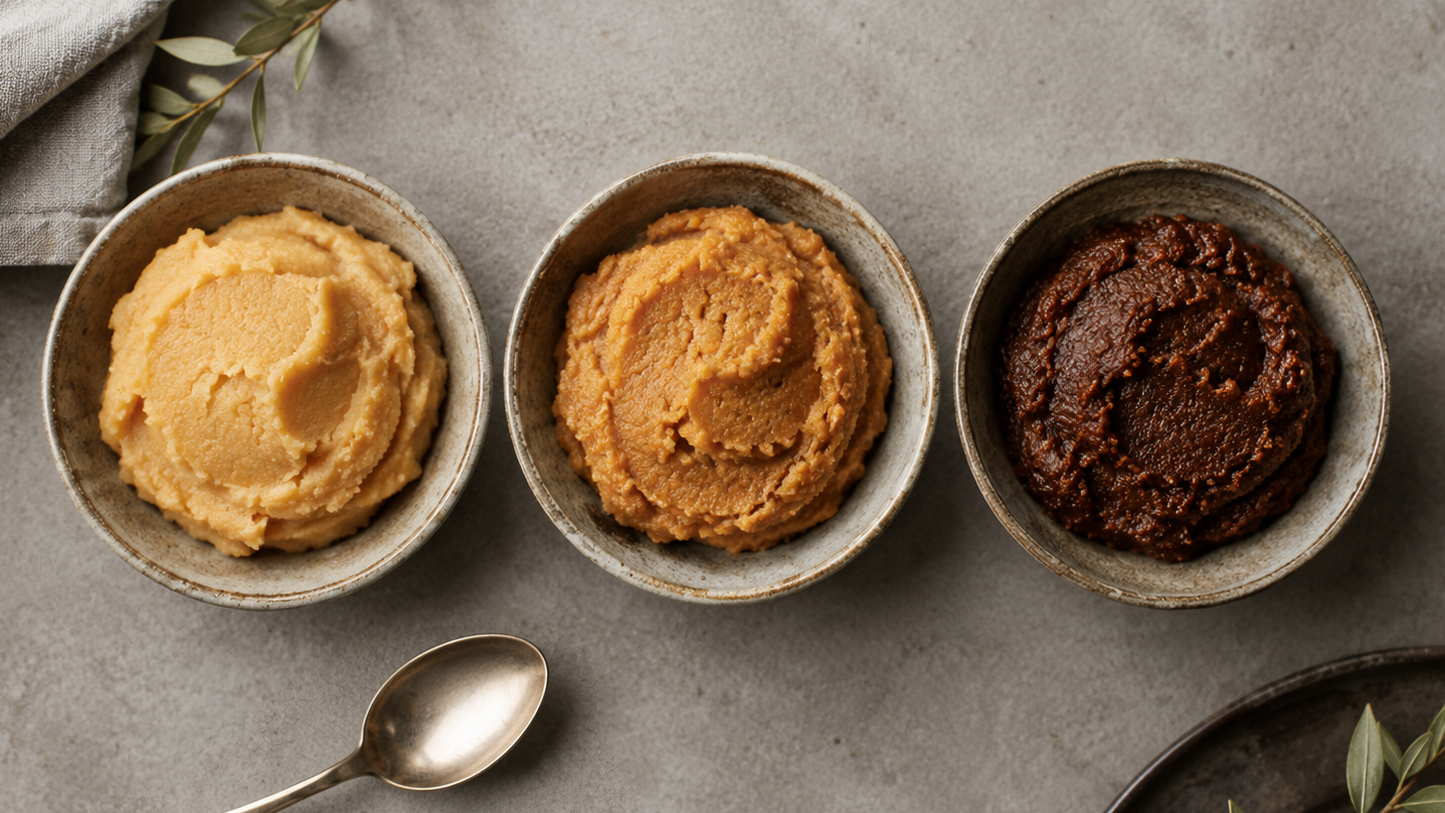
In the previous article, we looked at miso soup as part of Japanese food culture and everyday home cooking.
This time, let’s take a closer look at miso itself.
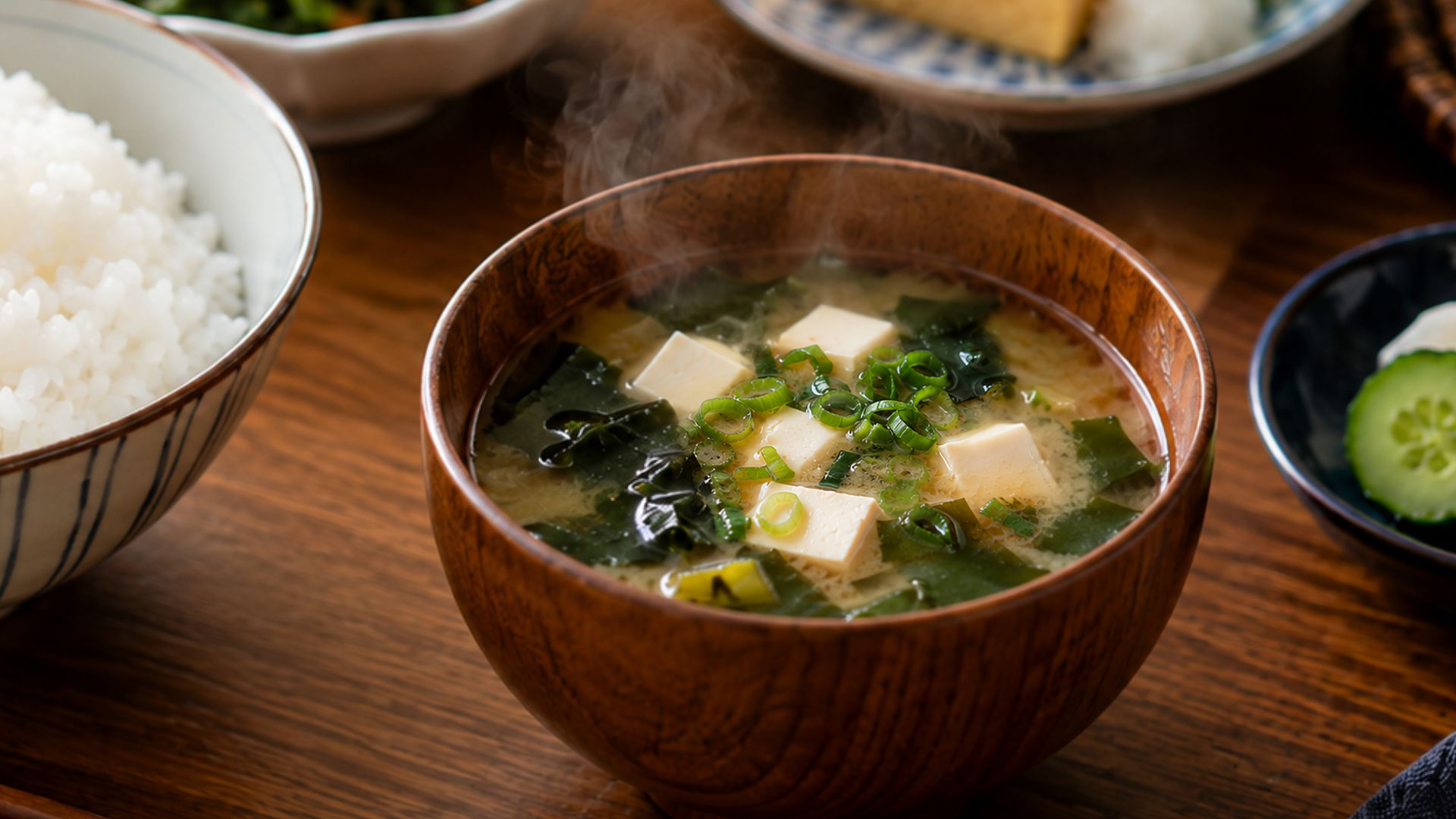
Miso is one of the most important ingredients in Japanese cooking, and it plays a central role in the flavor of miso soup. Even when the dashi and ingredients are the same, changing the type of miso can make the soup taste completely different.
Understanding the differences and characteristics of miso can help you choose it more confidently and find the flavor that feels right for your own table.
Three Common Ways to Classify Miso
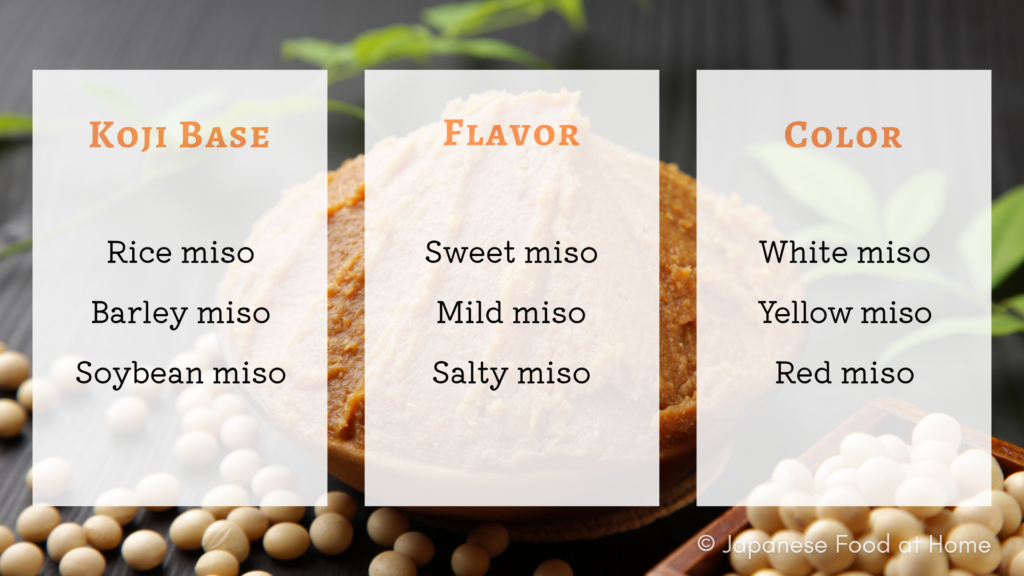
Miso is a fermented seasoning made mainly from soybeans, koji, and salt. There are many kinds of miso in Japan, and they can be classified in several ways, such as by the type of koji used, their flavor, and their color. In this article, we will explore the main types of miso and what makes each one different.
By Koji Base
Koji is one of the key elements in Japanese fermentation. It is used in the production of many traditional Japanese foods and seasonings, including miso, soy sauce, mirin, rice vinegar, and sake.
Koji is made by growing koji mold on ingredients such as rice, barley, or soybeans. In miso making, koji helps break down the ingredients and creates the sweetness, umami, and depth that give miso its complex flavor.
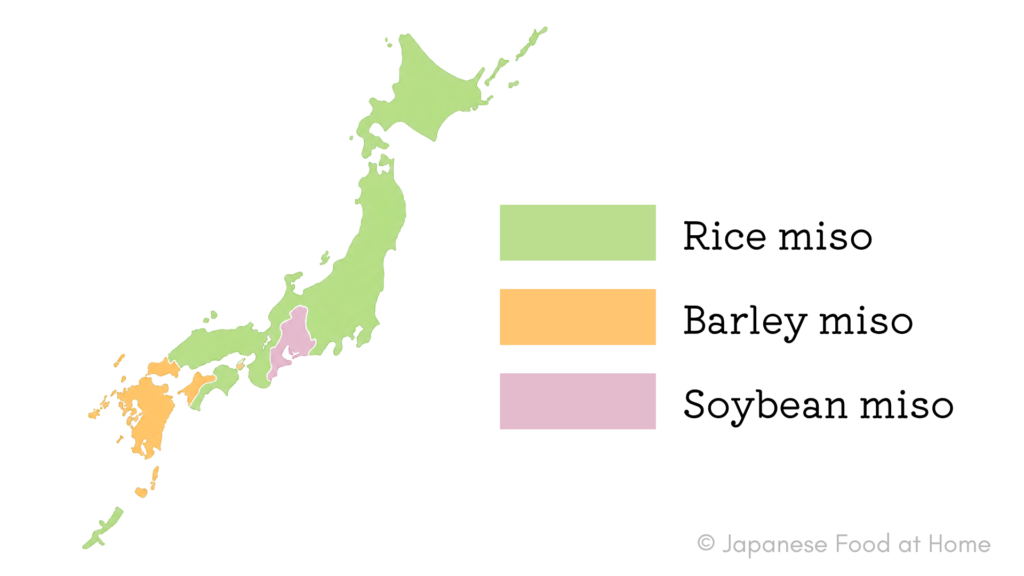
When miso is classified by koji base, it is usually divided into three main types: rice miso, barley miso, and soybean miso. These types also have clear regional tendencies, because miso has long been shaped by the crops, climate, and food culture of each area.
Rice Miso (Kome Miso)
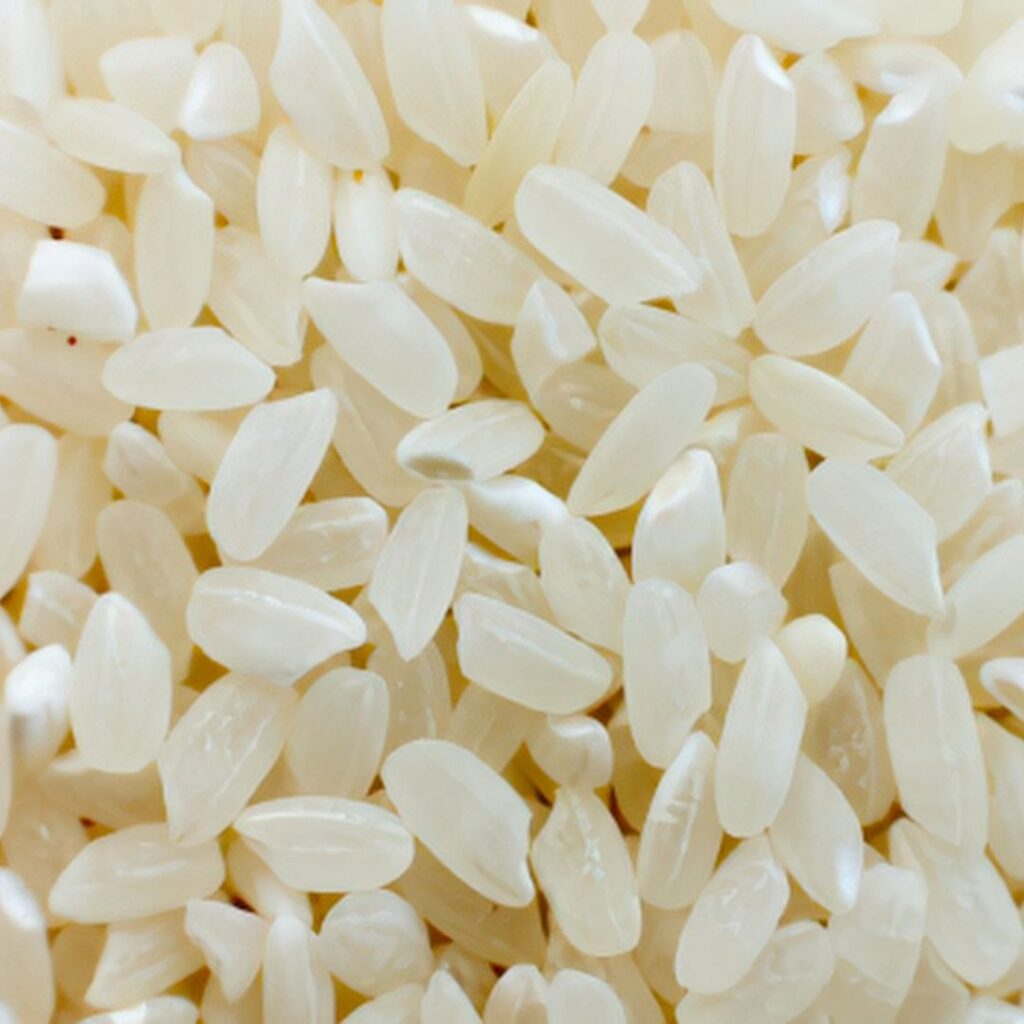
Rice miso is made with rice koji. Rice koji tends to bring a gentle sweetness and a balanced flavor, making rice miso easy to enjoy and widely used in Japan. Depending on the region and how it is made, rice miso can range from sweet and mild to salty and deeply savory.
Barley Miso (Mugi Miso)
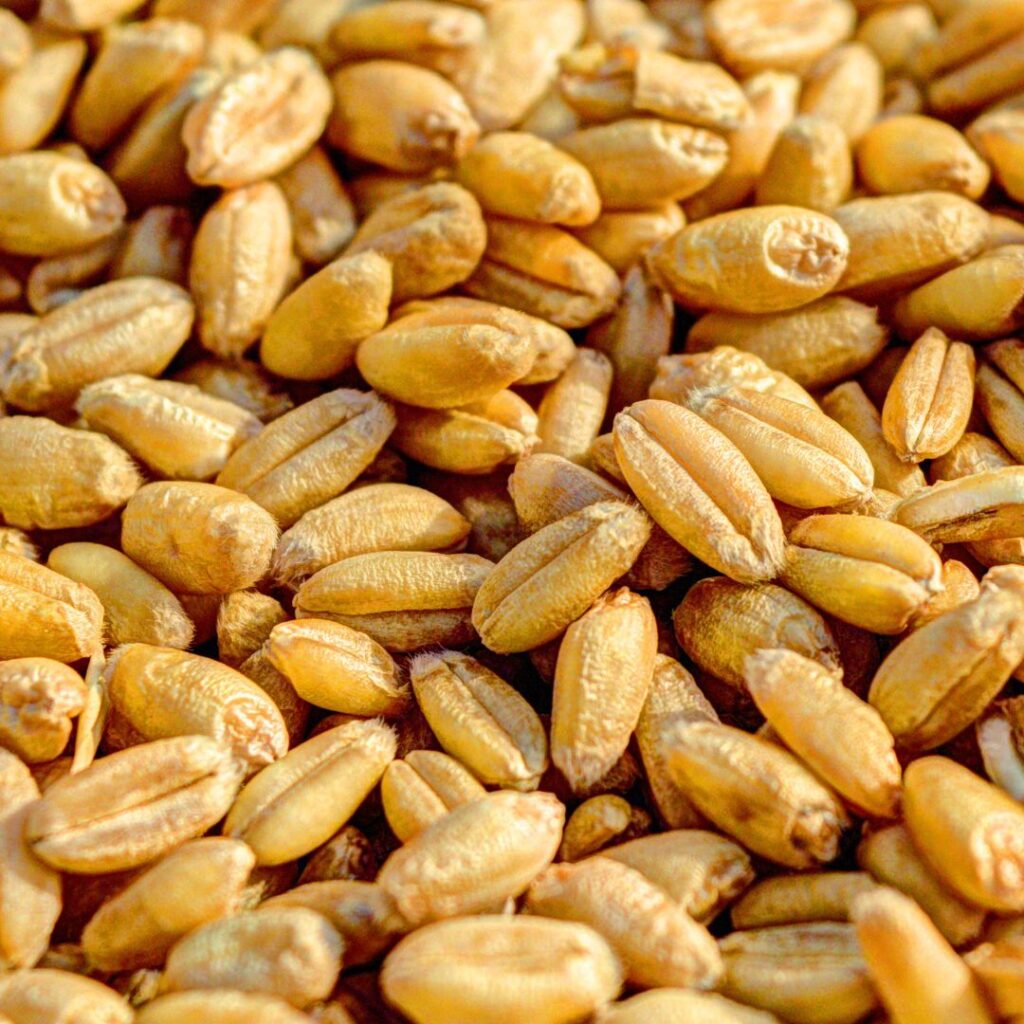
Barley miso is made with barley koji. It often has a slightly rustic aroma and a warm, earthy flavor. It usually contains a higher proportion of koji to soybeans and is mainly produced in warm southern areas, where miso can mature more quickly. As a result, barley miso tends to be aged for a shorter period of time and has a sweet, relatively light taste.
Soybean Miso (Mame Miso)
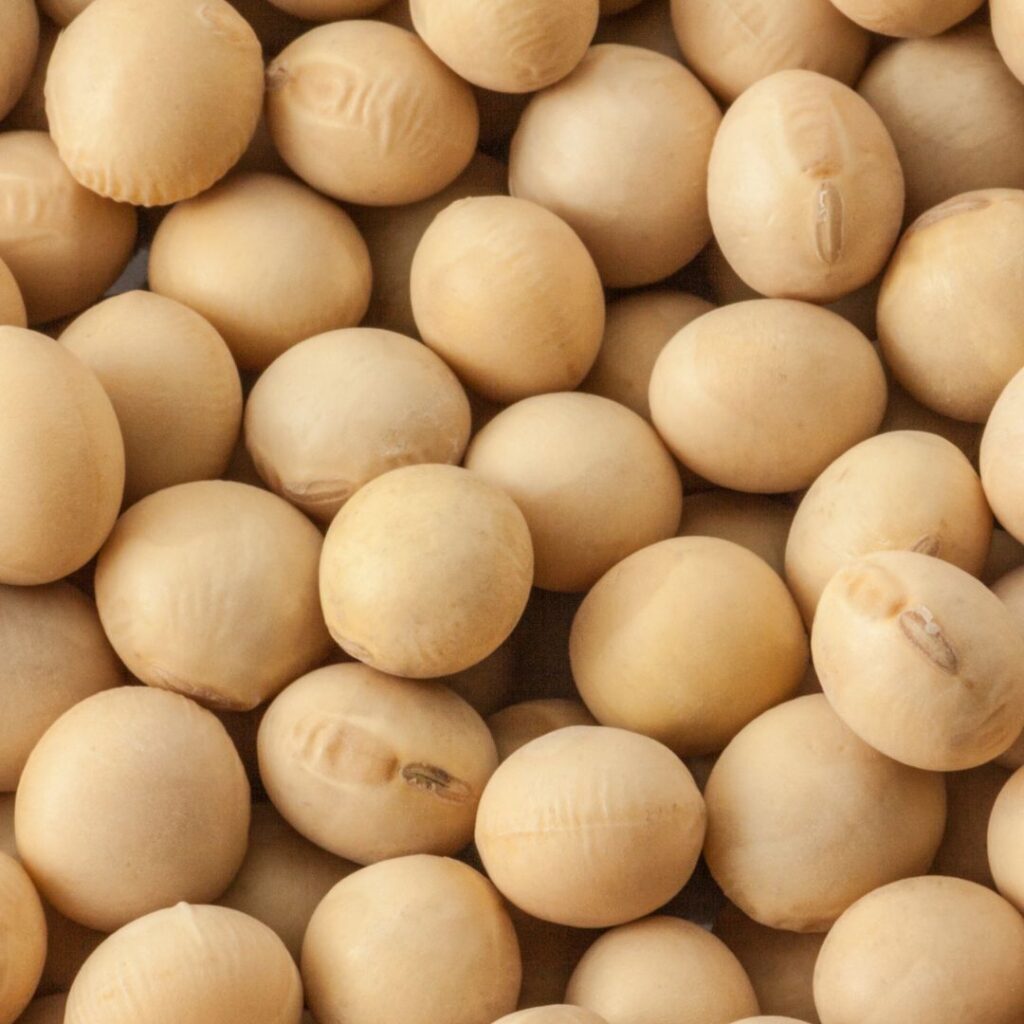
Soybean miso is made with soybean koji. Compared with rice miso and barley miso, it usually has more pronounced umami, less sweetness, and a hint of bitterness. Since it is usually aged for a longer period of time, soybean miso tends to be darker in color. While rice miso and barley miso can lose some of their delicate aroma when boiled, soybean miso is more heat-resistant and holds its flavor well, making it especially suitable for simmered dishes.
By Flavor
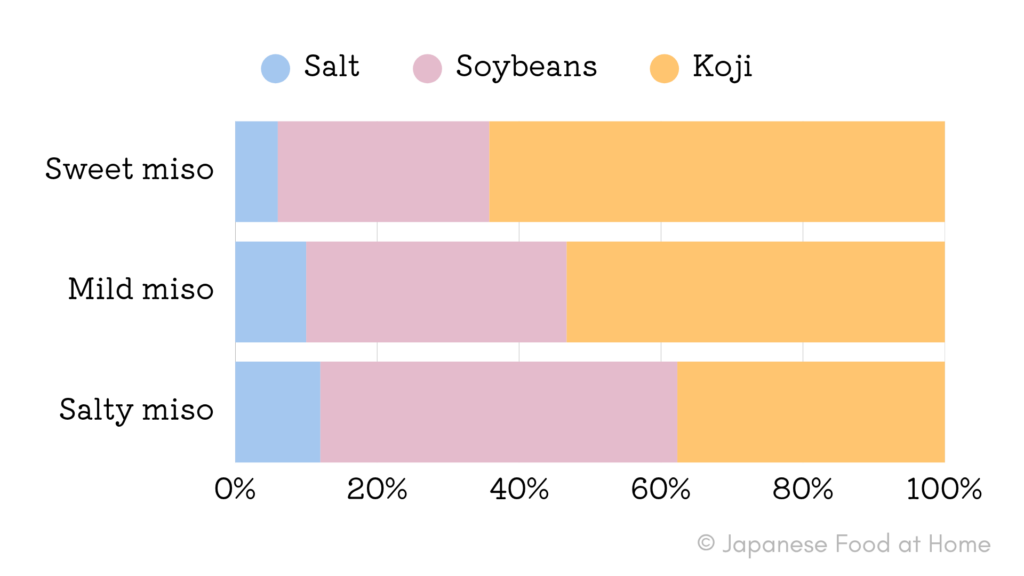
As mentioned above, miso is made mainly from soybeans, koji, and salt. When miso is classified by flavor, it is often grouped into three types: sweet miso, mild miso, and salty miso.
This classification is largely influenced by the balance of soybeans, koji, and salt, especially the proportion of koji and salt. In general, miso with a higher proportion of koji tends to taste sweeter, while miso with more salt tends to taste saltier.
Sweet Miso (Ama Miso)
Sweet miso has a high proportion of koji and a relatively low salt content. Because of this, it has a gentle sweetness and a mild, mellow flavor.
White miso from the Kansai region, including Kyoto, is one of the best-known examples of sweet miso. However, sweet miso is not always white; some varieties, such as Edo sweet miso, are red in color.
Because sweet miso is relatively low in salt, it is especially useful for sauces, marinades, and other dishes where you want the miso to be noticeable without making the dish overly salty.
Mild Miso (Amakuchi Miso)
As amakuchi means “medium-sweet” in Japanese, mild miso sits between sweet miso and salty miso. It has a moderate level of saltiness, but still keeps some of the natural sweetness from koji.
Because of its balanced flavor, many everyday types of miso fall into this mild category. Mild miso is widely used not only for miso soup but also for many home-style Japanese dishes where you want a gentle but savory miso flavor.
Salty Miso (Karakuchi Miso)
Before modern preservation and distribution systems became widely available, salty miso was especially common because its higher salt content helped it keep longer. Since salty miso is often aged for a longer period of time, it tends to have a deeper color and a stronger aroma.
Like other types of miso, salty miso is commonly used for miso soup. Its bold, savory taste also works especially well with fatty ingredients or in dishes where a strong miso flavor is needed.
By Color
Miso can also be classified by color, such as white miso, yellow miso, and red miso.
The color of miso changes depending on several factors, including how the soybeans are cooked, the aging temperature, and the length of the aging period.
When soybeans are boiled, the finished miso tends to become lighter in color because some of the components related to browning are released into the cooking water. When soybeans are steamed, the miso tends to become darker. Higher aging temperatures and longer aging periods can also make the color of miso deeper.
In general, sweet miso often has a higher proportion of koji and a lower salt content, so it is usually aged for a shorter period of time. This is why sweet miso is often associated with white miso, while salty miso is often associated with red miso. However, the color of miso is not determined by aging period alone. Since the cooking method of the soybeans also affects the color, lighter miso is not necessarily sweeter, and darker miso is not always saltier
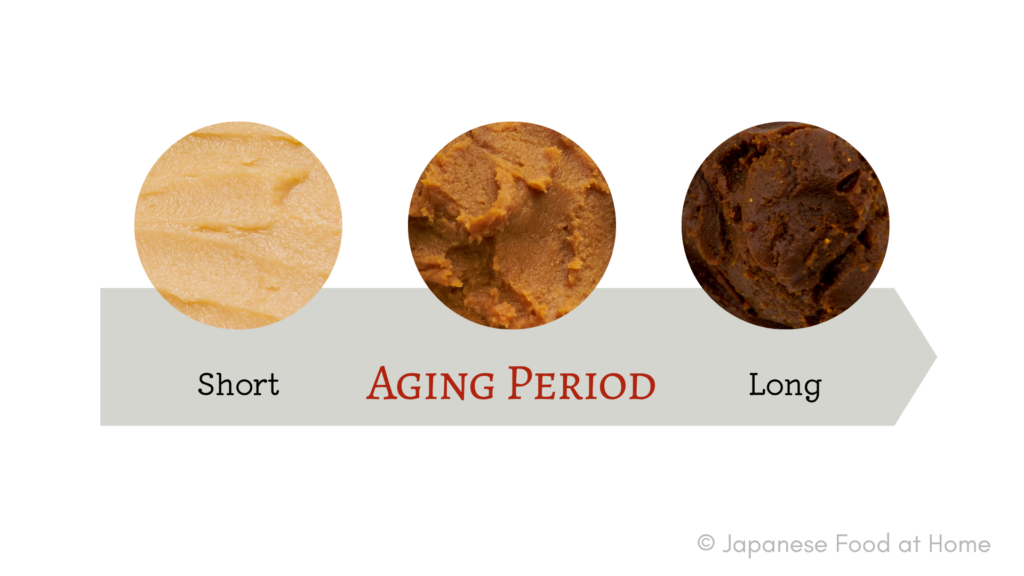
White Miso (Shiro Miso)
As mentioned above, the color of miso is closely related to the length of the aging period. Since more koji helps miso mature more quickly, many types of white miso are made with a high proportion of koji and aged for a relatively short period of time.
Koji contains enzymes that break down starches into sugars. Because of this, miso with a higher proportion of koji tends to have a sweeter flavor. This is why white miso is often classified as sweet miso. However, some white miso products are made with a higher salt content and are classified as mild miso rather than sweet miso.
Because of its shorter aging period, white miso often has a mild aroma and a smooth, mellow flavor.
White miso is made by many miso producers across Japan, but it is especially beloved in the Kansai region. Among them, Kyoto’s Saikyo miso is one of the most well-known examples of white miso.
Yellow Miso (Tanshoku Miso)
As tanshoku means “light-colored” in Japanese, yellow miso falls between white miso and red miso in color. It is usually aged longer than white miso, but not as long as many types of red miso.
Its flavor can vary depending on the producer and region, ranging from mild and slightly sweet to more savory and salty. In fact, many commonly available types of miso fall into this category, making it one of the easiest types to find and use in everyday Japanese cooking.
Red Miso (Aka Miso)
Red miso is darker in color and is usually aged for a longer period of time than white miso or yellow miso. During this longer aging period, its color deepens and its flavor becomes richer and more complex.
Red miso often has a stronger aroma and deeper umami. Because of its bold character, it works well with meat and fish, where it can help balance strong odors. It also holds its flavor well even when simmered for a longer time, making it a good choice not only for miso soup, but also for simmered dishes.
In general, salty miso often has a lower proportion of koji and needs to be aged for a longer period of time to develop its flavor. Because of this, salty miso is often associated with red miso. However, as mentioned above, the color of miso is also affected by factors such as how the soybeans are cooked and the aging temperature, so not all red miso is classified as salty miso. Some varieties, such as Edo sweet miso, are red in color but classified as sweet miso.
Common Miso Variations
In addition to the basic classifications above, there are also some common miso variations that you may see when shopping for miso. Two of the most common are awase miso and dashi-iri miso.
Awase Miso
Awase miso is a blended miso made by combining two or more types of miso. For example, rice miso and barley miso may be blended together, or red miso and yellow miso may be combined to create a more balanced flavor.
Because it brings together the characteristics of different types of miso, awase miso can have a well-rounded taste with both sweetness and depth. It is commonly used for everyday miso soup and is a convenient choice when you want a balanced flavor without choosing just one specific type of miso. Some traditional Japanese restaurants also create their own original awase miso blends to give their dishes a distinctive house flavor.
Dashi-Iri Miso
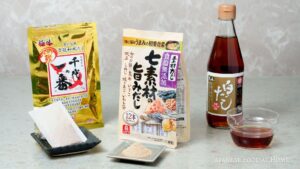
Dashi-iri miso is miso that already contains dashi seasoning. Since dashi is built into the miso, it allows you to make miso soup more quickly without preparing dashi separately.
It is very convenient for everyday cooking, especially when you want to make miso soup with less time and effort. However, the flavor can vary depending on the product, and some dashi-iri miso may contain added seasonings. If you want more control over the flavor of your miso soup, you may prefer to use regular miso and prepare the dashi separately.
The more you learn about miso, the more fun it becomes to build flavors with miso.
-scaled.jpg)
I hope this article helped you understand miso a little more deeply.
As you can see, there are many different kinds of miso throughout Japan. In future articles, I plan to introduce the characteristics of miso from different regions of Japan, so stay tuned!



Comments