
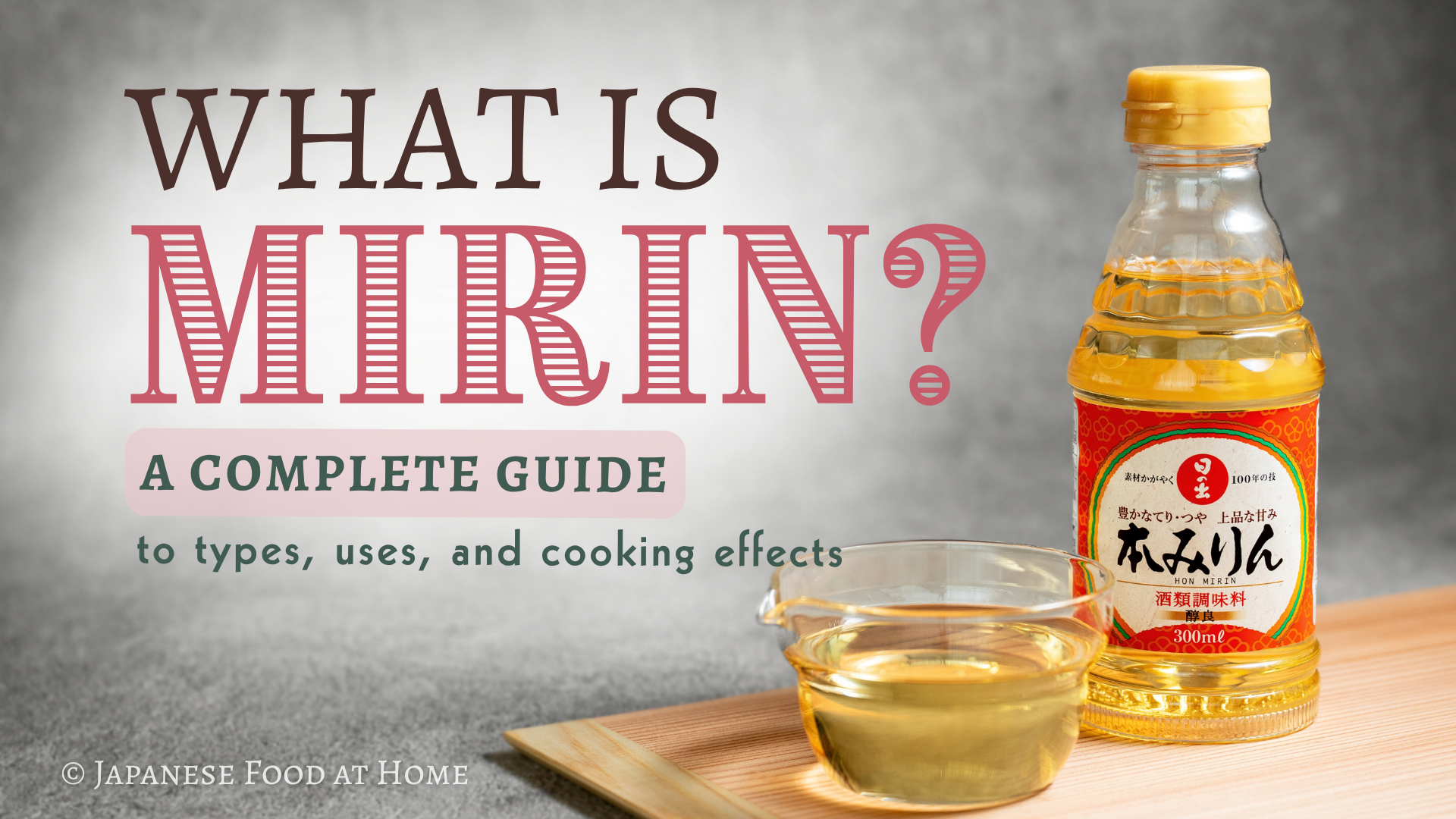
Mirin is one of the distinctive seasonings used in Japanese cooking. It contains alcohol and has a natural sweetness, so you may wonder how it differs from sake or other sweeteners.
In this guide, I’ll explain what mirin is, how it is made, and the role it plays in Japanese cooking.
Note: In this article, “mirin” refers specifically to hon mirin (本みりん), rather than mirin-style seasonings.
What Is Mirin?
Mirin is a traditional Japanese alcoholic seasoning that was originally enjoyed as a drink. Over time, particularly from the late Edo period onward, it came to be used increasingly as a cooking ingredient.
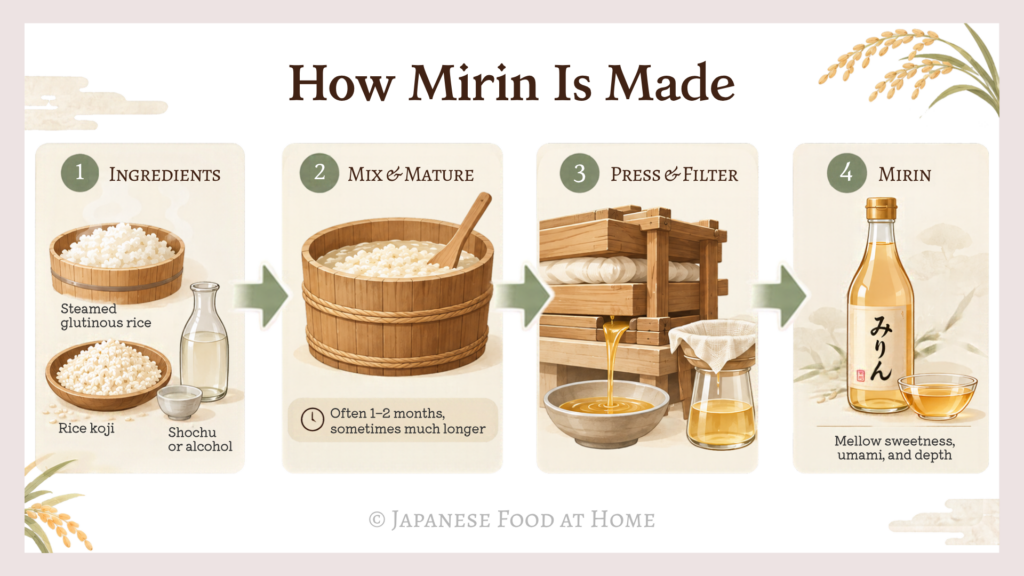
Traditionally, mirin is made by combining steamed glutinous rice, rice koji, and shochu or another form of alcohol, then allowing the mixture to slowly saccharify and mature before it is pressed and filtered. The maturation period varies widely: while many mirins are matured for around one to two months, some are aged for several years, and occasionally for more than a decade.
During maturation, enzymes from the koji break down the rice starches into sugars such as glucose and oligosaccharides, while proteins are broken down into amino acids. This process gives mirin its characteristic mellow sweetness, umami, and depth of flavor.
Mirin vs. Sake
As mentioned earlier, mirin was originally enjoyed as a sweet alcoholic drink. Even today, some traditionally made or long-aged mirins are served on their own as beverages. In that sense, mirin has something in common with sake, but the two differ significantly in both their ingredients and how they are made.
The Type of Rice Used
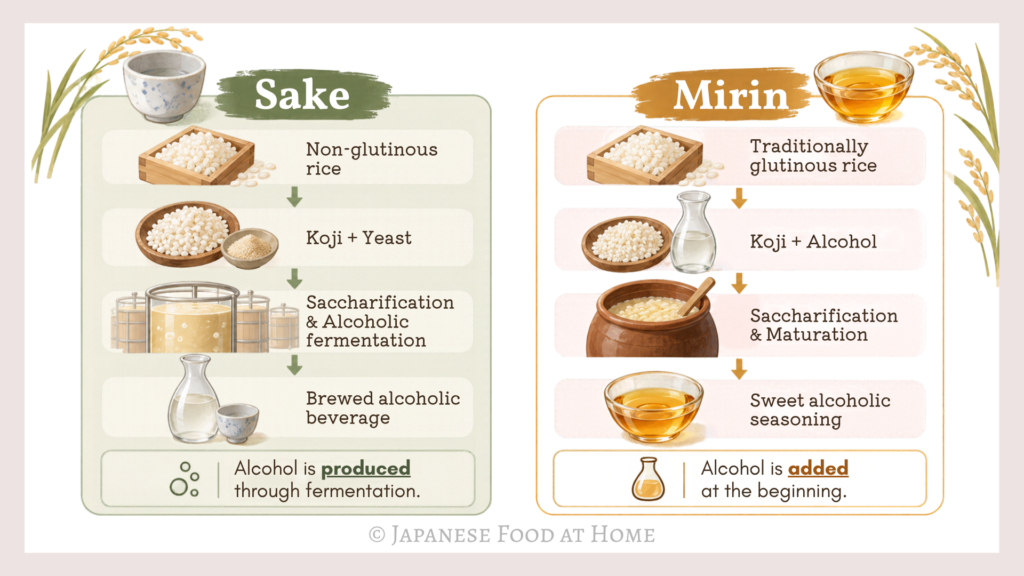
Sake is typically made with non-glutinous rice, while mirin has traditionally been made with glutinous rice. The starch in glutinous rice consists mainly of amylopectin, which is readily broken down by koji enzymes and contributes to mirin’s characteristic rich sweetness.
That said, some modern mirin products are made with non-glutinous rice.
How They Are Made
In sake brewing, koji enzymes break down the rice starches into sugars while yeast simultaneously converts those sugars into alcohol. This process is known as multiple parallel fermentation.
Mirin is made differently. Glutinous rice, rice koji, and shochu or another form of alcohol are combined and allowed to saccharify and mature without alcoholic fermentation by yeast. In other words, the alcohol in sake is produced through fermentation, while the alcohol in mirin is largely added at the beginning of the process.
Mirin vs. Sugar
Mirin is often used to add sweetness, but its flavor is quite different from the direct sweetness of sugar. Its mellow, gentle sweetness comes from a variety of sugars, including glucose and oligosaccharides, that are produced as the rice starches are broken down during maturation.
Amino acids and peptides add umami and richness, giving mirin a more complex and layered flavor than sugar alone.
Types of Mirin Products
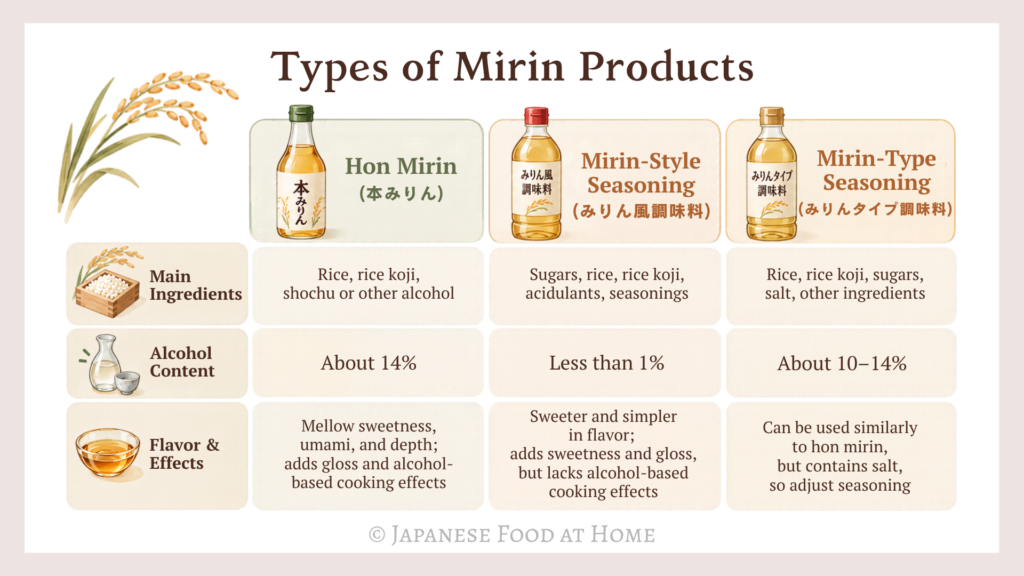
In Japanese supermarkets, you may see several products with similar names, including hon mirin, mirin-style seasoning, and mirin-type seasoning. Although they are used in similar ways, they differ in how they are made, their alcohol content, how they behave in cooking, and even how they are sold.
Hon Mirin (本みりん)
When people simply say “mirin,” they are generally referring to hon mirin.
As explained in the “What Is Mirin?” section above, hon mirin is made by combining rice, rice koji, and shochu or another form of alcohol, then allowing the mixture to undergo saccharification and maturation. It typically contains around 14% alcohol and is legally classified as an alcoholic beverage in Japan.
Its mellow sweetness, umami, and depth of flavor develop naturally during maturation. Because it is classified as alcohol, hon mirin is sold only at stores that hold a license to sell alcoholic beverages, including many supermarkets.
Mirin-Style Seasoning (みりん風調味料)
Mirin-style seasoning is made by blending sugars with ingredients such as rice, rice koji, acidulants, and seasonings to create a flavor similar to hon mirin. Unlike hon mirin, it does not undergo the same saccharification and maturation process and contains less than 1% alcohol.
It can still be used to add sweetness and gloss to food, but it does not provide the same cooking effects that come from the alcohol in hon mirin. Since it is not classified as an alcoholic beverage, it can be sold as a regular seasoning even by stores that are not licensed to sell alcohol.
Mirin-Type Seasoning (みりんタイプ調味料)
Mirin-type seasoning is a fermented seasoning made from ingredients such as rice and rice koji, with sugars, salt, and other ingredients added afterward. It contains alcohol, but it is seasoned to make it unsuitable for drinking, so it is treated as a seasoning rather than being classified as an alcoholic beverage.
It can be used in many of the same ways as hon mirin, but because it already contains salt, you need to take that into account when seasoning the dish. Like mirin-style seasoning, it can be sold by stores that are not licensed to sell alcohol.
What Does Mirin Do in Cooking?
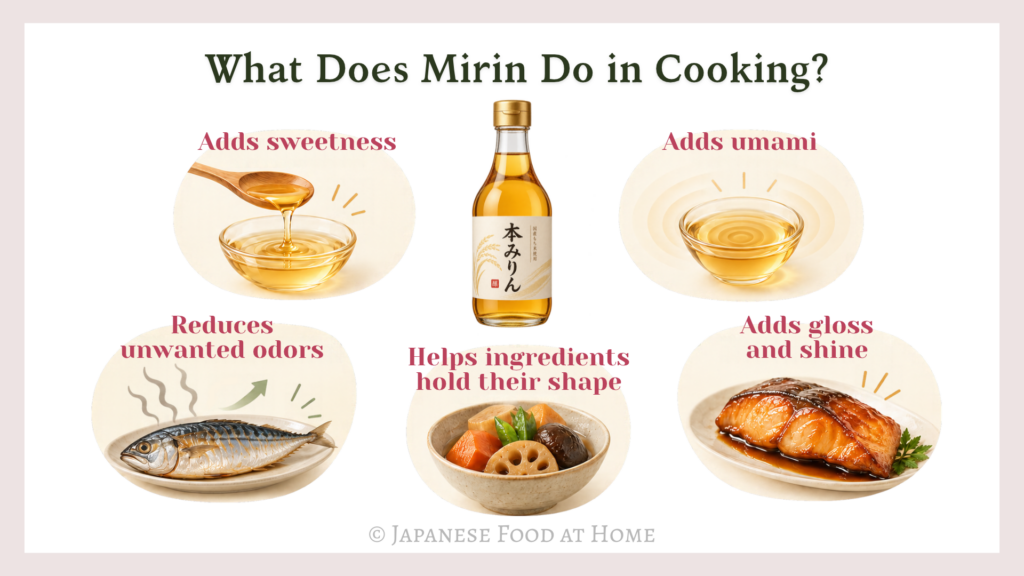
In addition to adding sweetness and umami, mirin has several other useful effects in cooking.
Reduces Unwanted Odors
As the alcohol in mirin evaporates during cooking, it helps carry away unwanted odors from ingredients such as meat and fish. In addition, alcohol, sugars, amino acids, and organic acids can react with odor-causing compounds and help reduce them chemically.
Helps Prevent Ingredients from Falling Apart
The alcohol and sugars in mirin help ingredients such as vegetables and fish hold their shape better during cooking, making them less likely to break apart or become mushy.
Adds Gloss and Shine
The various sugars in mirin, especially oligosaccharides, help seasonings cling to the surface of food. As the cooking liquid reduces, this creates an attractive glossy finish.
How to Use Mirin
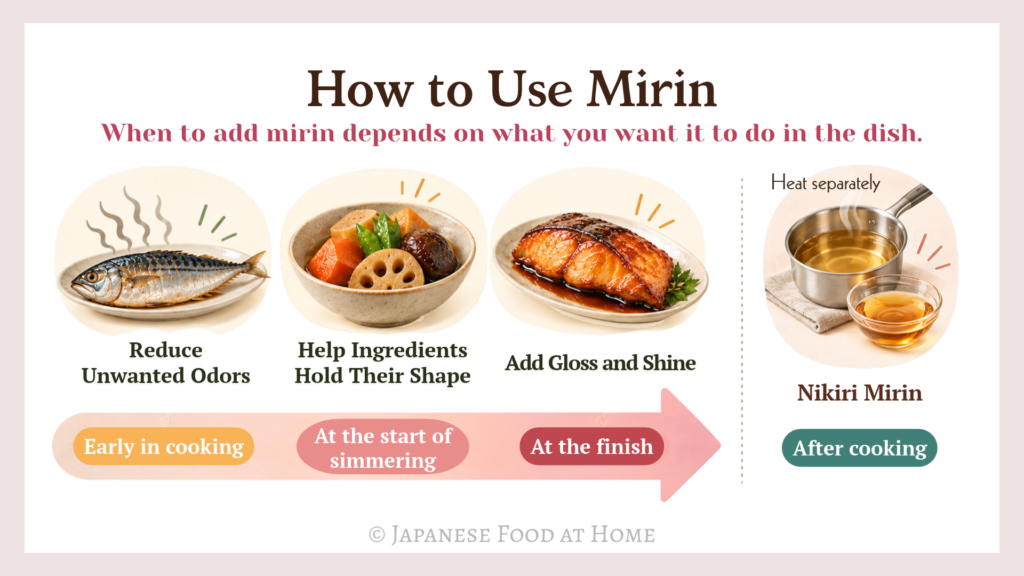
When to add mirin depends on what you want it to do in the dish. Understanding the right timing will help you make the most of its flavor and cooking effects.
To Reduce Unwanted Odors
Similar to adding white wine to seafood in Western cooking, mirin can be added relatively early in the cooking process and heated thoroughly. As the alcohol evaporates, it helps carry away unwanted odors from ingredients such as meat and fish.
To Help Ingredients Hold Their Shape
For simmered dishes, mirin is often added to a seasoned cooking liquid made with dashi and other seasonings such as soy sauce, then cooked together with the ingredients. The alcohol and sugars in mirin help ingredients hold their shape and make them less likely to fall apart during cooking.
To Add Gloss and Shine
In simmered dishes and glazed preparations such as teriyaki, mirin naturally adds gloss as the cooking liquid reduces. For an even shinier finish, add a small amount of mirin toward the end and cook it down so it coats the ingredients.
When Mirin Isn’t Heated During Cooking
When mirin itself will not be heated as part of the cooking process—such as when it is used in a dressing or added as seasoning after cooking—it is best to heat the mirin separately first to remove the alcohol, then let it cool before using. Otherwise, the alcoholic aroma can remain and interfere with the flavor of the dish.
Mirin prepared this way is called nikiri mirin (煮切りみりん).

Mirin isn’t just a sweetener. Once you understand what it does and when to add it, it becomes much easier to use it intentionally in Japanese cooking.
Comments