
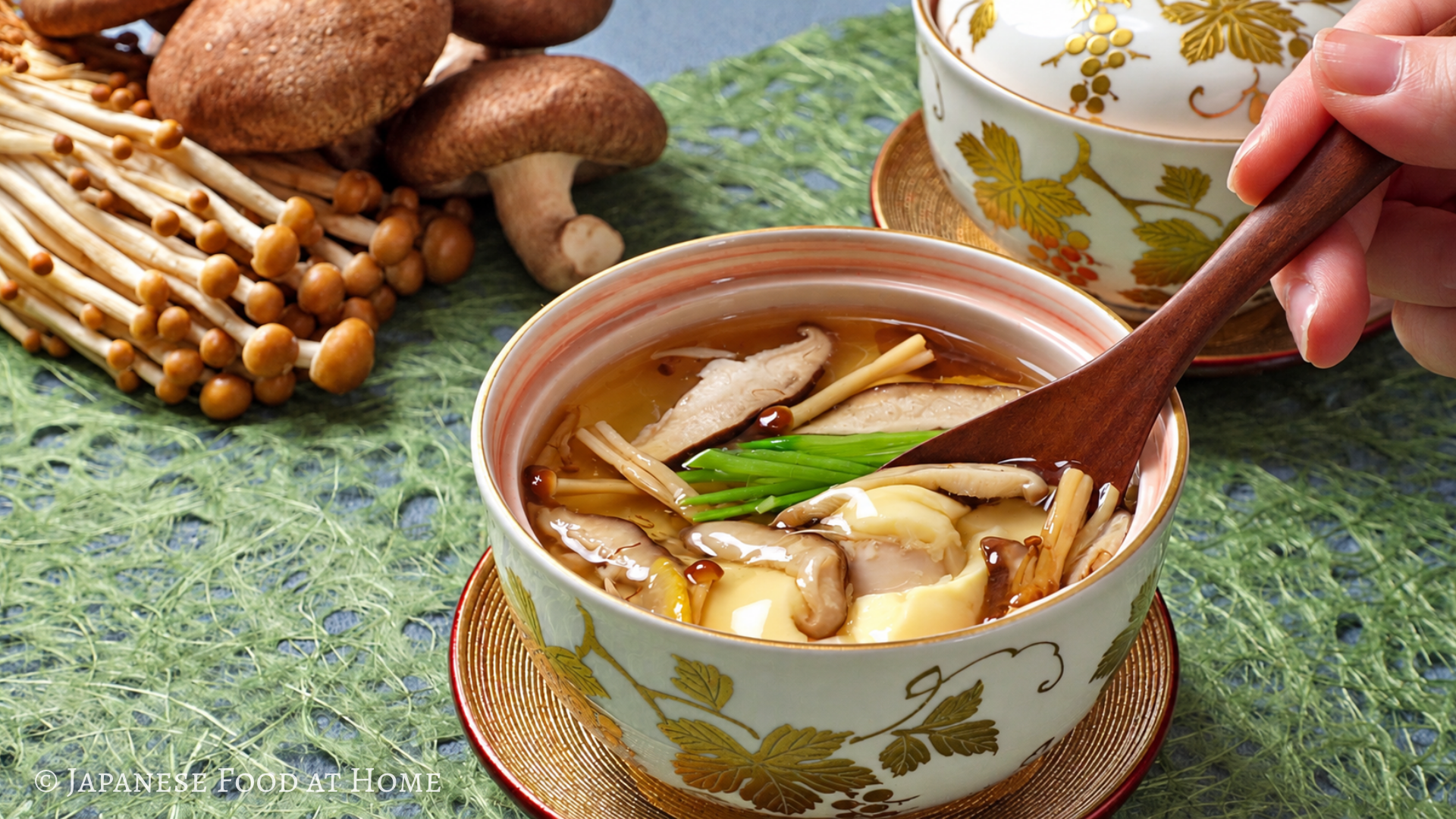
With its delicate, melt-in-your-mouth texture, chawanmushi is a popular Japanese dish enjoyed around the world.
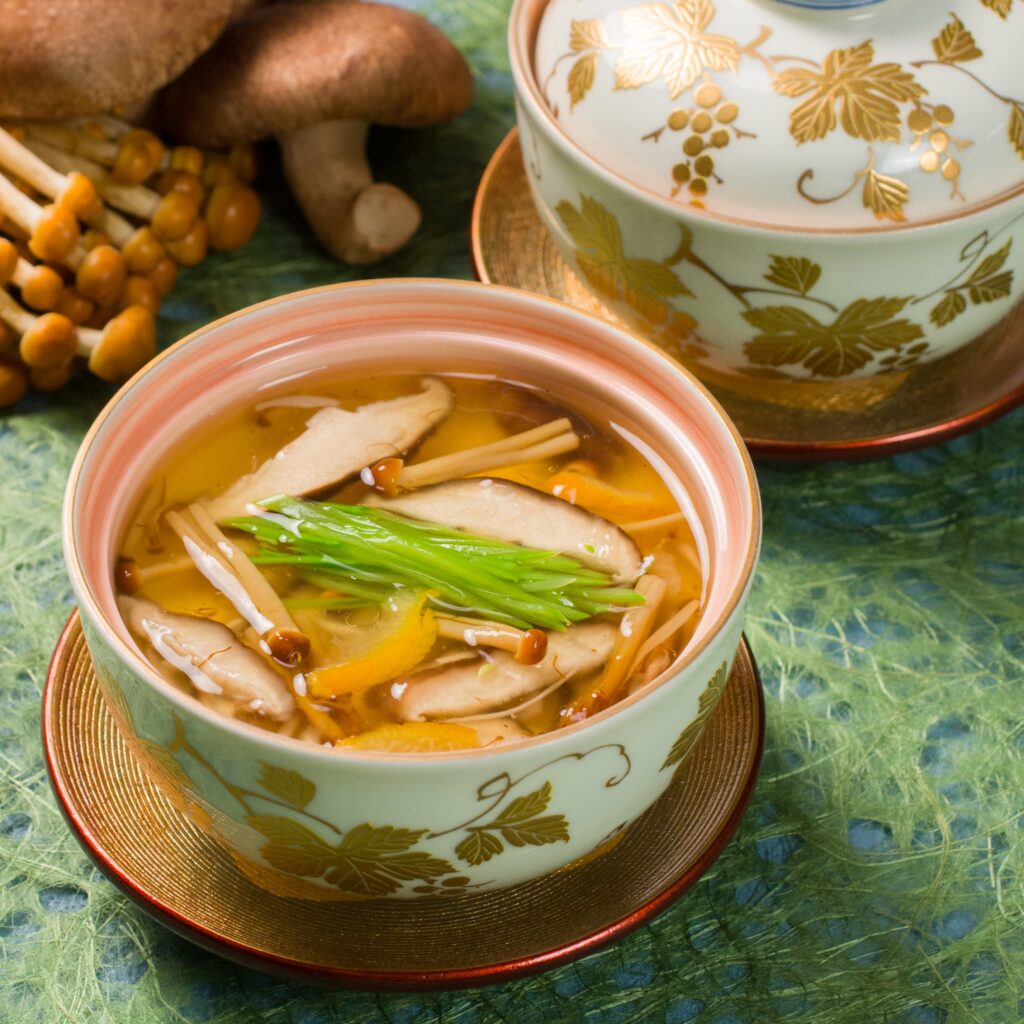
While it is traditionally prepared using a steamer, this recipe shows you how to make it easily at home using either a pot or a frying pan. Topped with a delicate mushroom sauce infused with the refreshing aroma of yuzu, this chawanmushi brings the flavors of autumn to your table with an elegant, restaurant-quality finish.
What Is Chawanmushi?
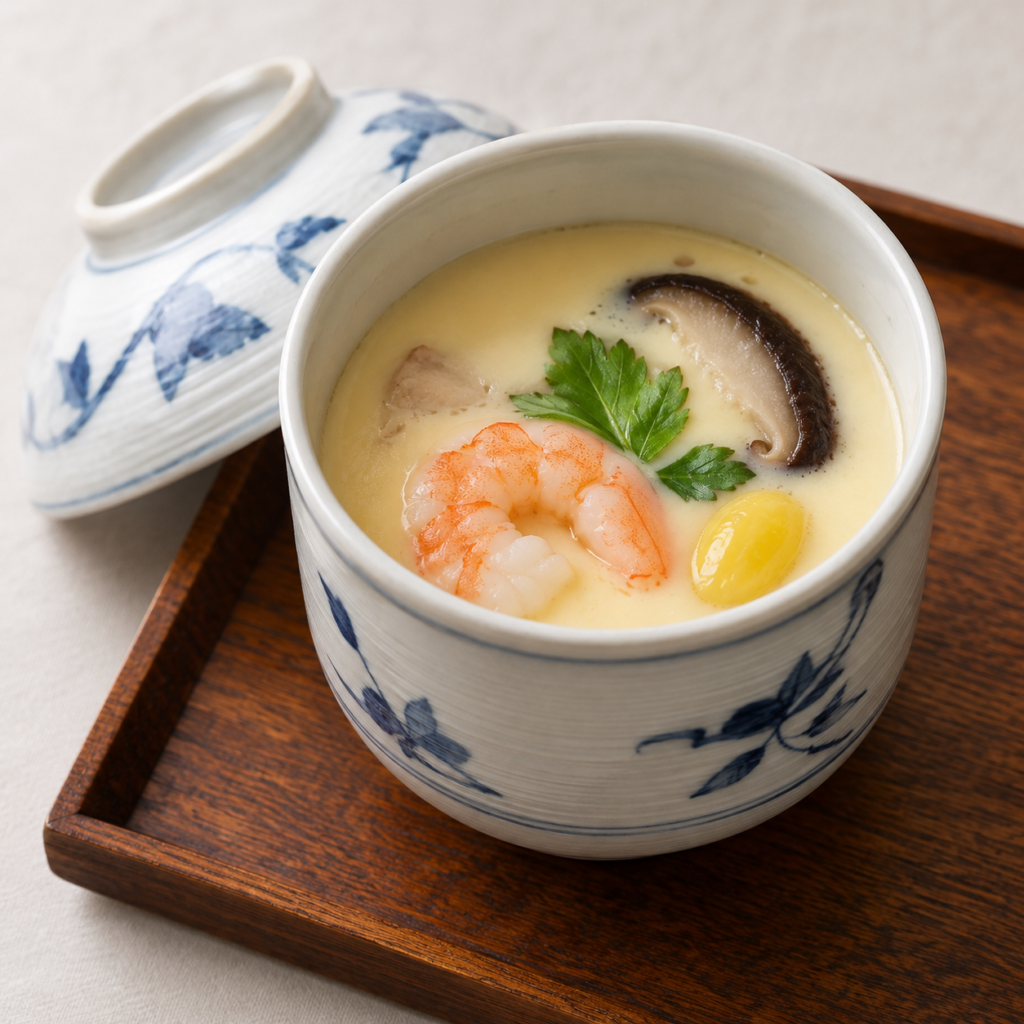
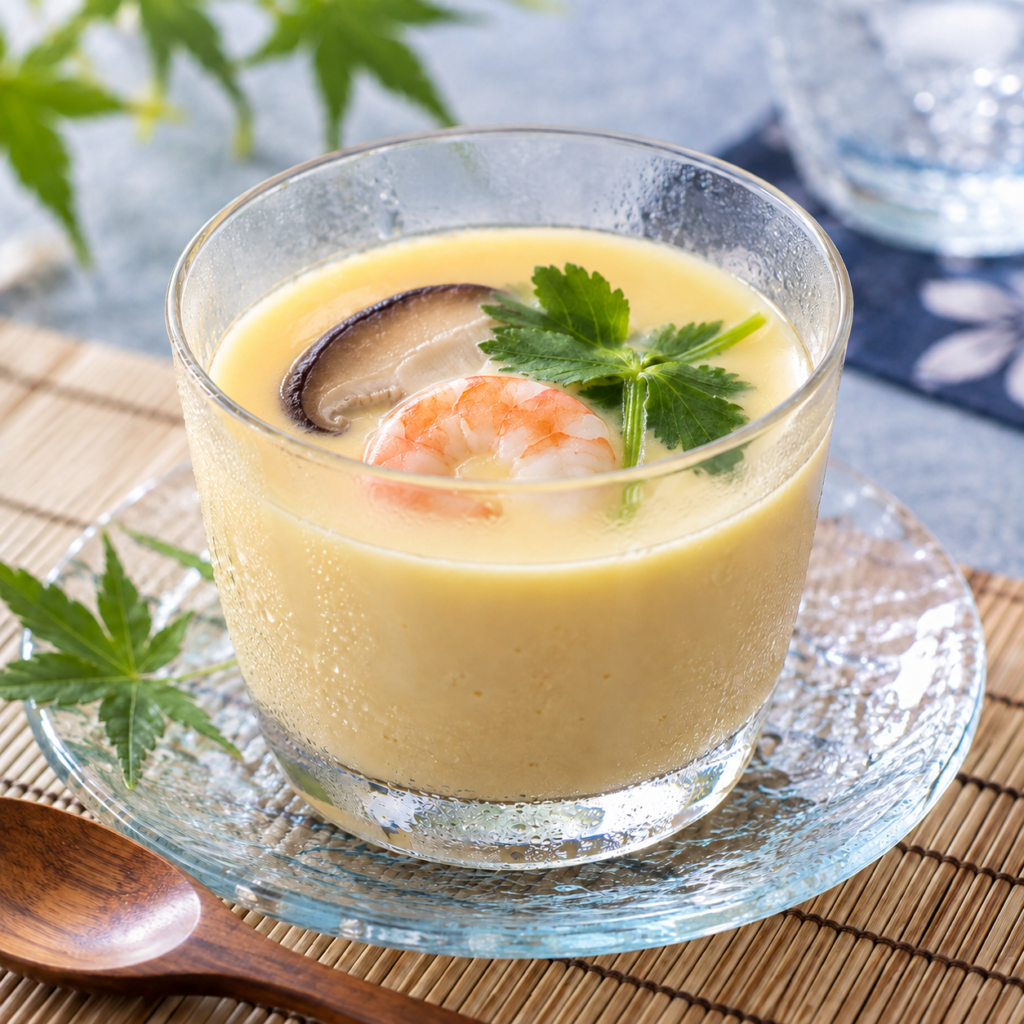
Chawanmushi is a traditional Japanese savory egg custard made by combining beaten eggs with dashi broth and gently steaming the mixture until it becomes silky smooth. It is also a familiar dish to many people outside Japan, as it is commonly served at conveyor-belt sushi restaurants.
Classic ingredients include shrimp, chicken, shiitake mushrooms, kamaboko (Japanese fish cake), and ginkgo nuts. There are also countless variations featuring seasonal ingredients, making chawanmushi a wonderful way to enjoy the flavors of each season.
Chawanmushi is typically served warm, but chilled versions are also enjoyed during the hot summer months.
At home, chawanmushi is usually served without a sauce, while more elaborate versions topped with a thickened, savory sauce are often found at traditional Japanese restaurants. This is known as ankake style. Although this elegant presentation may look complicated, it is surprisingly easy to recreate at home. Let me show you how!
How to Prepare for Steaming
Prepare the Lid
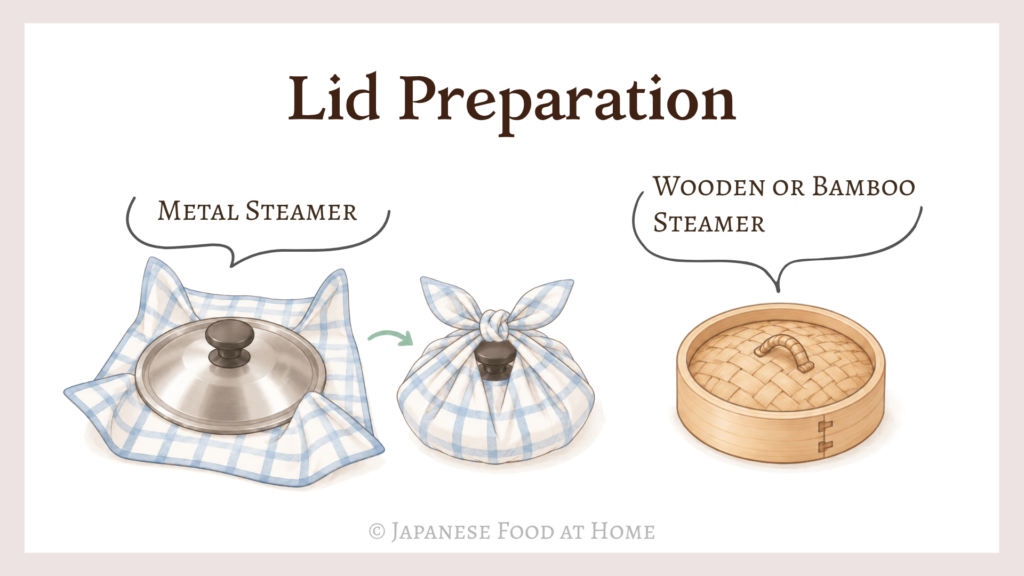
When using a metal steamer, such as one made of stainless steel, steam can condense on the underside of the lid and drip onto the chawanmushi. This can dilute the flavor and damage the delicate surface of the custard, affecting its appearance.
To prevent this, wrap the lid with a kitchen towel. Place the lid in the center of a spread-out towel, then gather the four corners and tie them together above the lid handle, or secure them with a rubber band. Make sure the towel is tightly secured so it cannot hang down and come into contact with the heat source, as this could cause a fire.
If you’re using a wooden or bamboo steamer, there’s no need to wrap the lid, as the natural material helps absorb moisture and allows some steam to escape, helping prevent condensation from dripping onto the food.
Preheat the Steamer
Before placing the chawanmushi cups inside, cover the steamer with the prepared lid and bring the water to a boil, allowing steam to build up inside.
Starting with a fully heated steamer helps the custard cook evenly from the beginning. Once the steamer is filled with steam, quickly but carefully place the cups inside and cover again right away.
How to Steam Without a Steamer

Don’t have a steamer at home? No problem! You can easily create a makeshift steamer using everyday kitchen equipment. Here are two simple methods.
Method 1: Pot + Flour Sifter
Place a flour sifter upside down inside a large pot to create a raised platform for the chawanmushi cups. Add water until it reaches just below the top of the inverted sifter, then preheat as described above.
Method 2: Deep Frying Pan + Kitchen Towel
Place a damp kitchen towel on the bottom of a deep frying pan to prevent the cups from moving. Add water until it reaches about one-third of the height of the cups, then preheat as described above.
As explained later in the recipe, chawanmushi is typically steamed over high heat for a short time, followed by a longer period over low heat. However, when using a frying pan, it’s important to add a little cold water when reducing the heat.
Unlike steaming, this water-bath method transfers heat more directly to the cups, so cooling the water slightly before switching to low heat is key to achieving a smooth, silky custard.
How to Make Mushroom Chawanmushi
Ingredients for 4 Servings
Egg Custard Mixture
2 eggs
300 ml water
2½ Tbsp shiro dashi
Yuzu Mushroom Ankake Sauce
3 shiitake mushrooms
30 g enoki mushrooms
200 ml water
2 Tbsp shiro dashi
A pinch of salt
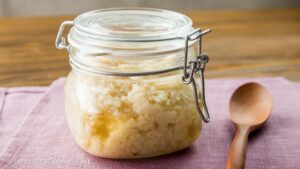
15 g yuzu-cha / yuja-cha (honey citron tea)
2 Tbsp potato starch slurry, for thickening
100 g boneless chicken thigh
A little salt
A splash of sake
4 snow peas
Ingredient Tips
- Shiro Dashi: Measure the shiro dashi straight from the bottle, without diluting it. Want to learn more about shiro dashi? Check out this article.
- Mushrooms: If shiitake or enoki mushrooms are difficult to find, feel free to substitute your favorite varieties.
- Yuzu-cha / Yuja-cha (Honey Citron Tea): Yuzu is a citrus fruit widely used in Japanese cuisine, known for its distinctive, refreshing aroma. Since fresh yuzu isn’t always easy to find, yuzu-cha (called yuja-cha in Korean) is a convenient alternative. This sweet citrus preserve is commonly sold in jars as “honey citron tea” and is an easy way to add the fragrant flavor of yuzu to your cooking.
- Potato Starch Slurry: A mixture of equal parts potato starch and water. For this recipe, combine 1 Tbsp of each to make 2 Tbsp of slurry.
Preparation
- Cut the chicken thigh into 2 cm (¾-inch) cubes. Sprinkle with salt and sake, toss to coat, and set aside while you prepare the other ingredients.
- Blanch the snow peas in lightly salted boiling water, then immediately transfer them to ice water to stop the cooking and preserve their vibrant green color. Pat them dry and cut into thin strips.
- Separate the shiitake mushroom caps from the stems. Thinly slice the caps. Trim off the tough ends of the stems, then cut the remaining stems into thin strips.
- Trim off the tough root ends of the enoki mushrooms and cut them in half crosswise. Use your fingers to separate the lower halves into small bundles.
- Add water to a steamer, pot, or deep frying pan, then preheat with the lid on.
Instructions
Crack the eggs into a bowl and beat thoroughly with chopsticks. Add the water and shiro dashi, mix well, then strain the mixture through a fine-mesh sieve.
Pat the chicken dry with paper towels to remove excess moisture. Divide it evenly among four chawanmushi cups.
Gently stir the egg mixture once more, then carefully pour it into the cups. If any bubbles appear on the surface, pop them with the tip of a chopstick.
Place the cups in the preheated steamer, cover with the lid, and steam over high heat for 2–3 minutes.
Check that the surface of the custard has turned slightly opaque and whitish. Replace the lid and continue steaming over the lowest heat for about 10 minutes. (If using a frying pan, add a little cold water when reducing the heat, as explained above.)
To check for doneness, insert a chopstick into the center of the custard. If no cloudy liquid comes out, it’s cooked through. If cloudy liquid appears, steam for another 2 minutes or so and check again.
Combine the water, shiro dashi, and a pinch of salt in a saucepan. Bring to a boil, then add the shiitake and enoki mushrooms. Let the mixture come back to a boil briefly.
Remove the saucepan from the heat and stir in the yuzu-cha. Add half of the prepared potato starch slurry and mix well. Return the saucepan to low heat and bring the sauce to a gentle boil, stirring until it thickens.
Gradually add more of the remaining slurry as needed to adjust the consistency.
Spoon the warm yuzu mushroom ankake sauce over each chawanmushi and garnish with the thinly sliced snow peas.
Cooking Tips
- Why Isn’t My Chawanmushi Smooth and Silky?
For a smooth, delicate texture, always strain the egg mixture through a fine-mesh sieve before steaming.
Temperature control is equally important. If the heat is too high, the egg mixture can become overheated before it sets evenly, creating bubbles and leaving a spongy texture. Remember to reduce the heat from high to low after the first few minutes of steaming.
- Why Isn’t My Chawanmushi Setting Properly?
If the egg mixture heats up too slowly, the eggs and dashi may separate before the custard begins to set, leaving a watery layer that may not set properly even with further cooking.
To help prevent this, make sure the steamer is fully preheated and steam over high heat for the first few minutes to bring the egg mixture up to temperature quickly. Then reduce the heat to low and continue steaming gently.
Also, be careful when adding mushrooms directly to the egg mixture. Some varieties, particularly maitake mushrooms, contain enzymes that break down proteins and can interfere with the eggs setting properly. If you want to add maitake mushrooms to your chawanmushi, cook them first, such as by blanching them in boiling water, to deactivate these enzymes before adding them to the egg mixture.

Silky, savory, and filled with the comforting flavors of autumn, this chawanmushi is easier to make than you might think! Enjoy a little taste of Japanese restaurant dining right at home.


Comments