
If you are interested in Japanese cooking, you have probably heard the word dashi.
Dashi is a Japanese soup stock that gives many dishes their aroma, umami, and depth of flavor. It is one of the most important flavor foundations in Japanese cuisine, and it is used in many everyday dishes, from miso soup and simmered dishes to noodle soup and rolled omelets.
In professional kitchens, dashi is still commonly made from scratch. At home, however, making dashi from scratch every day is not always realistic, especially if you are busy or live outside Japan.
The good news is that there are several convenient ways to prepare dashi at home. This article introduces these common options and how you can use them in everyday Japanese cooking.
What Is Dashi?
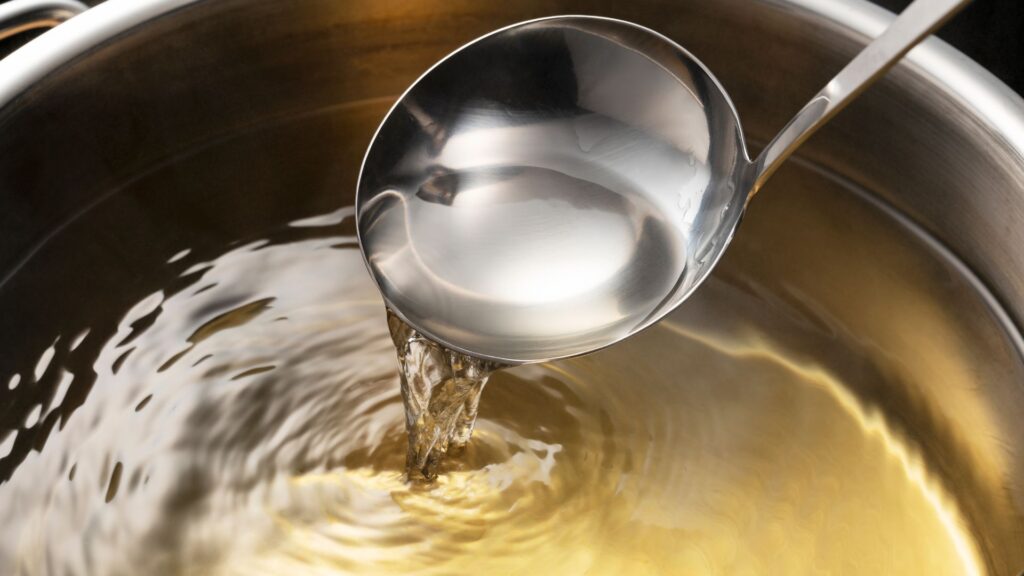
The most basic type of dashi is ichiban dashi, which is made with kombu and katsuobushi (dried bonito flakes). Kombu contains glutamic acid, while katsuobushi contains inosinic acid. Together, they create a strong umami synergy that gives dashi its rich, savory flavor.
However, dashi is not limited to kombu and katsuobushi. Some professional kitchens use other ingredients, such as dried tuna flakes instead of bonito flakes, or create their own blends using niboshi (dried sardines), dried shiitake mushrooms, or other ingredients. By adjusting the combination of ingredients, each restaurant can create its own style of dashi.
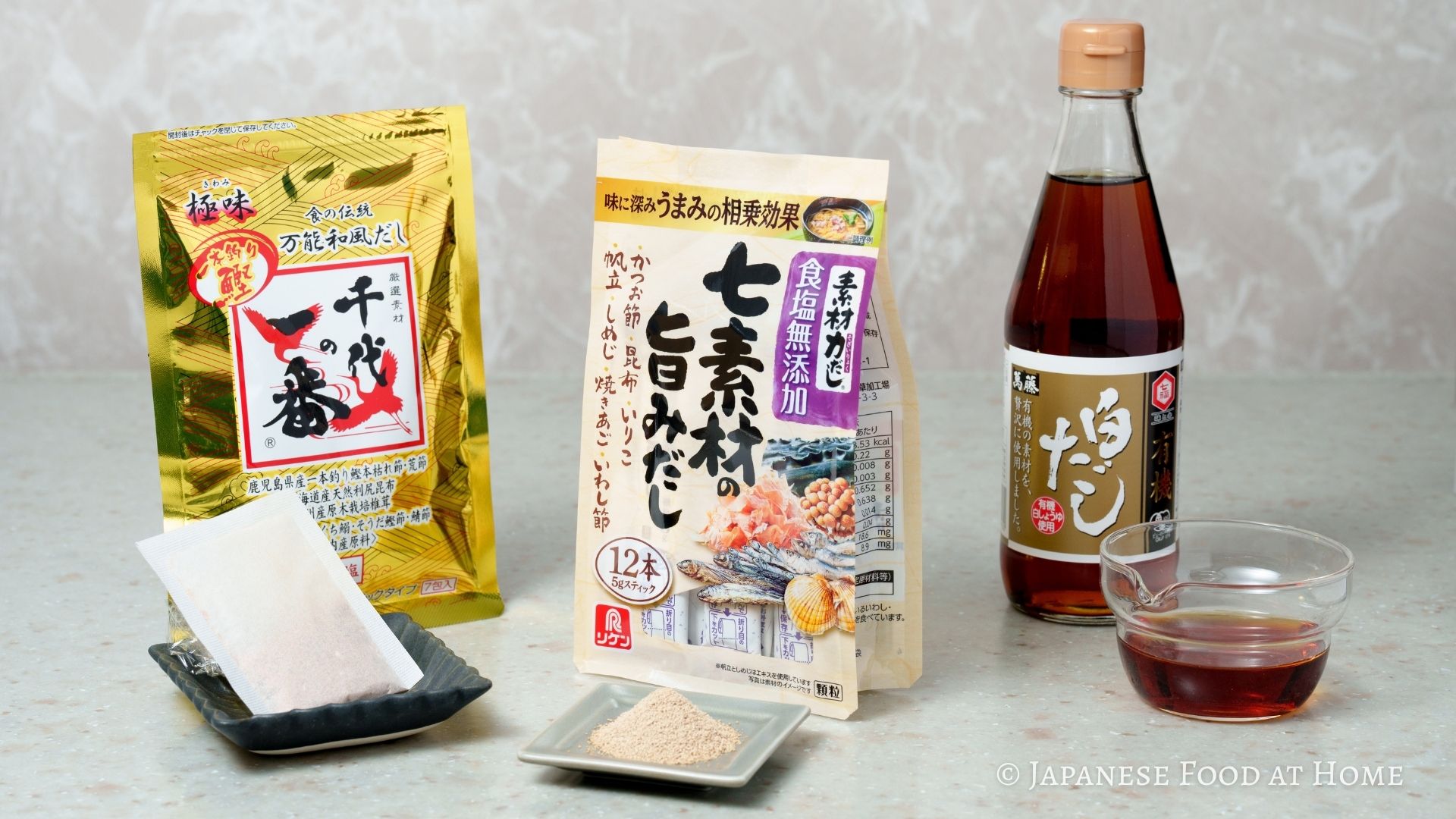
For home cooks, there are many quality dashi products available, from dashi packets and powder to liquid seasonings. This article will focus on these convenient options so you can enjoy the flavor of dashi more easily at home.
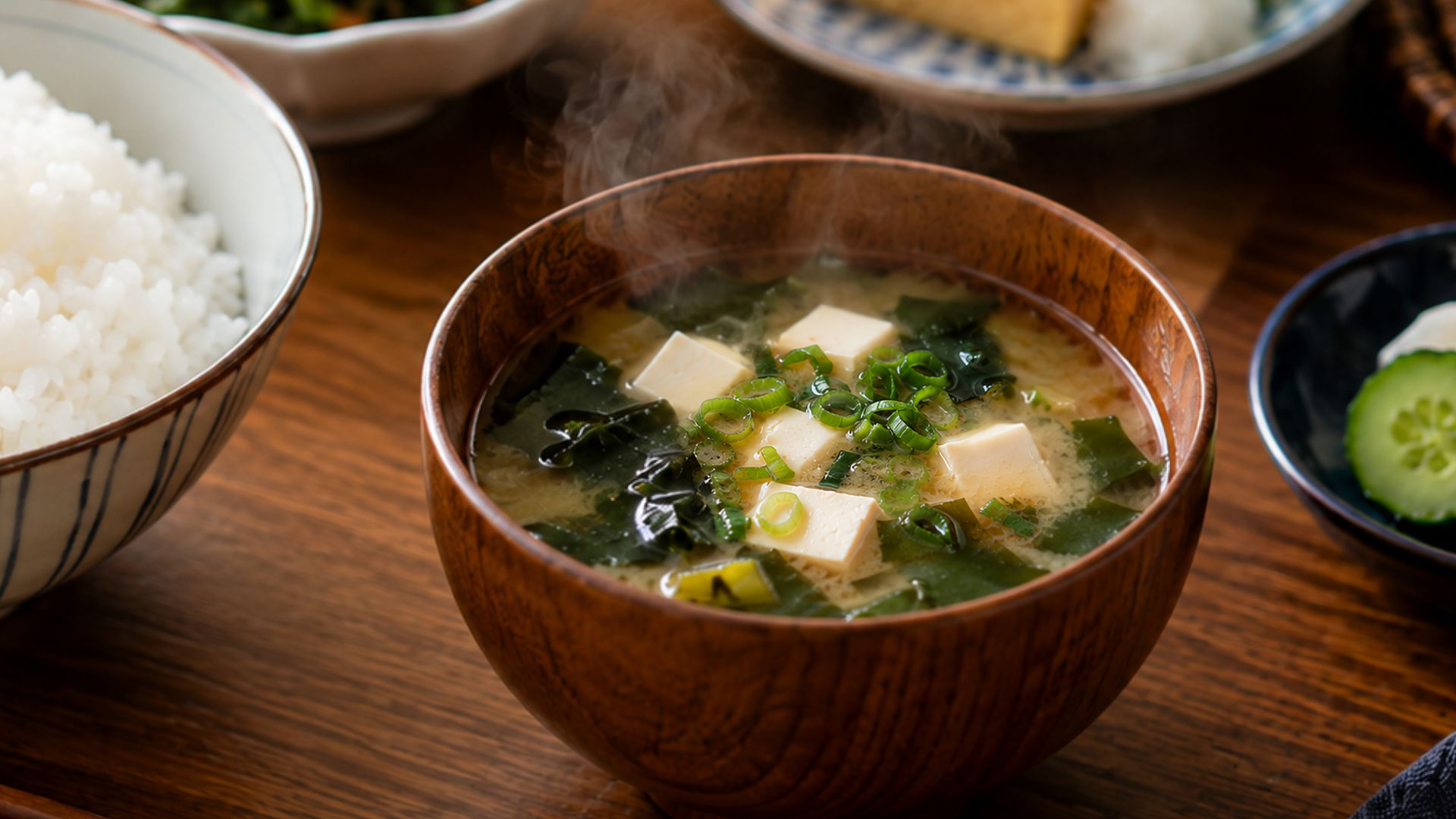
Dashi is also the foundation of miso soup. If you want to learn more about miso soup, check out this guide.
Common Types of Dashi for Home Cooking
Here are three convenient dashi products you can use at home and how to use them in everyday Japanese cooking.
Dashi Packets
Characteristics
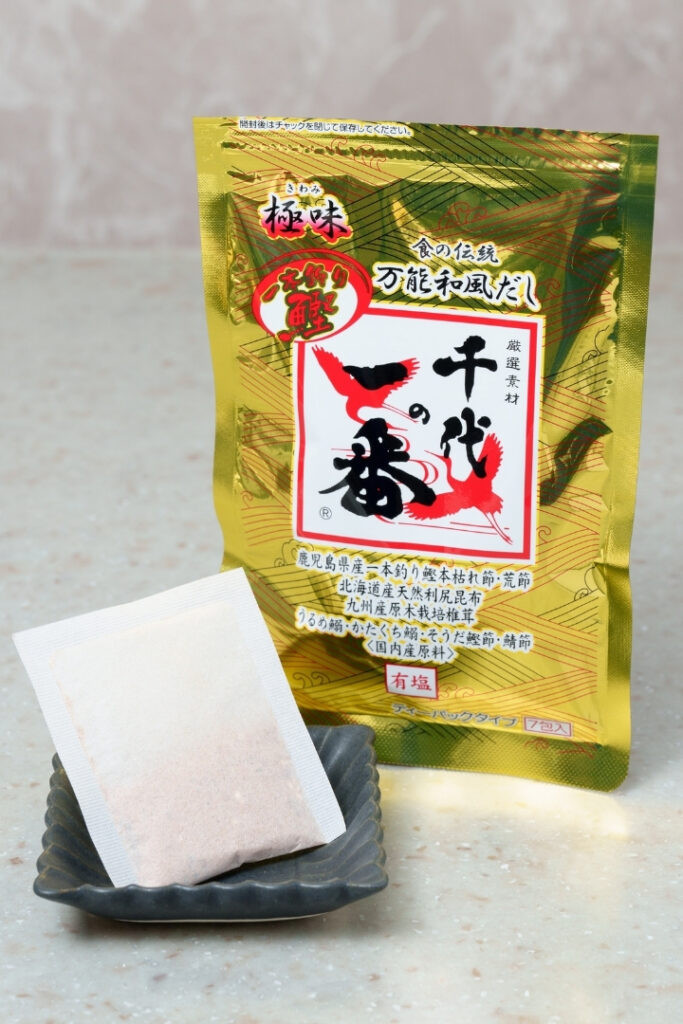
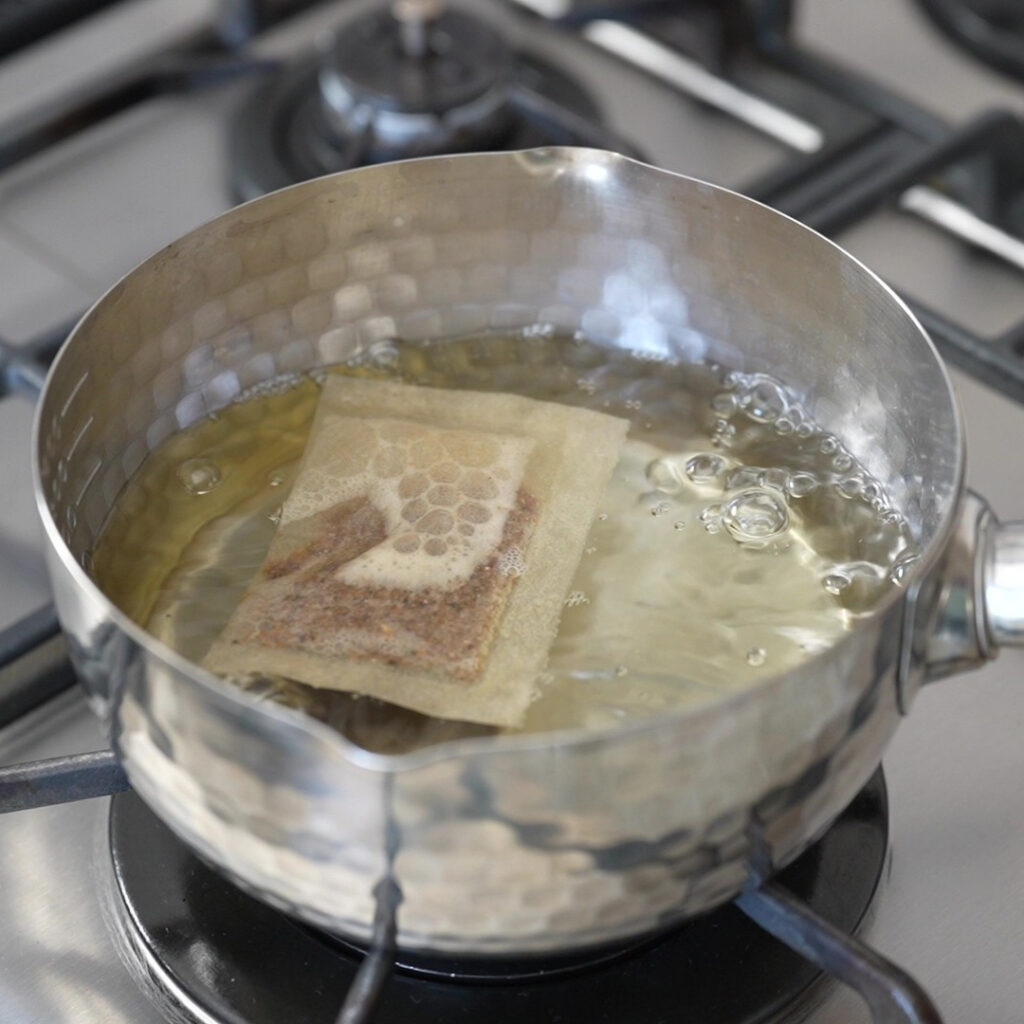
Dashi packets are small tea-bag-like packets filled with dried dashi ingredients, which are usually in the form of small flakes or powder so the flavor can be easily extracted.
Dashi packets are one of the easiest ways to prepare dashi with a natural flavor similar to dashi made from scratch.
Some products contain only dashi ingredients, while others also include salt, soy sauce, or other seasonings. If you want more control over the final taste, choose an unseasoned dashi packet.
How to Use
Place a dashi packet in a pot with water and bring it to a gentle simmer. Follow the package instructions for the amount of water and simmering time, as they vary depending on the product. After simmering, remove the packet.
Dashi Powder
Characteristics
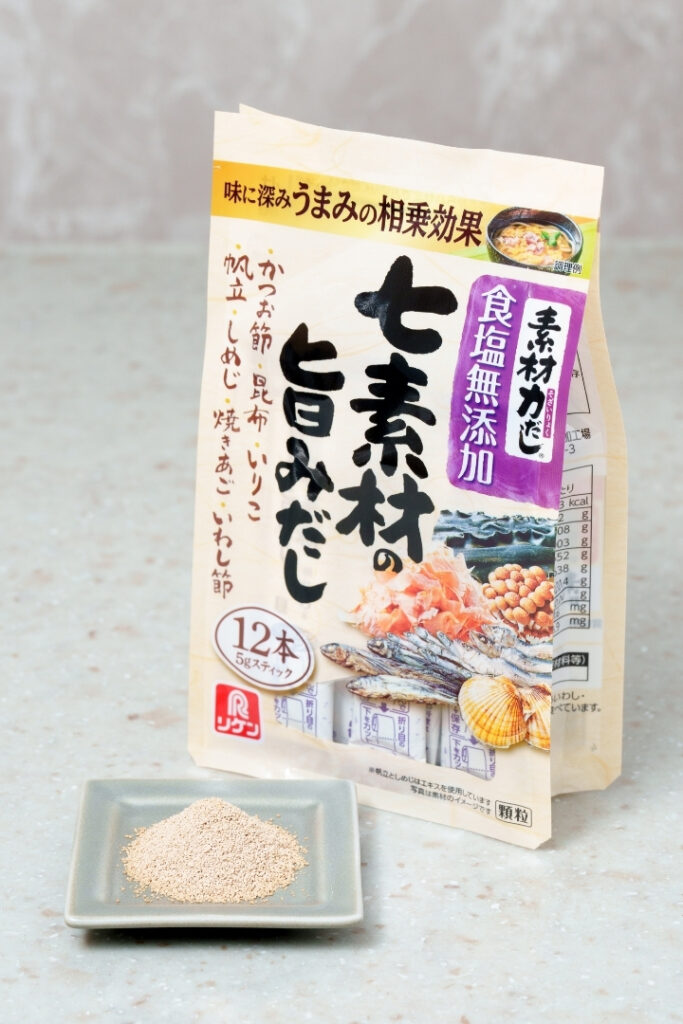
Dashi powder is a powdered or granulated dashi product that dissolves quickly in hot water.
Dashi powder is easy to keep in your pantry, especially when it comes in individual packets that help keep it fresh at room temperature.
It is also useful for dishes such as stir-fries, when you want to add dashi flavor directly without adding extra liquid.
Many dashi powders already contain salt, sugar, soy sauce, or other seasonings, so the taste can vary depending on the product. If you want more control over the final flavor, use the powder sparingly or choose an unseasoned product.
How to Use
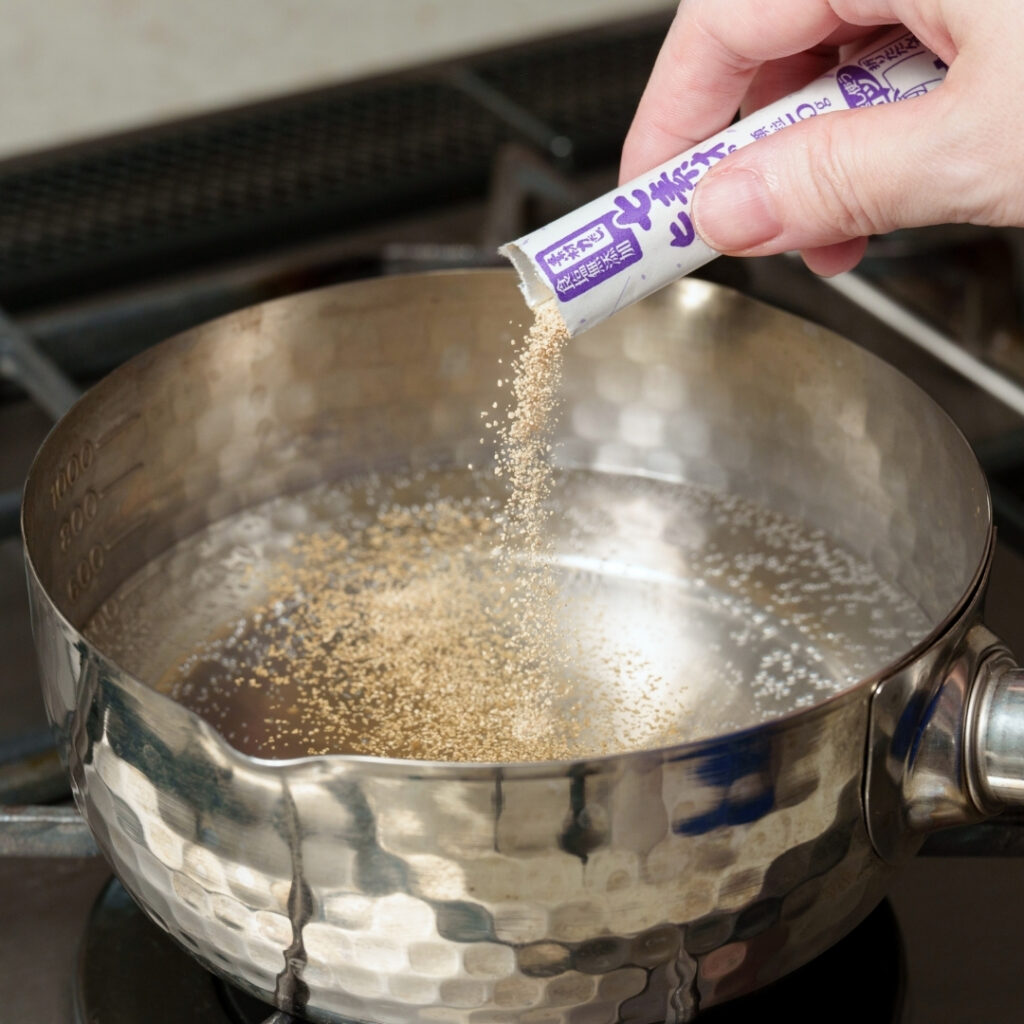
Add dashi powder directly to hot water or to the pot while cooking, then stir until it dissolves. Follow the package instructions for the amount to use.
Shiro Dashi
Characteristics
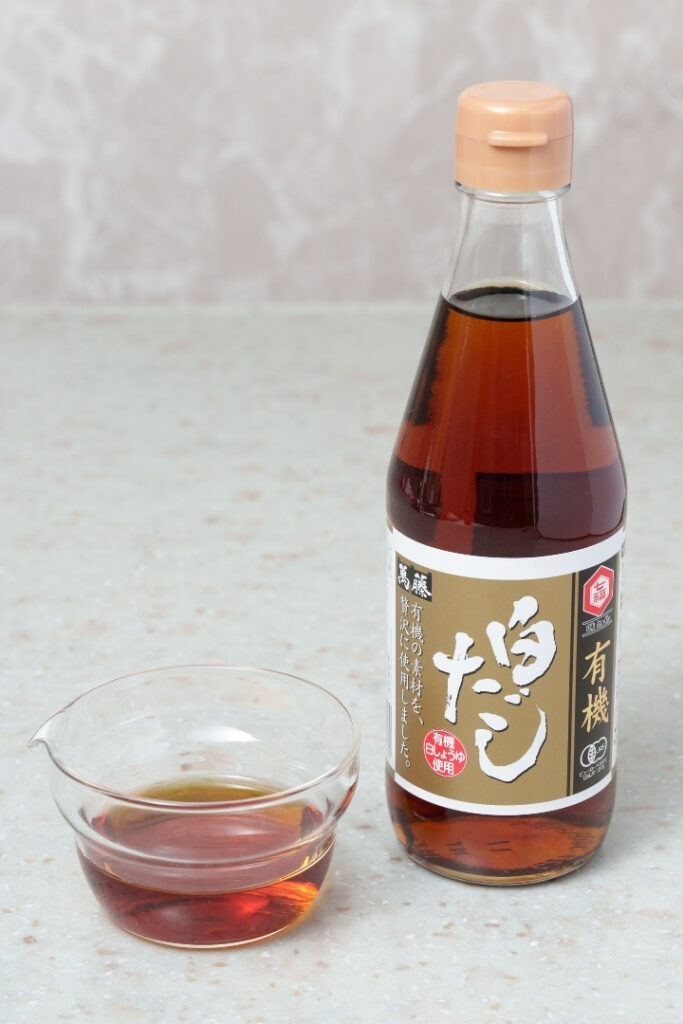
Shiro dashi is a concentrated liquid seasoning made with dashi, soy sauce, mirin, sugar, salt, and other seasonings. It can add umami, saltiness, and a slightly sweet flavor at the same time. The salt content can be higher than that of dashi packets or dashi powder, even when diluted.
Because shiro dashi is lighter in color than soy sauce, it is especially useful when you want to season a dish without making it too dark. Since it can be used without heating, it is also convenient not only for hot dishes, but also for chilled dishes such as ohitashi.
Shiro dashi is usually sold in bottles. After opening, it needs to be stored in the refrigerator, and it usually has a relatively short shelf life, so make sure to check the label and use it within the recommended period.
How to Use
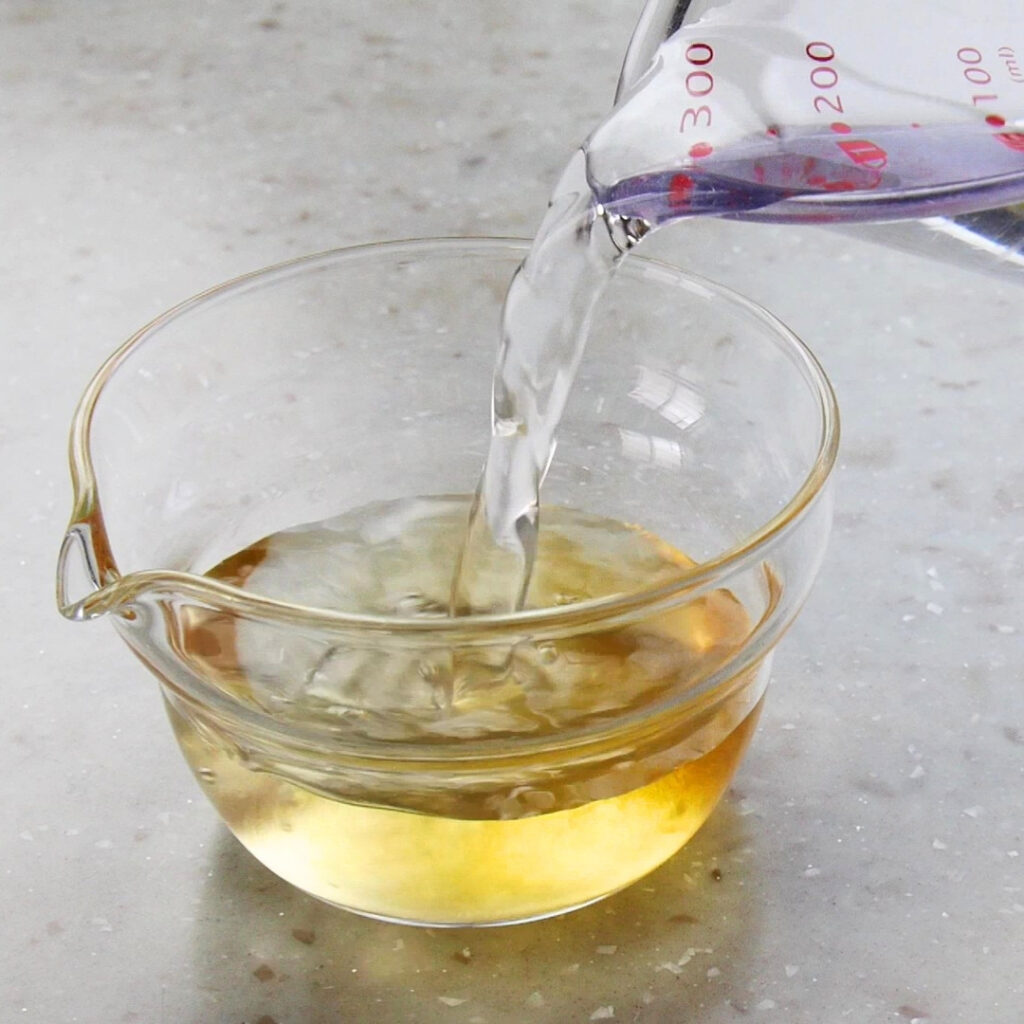
Dilute shiro dashi with water according to the package instructions. The dilution ratio depends on the product and the dish you are making, so always check the label first.
In the video below, you can also see how dashi is used in a real recipe. Have a look and give it a try!
-scaled.jpg)
Does dashi feel a little more approachable for your everyday Japanese cooking now?
You don’t need to make dashi perfectly from scratch every time. Choose the method that fits your kitchen and lifestyle.

Comments